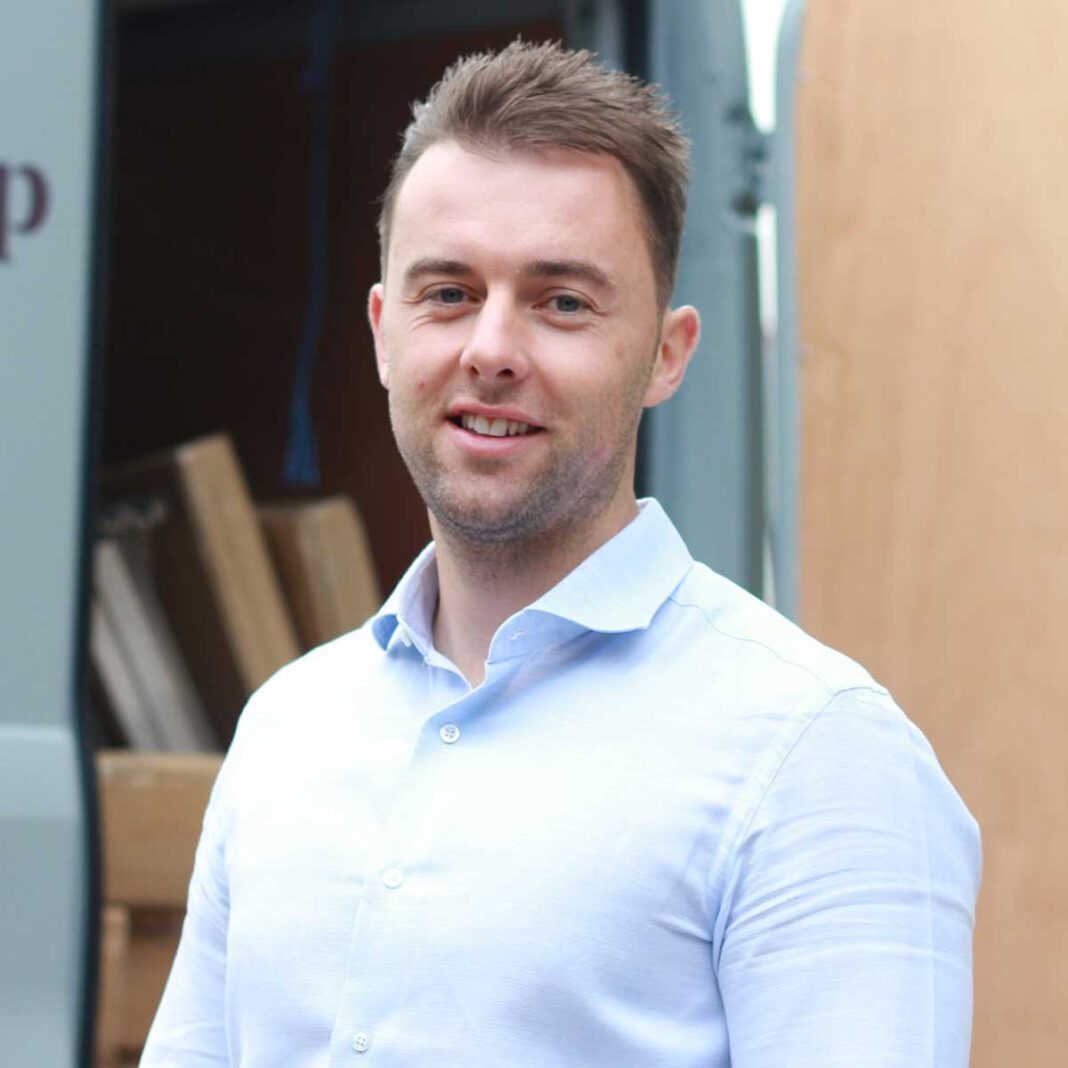

Ross Evans is co-founder of ShuttersUp, the West Wickham, Kent, company he started in 2006 with his friend Ashley Weight to make and fit plantation, PVC and faux wood shutters.
The business is a finalist for The Lloyds Leading SME Business of the Year at the Lloyds British Business Excellence Awards, with winners announced in London on 10 November 2026. In June it was also named one of The Sunday Times Best Places to Work 2026 in the small organisation category, with an average employee engagement score of 94 per cent, the company says.
He tells Business Matters how two night-shift carpenters turned a van and a customer-first ethos into an award-winning business.
What do you currently do at ShuttersUp?
I run ShuttersUp alongside my business partner and co-founder, Ashley Weight. My role has changed significantly since we started the business back in 2006. In the early days, I was very much hands-on, visiting customers, measuring up and fitting shutters myself.
As the company has grown, my role has evolved into a leadership position, overseeing the wider business and making sure we continue to deliver the level of service we have always wanted to be known for.
A big part of my day-to-day role now is working closely with our managers: checking in with them, understanding what is happening across the business and, most importantly, making sure our customers are being looked after properly. We are a people-focused business, so maintaining that connection with our teams and our customers is really important.
We are passionate about ensuring we deliver exceptional customer service. We regularly “secret shop” our competitors and, occasionally, even our own teams. We want to understand the whole experience from a customer’s perspective and identify where we can do better. Our ambition has always been to go above and beyond what customers expect and, ultimately, to set the standard for the industry.
We are also passionate about developing the next generation of talent. We have created the ShuttersUp Academy, our training facility for school leavers, giving them the skills they need to become professional shutter installers. It is a fully paid, 12-month programme, and in March 2026 it won Best Staff Internal Training Programme at the British Blind and Shutter Association Awards.
The Academy was developed alongside our managers, so I am regularly involved in reviewing how it is progressing, making sure we are giving the next generation the best possible start.
What was the inspiration behind your business?
Having completed a carpentry course at Croydon College, I started fitting fire doors on the London Underground, working night shifts alongside Ashley. He had previously worked at a shutter company and really enjoyed going into people’s homes, helping transform their spaces and seeing their positive reactions.
We realised working on the Underground was not for us. There was very little job satisfaction or interaction with people, something we both value.
We loved the people aspect of shutter fitting: meeting customers, doing something positive for them and seeing how much of a difference it could make to their home. That was the starting point of ShuttersUp. We wanted to create a business built on honesty, hard work and a high standard that helped make people feel genuinely happy in their homes.
We sold our cars, bought a van and started creating our business, with customer service our number one priority. Our vision is to become the UK’s most loved service, by inspiring daily moments of happiness, pride and comfort in customers’ homes.
Who do you admire?
I know most people would probably say someone famous or a well-known business leader, but actually, the people I admire are my mum and dad. Growing up, I saw how hard they worked to support our family.
My mum had a cleaning job and was out of the door by 5am, and my dad was a steel fixer, also up and out of the door early every morning. They worked hard, and that work ethic was just embedded in me and shaped my drive and determination.
Looking back, is there anything you would have done differently?
I would have left school earlier if I could have. I was not academic and always wanted to work with my hands. I think vocational work in schools is so important. If I could have started working earlier, I would have had a head start on what I am doing now.
I also would have changed our approach to marketing in the early days. We had no idea. We took an advert out in the Yellow Pages thinking the phone would ring, and nothing happened. Still, it meant that we had to get creative.
We built displays using old timber samples and walked into local interior design shops, offering to partner on projects. We delivered leaflets, spoke to homeowners face to face, and struck up collaborations with local gyms and tradespeople, which helped us to build momentum.
One of the biggest mistakes came in those early days. Our first major shipment of shutters was destroyed by a forklift truck at Felixstowe docks, with no insurance in place. At just 21, finding the money to replace those shutters was no small challenge.
Even harder was making the dreaded phone calls to customers, explaining that their shutters would need to be reordered. Thankfully, many of those first customers were friends and family, so they were understanding, but for us it was incredibly embarrassing.
That moment became a turning point for the business. We made sure that we always had comprehensive stock insurance in place, and we tell customers that we have invested in this protection on their behalf.
What defines your way of doing business?
For us, everything is driven by the customer. Our ethos is always to do what is best for them, not what is easiest for us. Not many trades companies work in that way, but it is our whole focus.
Our strapline, “made for you”, encapsulates this. We say that we do not make shutters for windows, we make them for people.
Being humble is also an important part of our ethos. ShuttersUp was built on honesty, hard work and integrity, and these are still important values for us.
What advice would you give to someone starting out?
Quite simply, treat people the way you would want to be treated. Respect, honesty and humility go a long way, whether you are dealing with customers, your team, suppliers or business partners.
Stay humble, listen to people, work hard and always try to do the right thing. The way you treat people is ultimately what helps to build a great business.