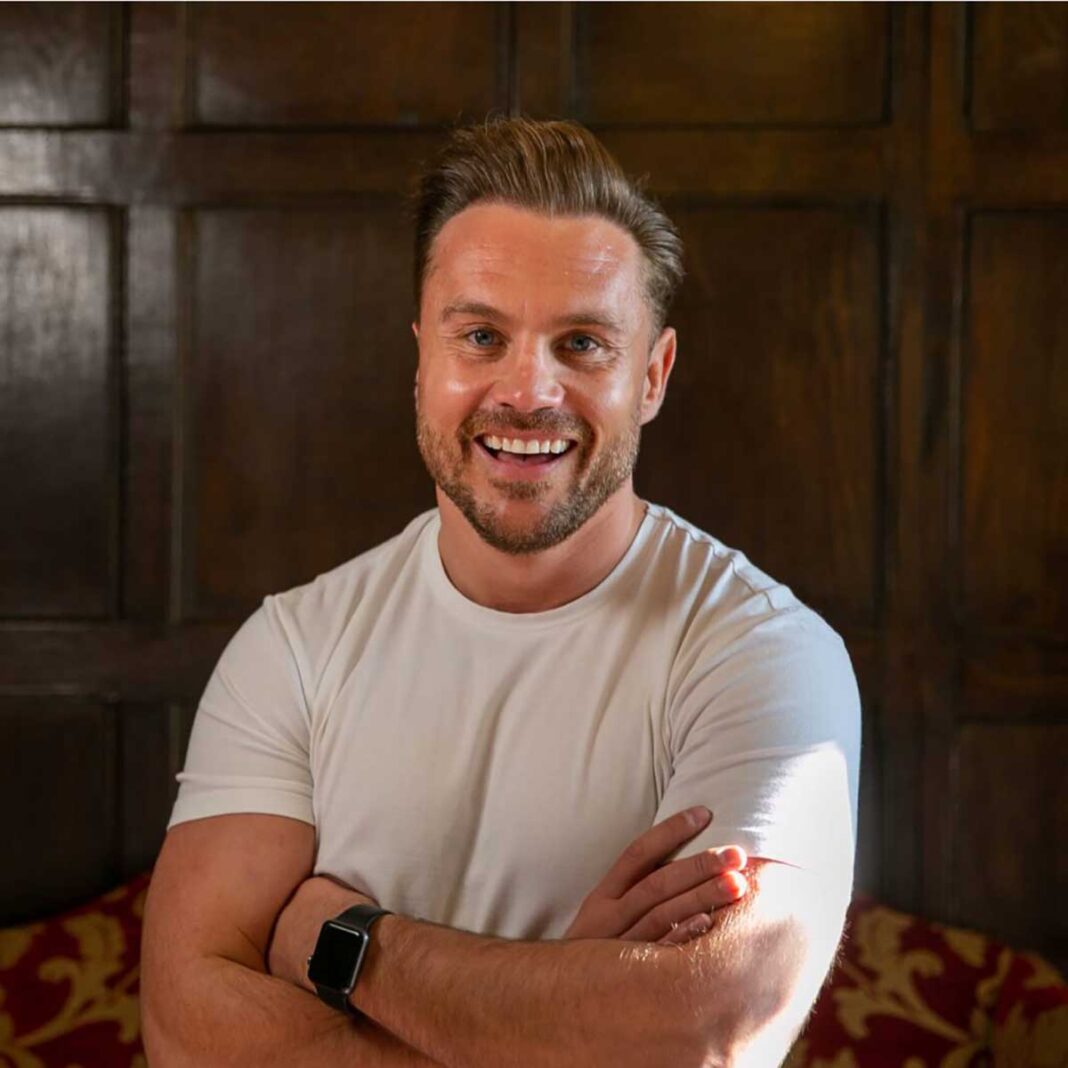

Will Polston is an Essex-based business strategist and performance coach who works with ambitious entrepreneurs through one-to-one coaching, masterminds and events under his Evolution Institute banner.
A former broker, he won Business Enabler of the Year at the Business Champion Awards in 2023, the same year he published his book North Star Thinking, with a foreword by Dr John Demartini. He tells Business Matters why achievement and fulfilment are not the same thing, and why direction should come before speed.
What do you currently do at Evolution Institute?
The simplest way I describe what I do is that I help ambitious entrepreneurs unlock their next level of potential, performance and purpose.
I meet entrepreneurs who have created financial freedom but sacrificed their time freedom to get it. Others finally reach the revenue number they have been pursuing for years, only to realise it has not changed how they feel. Some have built companies that are so dependent on them personally that they have unintentionally become the constraint on the next stage of growth.
What I help them do is get clear on what they actually want their business and life to look like, understand what is stopping them from creating it, and align the two around what I call their North Star: their life mission, their definition of success, rather than one borrowed from somebody else.
Sometimes that involves mindset and behavioural change. Often, it means helping someone make the transition from constantly operating their business to designing a business that can function and grow without everything having to pass through them.
I have now spent more than 7,000 hours coaching one-to-one and worked with over 2,500 business owners through coaching, events and workshops. Alongside that, I am an author, speaker, entrepreneur, investor and NED across other businesses. In 2023 I was named Business Enabler of the Year at the Business Champion Awards. The thread running through everything I do is the same: helping people transform excuses into results and live a life they love.
What was the inspiration behind your business?
There is a belief at the centre of my story that I formed when I was around 10 years old: money equals happiness.
My dad worked in London, and I remember seeing him come home tired, stressed and unhappy. He eventually left that job intending to go into business with one of my uncles. When that business did not happen, I watched him become unhappy and withdrawn.
At the same time, I had two uncles who were financially successful. One was a millionaire and one was a billionaire, and both were comfortable and happy. The conclusion felt obvious: Dad does not have much money and is not happy; my uncles have money and are happy; therefore, money must be the thing that creates happiness.
I became incredibly driven to earn. I had multiple paper rounds, washed cars, bought and sold things at school and started working as a pot boy in a bar when I was 14.
Later, I moved into broking and began achieving many of the things I had assumed would make me happy. The problem was that I still did not feel fulfilled, and that was difficult to reconcile because the belief I had built my life around simply was not producing the outcome I expected.
In 2013 I attended a personal development seminar and had what I can only describe as an eye and heart-opening realisation. I called it my lightning moment. The thing that had affected me so deeply as a child was never really my dad’s financial situation. It was seeing somebody I loved not fulfil what I believed was his potential, and seeing the impact that had on him and on our family.
That realisation changed my direction completely. What began as a journey to understand myself gradually became my mission: helping people fulfil more of what they are capable of so they do not reach the end of their lives wondering what they might have done.
Who do you admire?
I have never really approached admiration by deciding there is one person I want to emulate completely. I am much more interested in asking: what is the specific quality, behaviour or way of thinking that I can learn from?
My Uncle Mark was one of my earliest influences. When I was young, he represented possibility.
Tony Robbins has influenced me significantly through his understanding of human behaviour and his ability to communicate ideas in a way that gets people to act. Dr John Demartini, who wrote the foreword to my book, has also had a profound impact on how I think about human behaviour, values and perception.
I might admire one person’s communication, another’s leadership or another’s generosity. That links closely to modelling, one of the NLP tools I have used for many years. Rather than thinking, “I want to become that person,” I think: what do they believe, think or do that creates a result I respect, and what can I learn from it?
Looking back, is there anything you would have done differently?
I have made bad decisions. There have been failures, businesses that have not gone the way I expected and periods when I pushed myself too hard. There are, though, a few things I would tell a younger version of myself.
The first is straightforward: save and invest at least 10 per cent of everything you earn from the beginning, and treat that money as capital rather than spending money.
The deeper lesson would be to understand much sooner that achievement and fulfilment are not the same thing. For a long time, I was moving extremely quickly towards a destination without ever really stopping to ask whether it was a destination I wanted. There is nothing inherently wrong with pursuing more money, a larger company or greater success. The danger is believing those things will finally make you enough, significant or happy.
I would still tell my younger self to be ambitious. I would simply tell him to get clear on the direction before pressing harder on the accelerator.
What defines your way of doing business?
For me, it comes back to alignment before acceleration.
We live in a business culture that celebrates “more”: more turnover, more customers, more employees, larger offices, higher valuations and faster growth. But more is only useful if it is taking you somewhere you want to go.
Before getting obsessed with scale, I want to understand what the business is actually meant to create for the person behind it. How much money do they truly want? How much time? When that is clear, you can start designing a business that supports it intentionally.
Another principle is personal responsibility. One phrase I come back to repeatedly is: excuses or results, you choose. It is about directing your effort towards what you can influence rather than handing your power over to what you cannot.
I am also far more interested in transformation than short-term motivation. The work that interests me is changing the thinking, identity, behaviour and structures underneath the result, so the change lasts.
Ultimately, I believe business should create value for customers, opportunity for the people within it, and a great life for the people who own it.
What advice would you give to someone starting out?
Do not repeat the mistake I made by unconsciously adopting somebody else’s idea of what success is supposed to look like. Before you become consumed with the question, “How do I build a successful business?”, ask yourself, “What do I want this business to make possible?”
Create a North Star that is larger than a turnover figure or exit valuation.
Then get incredibly close to the problem you want to solve. Talk to customers and listen to them properly. Find out what is frustrating them and what they will actually pay to solve.
I would also find mentors earlier. Look for people who have already produced the result you are trying to create and use that to shorten your own learning curve.
Be disciplined with cash. Learn how to sell. Do what you say you will do. Protect your reputation.
Above all, do not put your life on hold while waiting for the business to become “successful”. You can create something significant and still enjoy the process of creating it. By all means build a business you are proud of. Just make sure you are also creating a life you actually want to live and love.