
This post was originally published on this site.
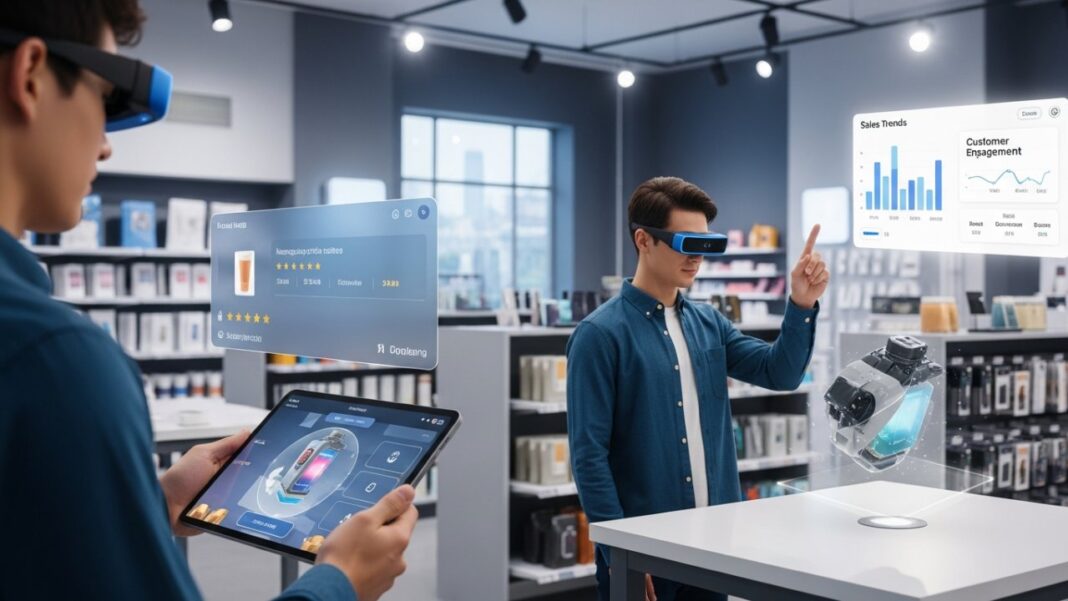
Augmented Reality is transforming retail by addressing common shopping challenges. You can help customers visualize products in their own spaces, like placing furniture in their homes or trying on clothes virtually. This not only boosts their confidence but also leads to fewer returns for you. To effectively implement AR, focus on user-friendly apps and engaging content. As you explore AR’s potential, consider how it can further enhance your business strategy and customer interactions.
Key Takeaways
- Augmented Reality (AR) enhances product visualization, allowing customers to see items like furniture in their own spaces before purchasing.
- Virtual try-ons for clothing and accessories reduce return rates and improve customer satisfaction by fostering informed buying decisions.
- Interactive AR displays in stores provide real-time product trials and personalized recommendations, enhancing the overall shopping experience.
- AR applications in grocery shopping help customers access ingredient information and navigate stores more efficiently.
- Retailers integrating AR into their strategies can increase consumer confidence and create new revenue streams while maintaining customer trust.
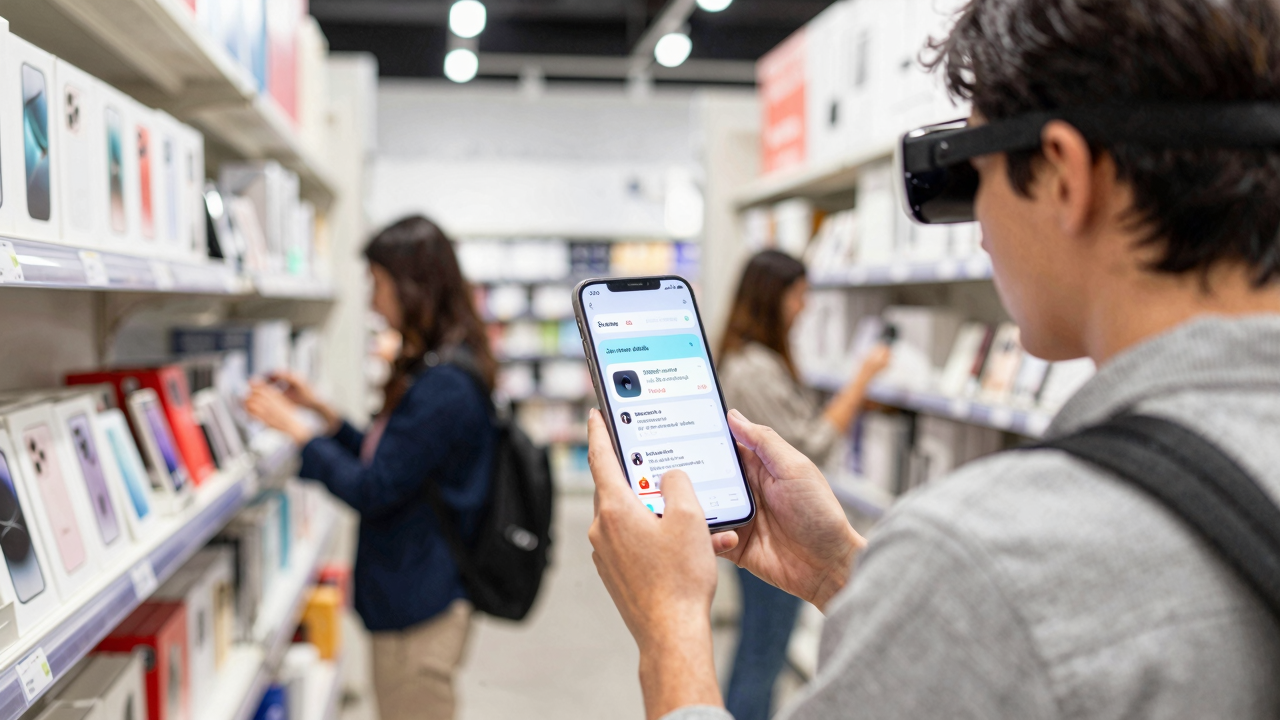
When you’re faced with common retail shopping challenges, Augmented Reality (AR) can be a game changer. AR shopping apps allow you to visualize products in your own space, like furniture, helping you see how they fit and look before buying. This reduces uncertainty and boosts confidence in your choices.
With augmented reality for ecommerce, you can try on clothes, shoes, and makeup virtually, leading to more informed purchasing decisions and fewer returns. Retail AR also enhances in-store experiences; interactive displays offer real-time product trials and personalized recommendations, making your shopping easier and more efficient.
In grocery shopping, AR can reveal ingredient information and guide you through large stores, so you spend less time searching. By adopting AR solutions, you streamline your shopping experience and guarantee you make choices that meet your needs effectively.
Innovative Uses of Augmented Reality Across Retail Sectors
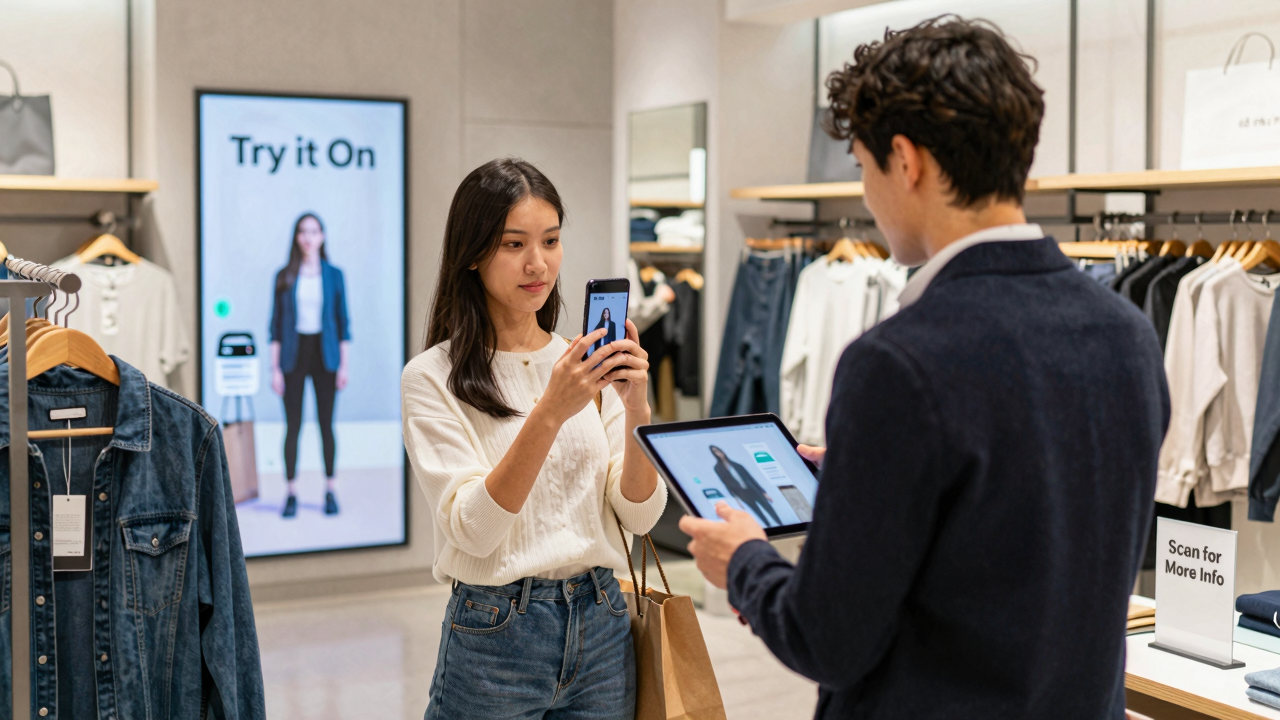
Augmented Reality (AR) is transforming how you shop across various retail sectors, making the experience more interactive and engaging.
For instance, using an augmented reality shopping app, you can visualize furniture from IKEA in your own home before purchasing, enhancing your confidence in the decision.
In fashion, brands like Warby Parker and Gucci offer virtual try-ons, allowing you to see how eyewear or clothing fits, which reduces return rates.
In supermarkets, AR helps you scan labels for ingredient information and recipe suggestions, promoting healthier choices.
Additionally, AR for consumer exhibitions showcases products in dynamic ways, grabbing your attention.
By exploring these augmented reality retail examples, you can elevate your shopping experience and make informed decisions with ease.
Embrace these innovative AR applications to enhance your everyday shopping routine and enjoy a seamless connection between the digital and physical worlds.
Top Benefits of AR for Retailers and Shoppers
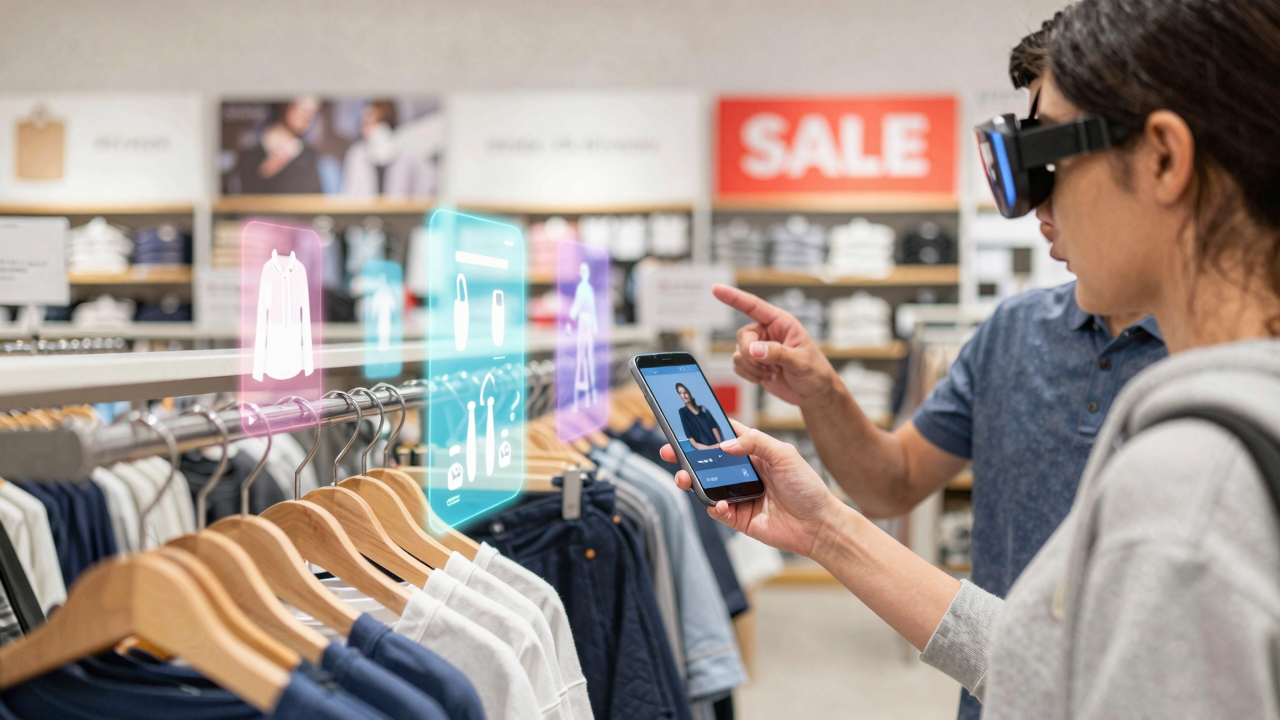
Incorporating augmented reality (AR) into retail can greatly enhance the shopping experience for both retailers and shoppers. You’ll find that AR boosts consumer confidence, with 56% of shoppers feeling more assured when interacting with AR features.
By offering augmented reality shopping options, retailers can attract 61% of consumers who prefer these innovative experiences. AR considerably reduces return rates through features like virtual try-ons for clothing, shoes, and makeup, leading to increased customer satisfaction.
AR in retail examples, such as IKEA’s furniture visualization, show how customers can see products in their own spaces, enhancing informed purchasing decisions.
As you explore the future of AR in retail, consider integrating virtual shopping experiences and services like design consultations to tap into new revenue streams.
How to Tackle AR Challenges in Retail
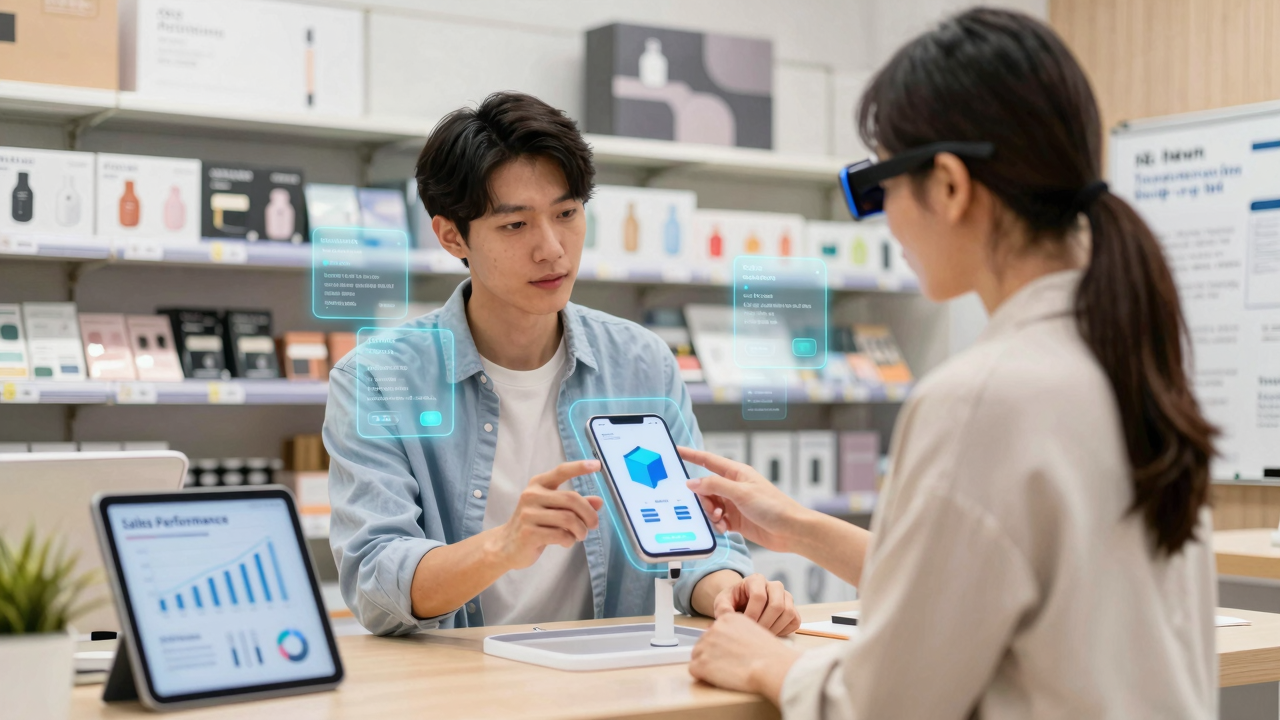
To successfully tackle the challenges of implementing AR in retail, you need to focus on a few key areas. Start by guaranteeing a user-friendly design; this is important for keeping customers engaged in your augmented reality store. If usability falters, customers may feel frustrated and disengaged.
Next, conduct a thorough financial analysis to evaluate the cost-benefit ratio of AR. Consider your development, maintenance, and marketing expenses carefully to confirm your investment aligns with your goals.
Additionally, understanding user behavior is fundamental. Gather insights on shopping habits to tailor AR experiences that resonate with consumers.
Finally, prioritize data privacy and security. Protecting customer information is critical, as breaches can damage trust and harm your brand.
The Future of AR in Retail: Trends and Predictions
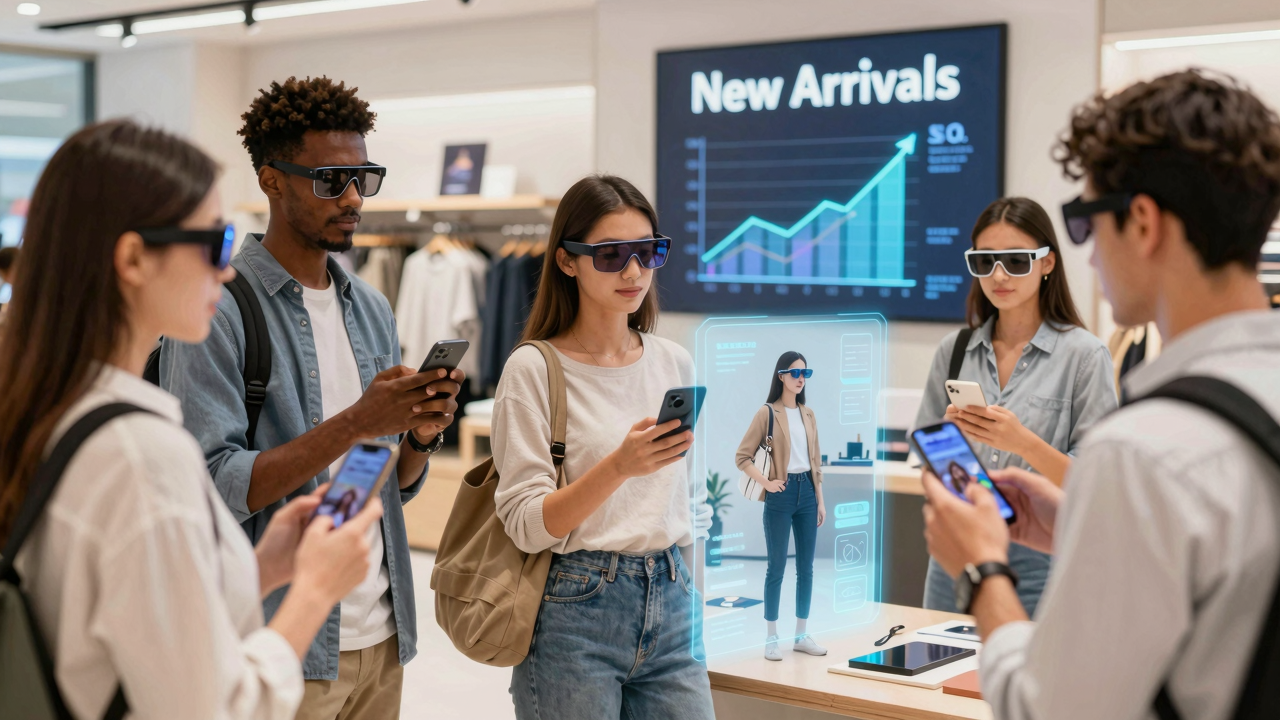
As technology continues to evolve, retailers need to stay ahead by embracing the future of AR in retail. You should consider integrating augmented reality into your business strategy, focusing on AR shopping to enhance customer experiences.
For instance, companies like IKEA are using AR storefronts to help customers visualize furniture in their homes, which markedly boosts confidence in purchases. Look into augmented reality ecommerce examples that illustrate the power of virtual try-ons in fashion, reducing return rates while improving customer satisfaction.
Shopping with VR offers a unique VR shopping experience, allowing consumers to explore products interactively. To prepare for these trends, invest in AR tools and applications that align with your brand, ensuring you meet the growing demand for immersive interactions.
Frequently Asked Questions
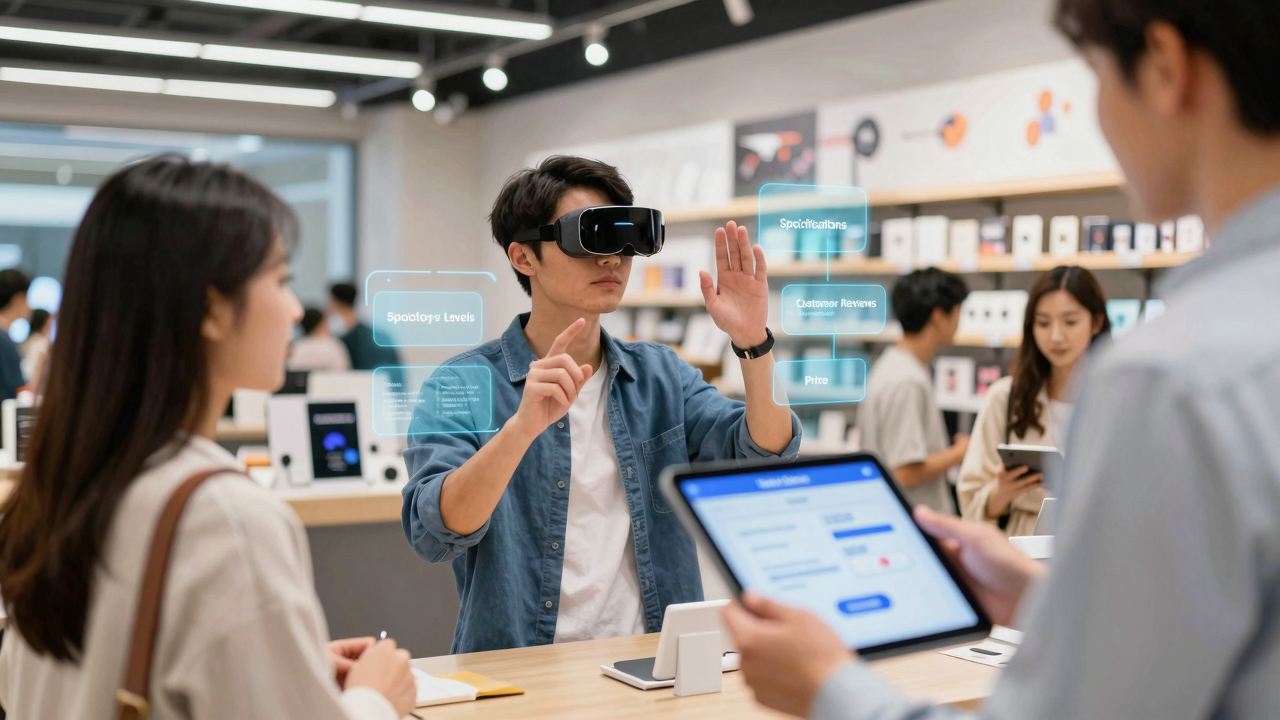
How Can Small Retailers Implement AR Without Significant Investment?
To implement AR without significant investment, start small. Use free or low-cost AR apps like IKEA Place or Snapchat’s Lens Studio to create interactive experiences.
Focus on virtual try-ons or simple product visualizations. Partner with local tech students or freelancers for development at a lower cost.
Promote your AR features through social media to attract customers. Test and gather feedback to refine your approach, ensuring it aligns with your target audience’s needs.
What ARe the Privacy Concerns Related to AR in Retail?
When using AR in retail, you should prioritize privacy concerns by being transparent about data collection. Clearly inform customers what data you collect and how it’s used.
Implement strong security measures to protect personal information. Consider allowing users to opt out of data sharing.
Regularly review your privacy policies and stay updated on regulations.
Finally, educate your staff about privacy practices to guarantee a consistent and trustworthy customer experience.
How Does AR Affect In-Store Employee Roles?
AR reshapes in-store employee roles by enhancing customer interactions and streamlining tasks.
You’ll find that employees use AR tools to assist customers with virtual try-ons or visualizing products in their space, increasing engagement.
Train staff to leverage AR for product demonstrations, leading to more informed purchases.
Encourage them to collect feedback on AR experiences, helping improve services.
Can AR Be Integrated With Existing E-Commerce Platforms?
Yes, you can integrate AR with existing e-commerce platforms. Start by evaluating your platform’s capabilities and APIs for AR compatibility.
Choose AR tools that enhance user experience, like virtual try-ons or product visualizations.
Collaborate with developers to guarantee smooth integration, and conduct user testing to refine functionality.
Promote these features through marketing campaigns to attract and engage customers.
[embedded content]
What ARe the Technical Requirements for AR Implementation?
To implement AR, you’ll need a robust software development kit (SDK) that supports AR features.
Verify your hardware, like smartphones or tablets, can handle AR applications with sufficient processing power. You’ll also require reliable internet connectivity for seamless performance.
Consider integrating AR with existing e-commerce platforms through APIs.
Finally, prioritize user-friendly design to enhance customer interaction, focusing on intuitive interfaces that guide users easily through their AR experiences.
Conclusion
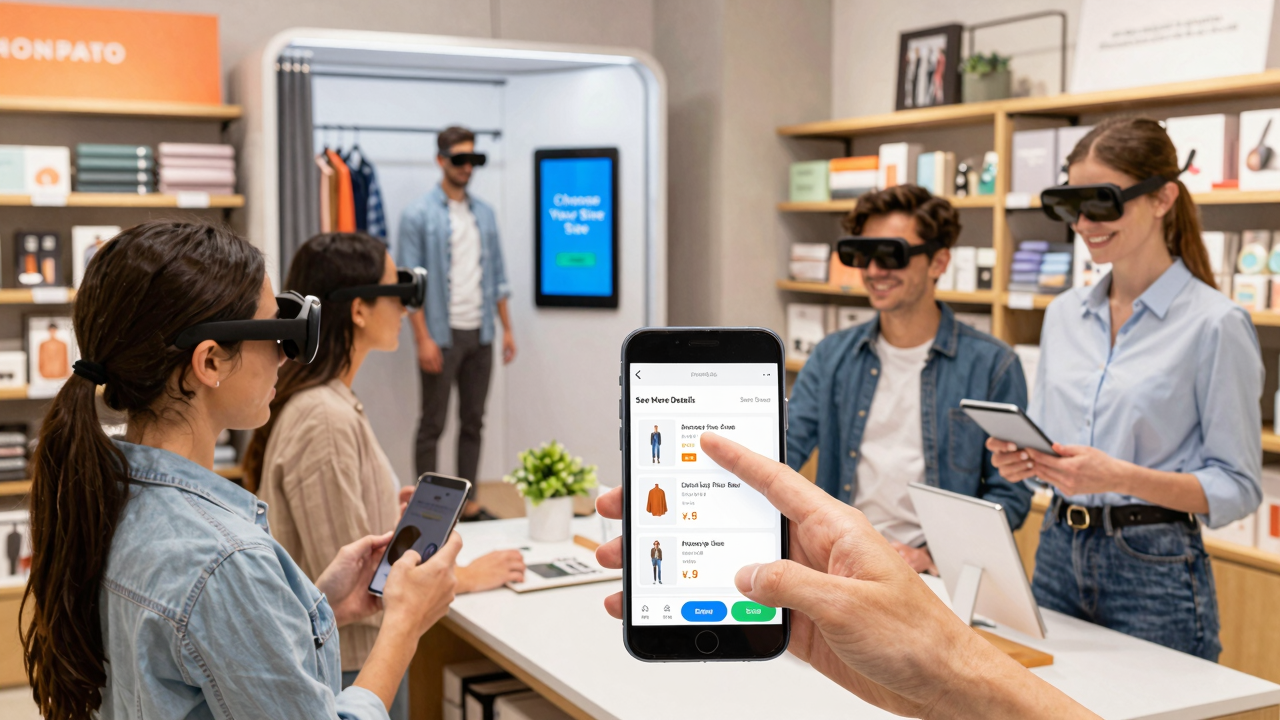
Augmented Reality is transforming retail by addressing common shopping challenges and enhancing customer experiences. To leverage AR, retailers should implement virtual try-ons and interactive product displays. Focus on training staff to assist customers with AR tools, and gather feedback to improve the experience. As AR technology advances, stay updated on trends and integrate new features to keep your offerings fresh. By embracing AR, you can boost sales, reduce returns, and create a more engaging shopping environment.
Image via Google Gemini and Small Business Trends