

Creating a customer satisfaction survey that delivers results starts with understanding your goals. Define what you want to learn, whether it’s about product quality or service interactions. Next, choose relevant metrics like CSAT or NPS to measure success. Keep your questions clear and concise, aiming for 5-7 to improve completion rates. Distribute your survey right after key customer interactions. But don’t stop there; analyzing feedback effectively is essential. Let’s explore how to make sense of that data next.
Key Takeaways
- Define clear objectives and select metrics like CSAT, NPS, or CES to align with business goals and measure customer loyalty effectively.
- Craft engaging, focused survey questions, limiting to 5-7 to enhance completion rates and ensure clarity.
- Optimize survey distribution by targeting key touchpoints immediately after significant interactions for timely feedback.
- Analyze feedback for insights, segment responses, and track metrics over time to identify areas for improvement.
- Create a feedback loop by communicating changes based on insights and re-running surveys to measure effectiveness.
Why Customer Satisfaction Surveys Matter

When you think about your business’s success, customer satisfaction surveys should be at the forefront of your strategy.
Implementing client satisfaction survey best practices can transform your approach to customer feedback. Regularly collecting insights reveals that 91% of customers are likely to recommend a company after a positive experience, making these surveys essential for growth.
To create a customer satisfaction survey, focus on concise questions that highlight strengths and weaknesses.
Utilizing metrics like CSAT, NPS, and CES helps you benchmark performance effectively.
How to Define Clear Objectives for Your Survey?

To define clear objectives for your customer satisfaction survey, start by identifying key metrics that matter to your business, like overall satisfaction or customer loyalty.
Make sure these objectives align with your business goals, focusing on specific interactions like post-purchase experiences.
Identify Key Metrics
How can you guarantee your customer satisfaction survey delivers valuable insights? Start by defining clear objectives and identifying specific customer experiences you want to measure, like service interactions or product satisfaction.
Use key metrics such as Customer Satisfaction Score (CSAT), Net Promoter Score (NPS), and Customer Effort Score (CES) to shape your survey questions according to client survey best practices. Establish benchmark scores based on industry standards to see how you stack up against competitors.
[embedded content]
Focus on actionable insights by selecting metrics that connect directly to customer loyalty and retention. Keep your survey concise, limiting it to 3-5 targeted questions. This approach makes it easier to gather relevant data, enhancing the effectiveness of how to create a customer feedback survey.
Align With Business Goals
Aligning your customer satisfaction survey with your business goals is essential for gathering meaningful insights. Start by clearly defining the survey’s purpose to address specific objectives, like improving customer retention or enhancing service quality.
Focus on key performance indicators (KPIs) related to customer satisfaction, such as CSAT or NPS.
- Use insights from past feedback to identify improvement areas.
- Set actionable goals based on survey results to enhance products or services.
- Confirm your survey questions reflect these defined objectives for clarity.
- Regularly review and adjust your approach as business goals evolve.
Choosing the Right Metrics for Your Survey

What metrics should you choose for your customer satisfaction survey? Selecting the right metrics is essential for understanding your customers’ experiences. Consider these three key metrics:
| Metric | Description |
|---|---|
| Customer Satisfaction Score (CSAT) | Measures immediate satisfaction on a scale of 1 to 5 or 1 to 7. |
| Net Promoter Score (NPS) | Assesses long-term loyalty by asking how likely customers are to recommend you on a scale of 0 to 10. |
| Customer Effort Score (CES) | Evaluates how easy it is for customers to complete tasks, with higher scores indicating better experiences. |
Craft Engaging and Concise Survey Questions

Creating engaging and concise survey questions is essential for capturing accurate customer feedback. To achieve this, focus on clarity and brevity while crafting your questions. Here are some effective strategies:
- Keep each question to one idea, avoiding confusion.
- Use a mix of question types, like Likert scales for satisfaction and open-ended questions for detailed insights.
- Limit your survey to 5-7 questions to boost completion rates.
- Personalize questions when possible to make customers feel valued.
Avoid double-barreled questions and leading language to guarantee clarity. For instance, instead of asking, “How satisfied are you with our service and product quality?” separate them into two distinct questions. This way, you gather more reliable data.
Target Key Touchpoints for Survey Distribution

To effectively gather customer feedback, you should target key interaction moments, like post-purchase or after support resolutions.
Timing matters; sending surveys right after these experiences can capture fresh insights that are more relevant and actionable.
Consider using various channels, such as email or SMS, to reach customers where they are, maximizing your chances of participation.
Identify Critical Interaction Moments
How can you effectively capture customer feedback? Start by identifying vital interaction moments in the customer journey. Focusing on key touchpoints guarantees you gather relevant insights:
[embedded content]
- Post-purchase interactions to measure satisfaction with the buying experience.
- After customer support engagements to evaluate service quality.
- Following onboarding experiences to assess initial impressions.
- Key moments identified through customer journey maps to highlight impactful interactions.
Distribute surveys shortly after these interactions to capture fresh sentiments.
Utilize digital channels like email or chatbots for immediate feedback, reaching customers when they’re most engaged. Implement automated triggers to send surveys right after significant actions, like completing a purchase or resolving a support ticket.
[embedded content]
This approach streamlines your feedback collection and enhances data quality.
Optimize Timing for Engagement
While you might think about sending surveys whenever you can, optimizing the timing for distribution is essential to gathering meaningful feedback. Distributing surveys right after key touchpoints, like post-purchase or after customer support interactions, helps capture fresh insights. Timing your surveys shortly after significant events can boost participation rates by 25-40%.
Here’s a simple table to guide your timing strategy:
| Touchpoint | Ideal Timing | Engagement Tip |
|---|---|---|
| Post-Purchase | Immediately after purchase | Send a thank-you note |
| Customer Support Closure | Right after interaction | Ask specific service questions |
| Newsletter Signup | Within 24 hours | Incentivize responses |
Utilize automated triggers and A/B test different timings to find what works best for your audience.
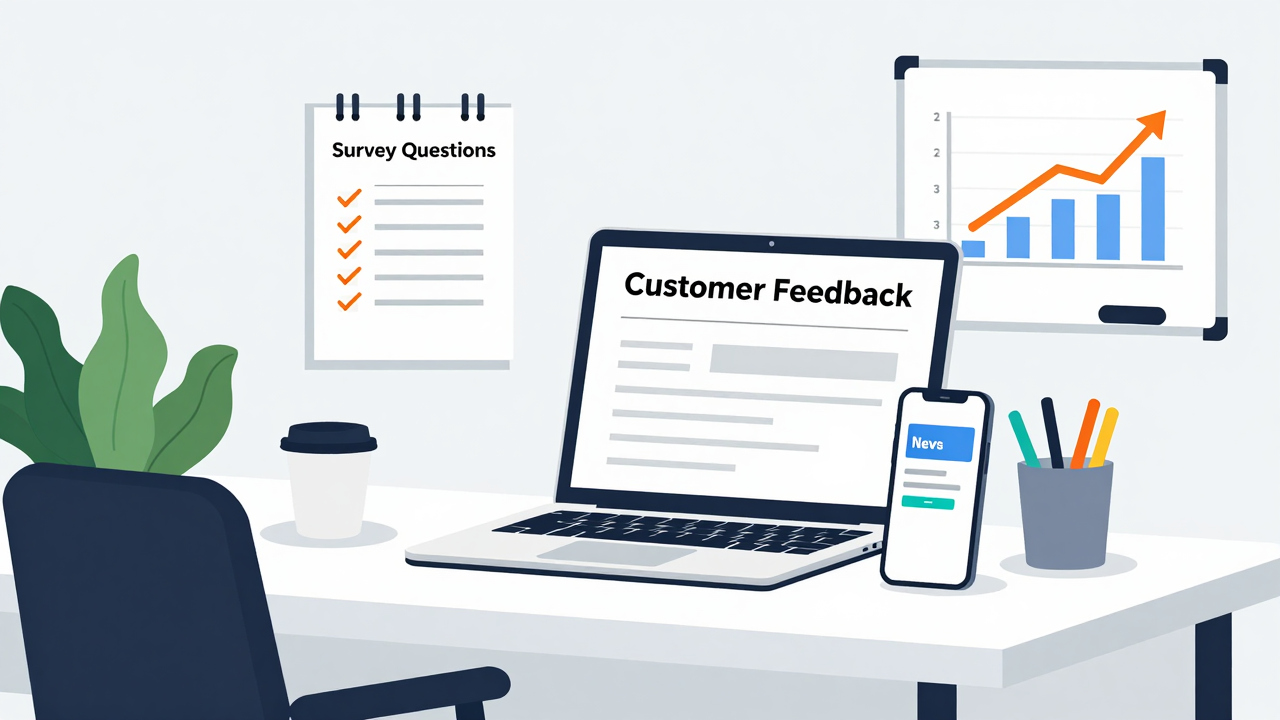
When selecting the best tools for customer satisfaction surveys, it’s essential to focus on features that enhance your feedback collection process. Start by choosing trusted survey platforms, like Snap Surveys, that offer engaging designs and various response methods.
Look for tools with automation features to send surveys promptly, like SMS invitations triggered by customer interactions. This guarantees you gather timely feedback.
Consider the following key features:
- Analytics Capabilities: Tools that provide in-depth analysis and reporting, allowing you to visualize trends easily.
- Customization Options: Platforms that let you customize question formats, such as Likert scales and open-ended questions, aligning with your feedback objectives.
- Integration with CRM: Solutions that integrate well with your CRM, centralizing customer data for better insights.
These features will help you create effective surveys that drive actionable results.
Keep Your Survey Short and Easy to Complete
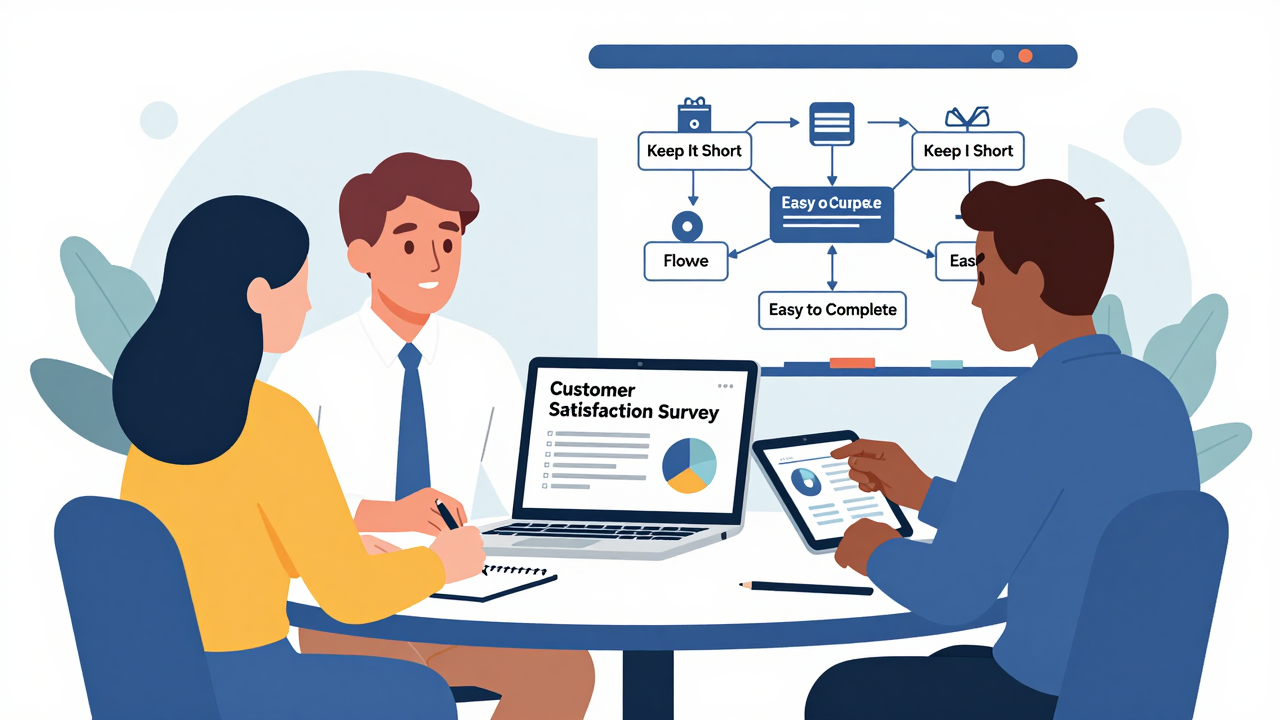
To keep your survey short and easy to complete, aim for a completion time of just 3 to 5 minutes, which usually means about 15 to 20 focused questions.
Use a mix of question types, like single-choice and Likert scales, to make it engaging while still gathering useful data.
Remember to simplify your wording and stick to relevant topics to guarantee clarity and encourage responses.
Focus on Key Questions
How can you guarantee your customer satisfaction survey captures valuable insights without overwhelming your respondents? By focusing on key questions, you can maintain engagement and gather useful feedback. Here’s how:
- Keep your survey to 15-20 questions, aiming for a completion time of 3 to 5 minutes.
- Use a mix of question types, like single-response, multiple-choice, and open-ended, to gather diverse insights.
- Prioritize core questions that assess customer satisfaction, such as the Customer Satisfaction Score (CSAT).
- Personalize questions to enhance relevance and make respondents feel valued.
Limit Response Time
Limiting response time is essential for ensuring your customer satisfaction survey is both effective and user-friendly. Aim for a completion time of just 3 to 5 minutes, ideally keeping your survey under 20 questions.
Research shows that fewer than 10 questions often yield the best completion rates, as respondents won’t feel overwhelmed. Focus on relevant topics to gather meaningful insights without burdening your customers.
Use clear, simple language in your questions to enhance understanding and speed up responses. Incorporate a mix of question types, such as single-choice and rating scales, to streamline the process.
How to Analyze Feedback for Real Insights?

Analyzing feedback effectively reveals valuable insights that can drive improvements in customer satisfaction. Start by breaking down your data into manageable parts. Here’s how:
- Calculate average scores from rating scales to find overall satisfaction levels and pinpoint areas needing improvement.
- Review qualitative feedback from open-ended questions to identify recurring themes and sentiments that highlight customer experiences.
- Segment responses by demographics or customer type to uncover specific pain points and tailor solutions accordingly.
- Track changes in satisfaction metrics over time to evaluate the impact of any changes you make.
Additionally, consider using sentiment analysis tools to categorize open-ended responses as positive, negative, or neutral. This helps you focus your efforts on addressing customer concerns and recognizing what’s working well.
How to Implement Changes Based on Feedback?

Implementing changes based on customer feedback is essential for improving satisfaction and building loyalty. Start by analyzing the survey data to spot common themes and specific areas needing improvement. Focus on both the quantitative scores and qualitative responses for a well-rounded view of customer sentiment.
Prioritize addressing low-scoring areas that impact satisfaction directly, and make those changes promptly to show you value customer concerns.
Next, communicate the improvements back to respondents. This reinforces their importance and encourages future engagement.
To guarantee ongoing effectiveness, create a feedback loop by re-running surveys after implementing changes. This will help you measure the impact of your adjustments over time.
Finally, use the insights gained to inform training for your customer service staff, equipping them to enhance the overall experience based on identified needs.
Track Trends for Continuous Improvement

To guarantee ongoing improvement in customer satisfaction, regularly tracking trends in your survey data is essential. By keeping an eye on customer satisfaction scores like CSAT, NPS, and CES, you can spot shifts in sentiment and adjust your strategies proactively.
Here are some practical steps to take into account:
- Use longitudinal data analysis to compare current performance with historical data, identifying patterns that highlight areas for improvement.
- Segment survey responses by demographics or behaviors, allowing you to tailor improvements for specific groups.
- Create a systematic feedback loop where insights from surveys lead to actionable changes, fostering a culture focused on continuous improvement.
- Re-run surveys after implementing changes to assess their impact, validating whether your adjustments effectively meet customer needs.
Taking these steps guarantees you’re not just reacting to feedback but actively shaping a better customer experience over time.
Avoid Common Pitfalls in Survey Design

When designing a customer satisfaction survey, it’s crucial to avoid common pitfalls that can compromise the effectiveness of your data collection. First, keep your questions clear and concise—focus on one idea at a time to prevent confusion. Avoid double-barreled questions, as they can lead to inaccurate data.
Next, limit your survey length to about 3 to 5 minutes. Shorter surveys encourage higher response rates, while long ones can cause fatigue.
Incorporate a mix of question types, such as rating scales and open-ended questions, to gather both quantitative and qualitative data. Additionally, distribute surveys immediately after customer interactions to capture fresh insights.
Finally, regularly test and revise your questions based on feedback and changing customer needs. This guarantees your survey remains relevant and effective, helping you gather meaningful data that truly reflects customer satisfaction.
Frequently Asked Questions
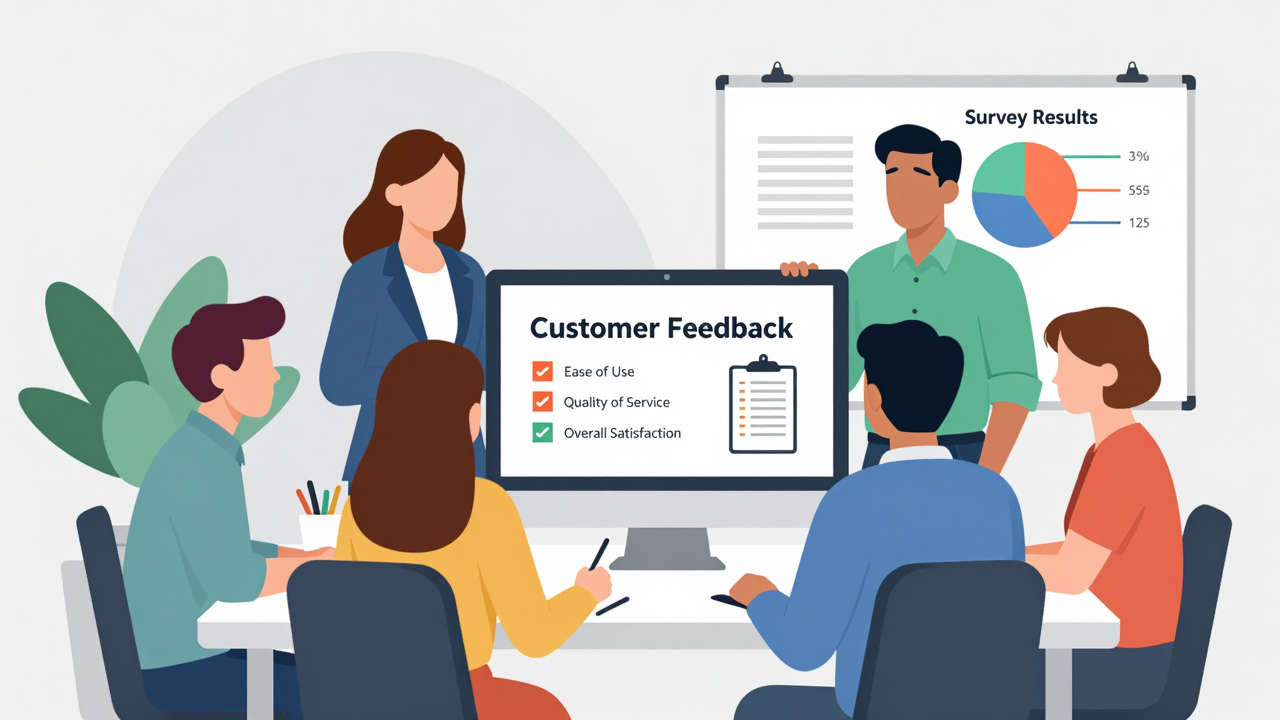
How to Create a Survey for Customer Satisfaction?
To create a customer satisfaction survey, start by defining its purpose, focusing on specific experiences like product use or support interactions.
Use a mix of question types, such as rating scales for quantitative data and open-ended questions for qualitative insights. Keep it concise—aim for 3 to 5 minutes.
Distribute the survey soon after interactions to capture fresh feedback.
Finally, analyze the results regularly and act on feedback to improve customer experiences.
What Are the 3 C’s of Customer Satisfaction?
The 3 C’s of customer satisfaction are Clarity, Consistency, and Connection.
Guarantee clarity by providing clear information about your products and services, so customers know what to expect.
Maintain consistency by delivering the same quality of service each time, which builds trust.
Finally, focus on connection by personalizing interactions, making customers feel valued.
What Are the Four Types of Customer Satisfaction Surveys?
The four types of customer satisfaction surveys you should consider are Customer Satisfaction Score (CSAT), Net Promoter Score (NPS), Customer Effort Score (CES), and Post-Interaction Surveys.
CSAT measures immediate satisfaction, while NPS gauges long-term loyalty. CES focuses on how easy it’s for customers to complete tasks.
Post-Interaction Surveys capture feedback right after a service experience.
Use these tools to understand customer sentiment and improve your interactions effectively.
How to Graph Customer Satisfaction Survey Results?
To graph customer satisfaction survey results, start with bar or pie charts for clear percentage distributions of satisfaction levels.
Use line graphs to track changes in metrics like CSAT over time.
Heat maps can visualize responses across demographics, highlighting strengths and weaknesses.
Create interactive dashboards to allow stakeholders to filter data by timeframes or segments.
Keep your graphs simple, limiting data points to enhance clarity and impact.
This will effectively communicate your findings.
Conclusion

To summarize, creating an effective customer satisfaction survey requires clear objectives, the right metrics, and concise questions. Distribute your survey promptly after key interactions and analyze the feedback carefully for actionable insights. Implement changes based on what you learn, and keep tracking trends to guarantee continuous improvement. Avoid common pitfalls by staying focused and engaged with your customers. By following these steps, you’ll enhance customer satisfaction and loyalty, driving better results for your business.
Image via Google Gemini and Small Business Trends