
This post was originally published on this site.
As more buyers skip search entirely and go straight to ChatGPT, Gemini, or Perplexity for recommendations, marketers are realizing they need a new kind of tool — one that shows them how their brand appears in AI answers and what to do about it. That’s what both HubSpot AEO and Ahrefs Brand Radar are built for. But they take meaningfully different approaches, and the right choice depends almost entirely on what you need to do after you get the data.
In this post, we’ll break down how each tool works, compare them across the features that matter most to buyers, and give you a clear framework for choosing between them.
We’ll also flag one common source of confusion upfront: HubSpot’s free AEO Grader is a separate diagnostic tool, not the product we’re comparing here. HubSpot AEO is the full platform, and this post covers it.
Table of Contents
HubSpot AEO vs. Ahrefs Brand Radar at a Glance
Quick verdict: HubSpot AEO wins on workflow integration and actionability. Ahrefs Brand Radar covers platform breadth and prompt volume. If you’re an Ahrefs shop that just needs visibility monitoring bolted on, Brand Radar is a good choice. If you need to actually move the needle on your AI presence and can’t afford the gap between “insight” and “shipped content,” HubSpot AEO is the stronger fit.
What HubSpot AEO and Ahrefs Brand Radar Actually Do
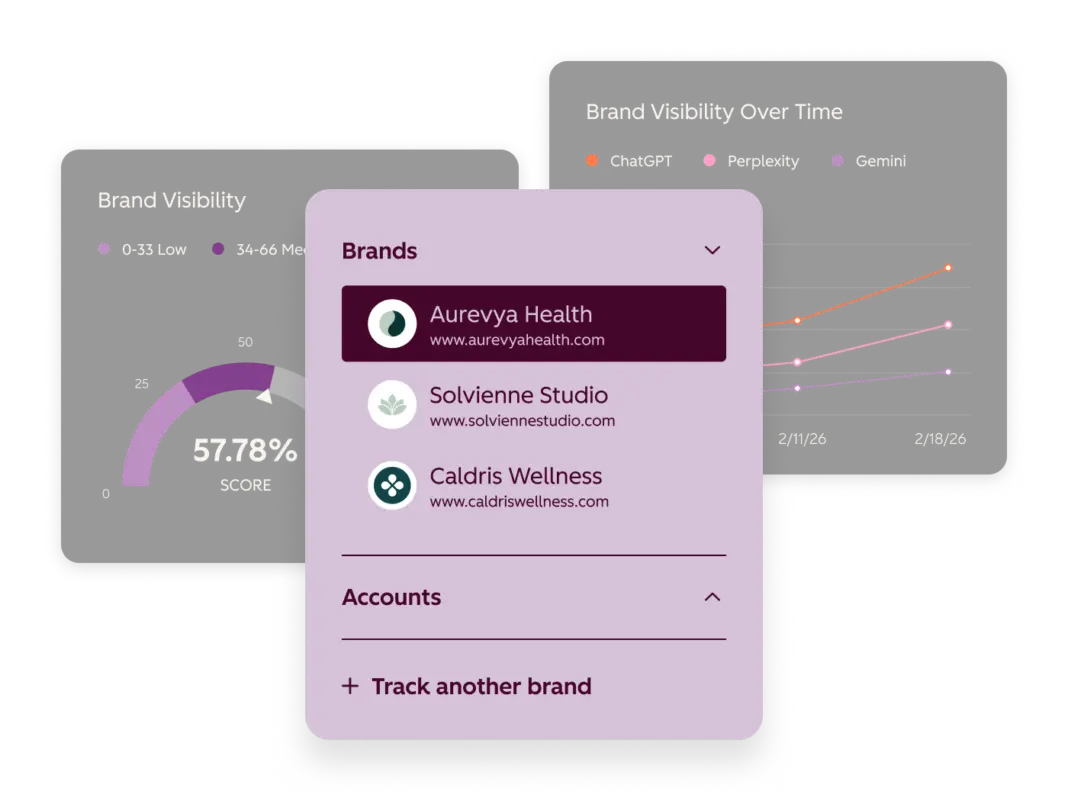
HubSpot AEO tracks your brand’s visibility across ChatGPT, Gemini, and Perplexity, then connects that data directly to the content tools you need to act on it. The key differentiator is the workflow: when you spot a visibility gap, you don’t export a CSV and open a new tab. You act on the recommendation inside HubSpot. That could mean writing a blog post, publishing a LinkedIn update, or engaging on Reddit, all from the same platform.
The CRM connection is meaningful, too. Instead of manually entering prompts to track, HubSpot suggests them based on what it already knows about your business, customers, and competitors. That type of connectivity is a real time-saver, and it means you’re tracking the right questions from day one.
Ahrefs Brand Radar approaches AI visibility as an extension of everything Ahrefs already does well: massive data, broad coverage, and a monitoring-first philosophy. It tracks brand mentions across seven AI platforms (more than any other tool we looked at), and its prompt database of 406 million monthly queries is built from real user searches rather than synthetic data. If you want to know which platforms are mentioning you, how you stack up against competitors, and what sources are driving AI citations, Brand Radar covers that thoroughly.
It also tracks visibility on YouTube, Reddit, and TikTok (free while in beta), which is a nice bonus for brands that care about presence beyond pure AI answer engines. And for teams that want to pull that data into their AI workflows, it has an MCP server that lets you query Ahrefs data directly inside Claude or ChatGPT.
HubSpot AEO vs. Ahrefs Brand Radar: Features Compared
Which AI Engines and Prompts Are Tracked
This is probably the starkest difference between the two tools.
HubSpot AEO tracks ChatGPT, Gemini, and Perplexity. Those three cover the majority of AI search volume right now, but if your category requires coverage of Microsoft Copilot, Google AI Overviews, Google AI Mode, or Grok, you’ll hit a ceiling.
Ahrefs Brand Radar tracks seven platforms: AI Overviews, AI Mode, ChatGPT, Perplexity, Microsoft Copilot, Gemini, and Grok. If breadth of engine coverage is a hard requirement, Brand Radar has the advantage.
On the prompt side, HubSpot uses your CRM data to suggest which prompts to track. You’re not starting from a blank slate, and the suggestions improve as your business data evolves. Ahrefs has a database of 406 million monthly prompts derived from real search queries, which is an impressive dataset. You can also add custom prompts in both tools, though Brand Radar’s custom prompt limits vary significantly by plan (from 5 prompts on Lite up to 2,500+ on Enterprise standalone).
Citations, Sources, and Sentiment
Both tools offer citation analysis and sentiment tracking, but they surface the data differently.
HubSpot AEO’s citation analysis shows you which domains, URLs, and content types are driving AI mentions, broken down by source type (owned content, competitor content, third-party, social, affiliate) and content type (blog, news, product, social). Sentiment is scored on a scale of -100 to +100, so you’re not just seeing whether you’re mentioned but whether those mentions are doing you any good.
Ahrefs Brand Radar tracks citations across its full set of AI platforms and also pulls in coverage from YouTube, Reddit, and TikTok. That social layer gives brand teams a more complete picture of where they’re being referenced.
For teams that need to understand the full ecosystem of content influencing their AI presence, Brand Radar’s multi-surface tracking is a meaningful addition.
Historical Trends and Reporting
HubSpot AEO shows how your brand visibility score trends over time across each engine, and ties that visibility data directly to your campaign metrics. So when your AEO score improves after a content push, you can actually connect those dots inside the same platform rather than correlating across tools.
Ahrefs Brand Radar provides historical trend data across its engine set. Because it’s integrated with the broader Ahrefs suite, teams on full Ahrefs plans can layer AI visibility trends alongside their traditional SEO metrics (organic traffic, backlinks, rankings) for a unified view of search performance.
Which one turns insights into shipped content faster?
This is where the two tools genuinely diverge, and it’s the question that should drive most buying decisions.
From Visibility Gap to Brief
In HubSpot AEO, when your data shows a visibility gap (say, a competitor is consistently appearing for “best [your category] for small teams,” and you’re not), the tool surfaces a prioritized recommendation. That recommendation might say: write a blog post that targets this prompt, update this existing page, or publish a LinkedIn post on this topic. It’s not just data — it’s a next step.
In Ahrefs Brand Radar, you get the same visibility gap data, but the path from insight to action is your responsibility. You’ll need to incorporate that information into your content workflow, create the brief, assign the work, and track progress in whatever system you use.
From Draft to Publish to Measure
Because HubSpot AEO lives inside Marketing Hub, you can act on a recommendation without switching tabs. Blog posts, social posts, and content updates are all native to the platform. Once you publish, the AEO data updates as AI mentions shift, and your campaign analytics are right there alongside it.
With Ahrefs Brand Radar, publishing happens wherever your team already publishes. The measurement loop comes back to Brand Radar for the AI visibility side, but you’d need to pull in other data sources to see the full picture of impact.
For teams that already have a well-oiled content workflow and just need better monitoring data to feed it, this isn’t a dealbreaker. For teams that are still building that workflow or that want fewer tools in the stack, HubSpot’s integrated approach saves meaningful time.
HubSpot AEO vs. Ahrefs Brand Radar: Pricing
HubSpot AEO Pricing
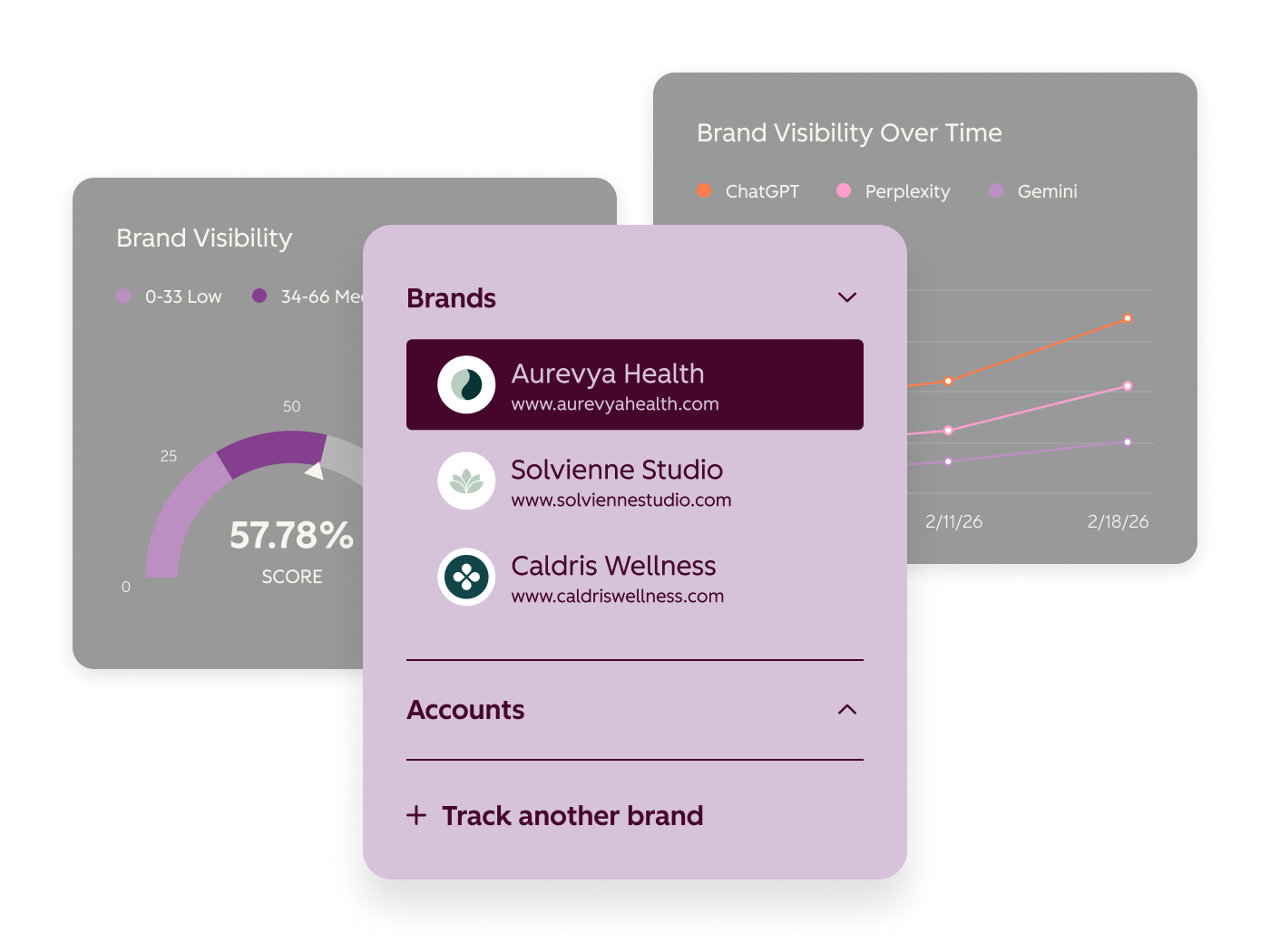
HubSpot AEO starts at $50/month (or $45/month if you pay annually). It includes ChatGPT, Gemini, and Perplexity coverage, brand visibility and sentiment analysis, prompt tracking with CRM-powered suggestions, competitor and citation analysis, and prioritized recommendations.
There’s a free 28-day trial with 25 prompts across all three engines, no credit card required. That trial is a low-friction way to see real data before you commit.
If you want AEO built into your full marketing stack, HubSpot for Marketers (Marketing Hub + Content Hub) starts at $900/month and includes AEO alongside the full campaign, content, and social toolkit.
For current pricing, see: hubspot.com/products/aeo
Ahrefs Brand Radar Pricing
Ahrefs doesn’t offer free trials or discounts, so you’re committing upfront.
Standalone Brand Radar (includes an Ahrefs Free account):
- Base entry: $199/month
- Select Platforms: $398/month (pick specific AI engines, plus YouTube, TikTok, Reddit)
- All Platforms: $699/month (full access to the 406M prompt database, plus 2,500 custom prompt checks/month)
- Custom Prompt Only packages: $50/month (2,500 checks), $100/month (7,000 checks), $250/month (25,000 checks)
Bundled in full Ahrefs plans (Brand Radar included):
- Starter: $29/month
- Lite: $129/month ($108/month annually) — 5 custom prompts, 150 checks/month
- Standard: $249/month ($208/month annually) — 10 custom prompts, 300 checks/month
- Advanced: $449/month ($374/month annually) — 20 custom prompts, 600 checks/month
- Enterprise: starts at $1,499/month — custom limits, uncapped API, SSO
The pricing story in plain terms: If you’re already on Ahrefs, adding Brand Radar is part of your existing plan, and the incremental cost is low. If you’re coming in cold and want standalone Brand Radar with full platform coverage, you’re looking at $699/month. HubSpot AEO at $50/month is significantly cheaper for a standalone AEO tool, though it covers three engines versus seven.
How Each Tool Fits Your Stack
HubSpot AEO is the better fit if:
- You’re already using HubSpot for marketing and content
- You want AEO data connected to CRM, campaigns, and content creation in one place
- Your team needs to ship content based on AEO insights without adding tools or handoffs
- You want to see AI visibility data alongside your other marketing metrics
Ahrefs Brand Radar is the better fit if:
- You’re already on Ahrefs and want AI visibility without adding another subscription
- You need the widest possible engine coverage (especially Copilot, AI Overviews, AI Mode, or Grok)
- Your team is comfortable with a monitoring-first workflow that feeds into separate content tools
- You want to use an MCP server to pull AI visibility data into your existing AI workflows
Both tools have meaningful integrations, but they’re solving for different stacks. HubSpot is built for teams that want a connected marketing platform. Ahrefs is built for SEO-first teams that want comprehensive data and are comfortable building their own workflow around it.
Which tool is known for ease of use and time to value?
HubSpot AEO is designed so any marketer can get started quickly, no technical background required. The CRM-powered prompt suggestions mean you don’t have to figure out what to track — the tool gives you a starting point based on your business data. Most teams are looking at real visibility data within a day of setup.
Ahrefs Brand Radar benefits from Ahrefs’ longstanding UX, which is familiar to SEO teams but can have a steeper learning curve for marketers who aren’t already Ahrefs users. The custom prompt setup gives you more control but also requires more upfront configuration, especially if you’re coming in on a standalone plan without existing Ahrefs context.
If you’re an SEO pro who already knows Ahrefs, the time to value is fast. If you’re a content marketer or marketing generalist, HubSpot’s setup is probably faster.
HubSpot AEO vs. Ahrefs Brand Radar: Decision Framework
Here’s how to think through the choice based on your actual situation.
If You Need Monitoring Only
You want to know how your brand shows up across AI platforms, track competitors, and get reliable citation data. You’re not trying to shift your content workflow or integrate AI visibility into campaign reporting.
Pick Ahrefs Brand Radar. The seven-platform coverage and 406M-prompt database make it a comprehensive monitoring option, especially if you’re already on Ahrefs. The standalone entry price is higher than HubSpot, but if visibility breadth is the priority, it’s the stronger tool.
If You Need Monitoring Plus Execution
You want the visibility data, but you also need a clear path from “we’re not showing up for this prompt” to “we fixed that.” Your team doesn’t have time to move data between tools or manage a separate content workflow.
Pick HubSpot AEO. The workflow integration (CRM-powered prompts, in-platform publishing, connected campaign metrics) is designed exactly for this use case. The $50/month price point makes it easy to test before scaling up to a full Marketing Hub plan.
Try HubSpot AEO free for 28 days
If You Manage Multiple Brands or Regions
You need to track AI visibility across multiple properties, possibly in different markets or with different competitive sets.
This is a heavier use case for both tools. HubSpot AEO’s pricing is per account, so multi-brand setups require a conversation with sales. Ahrefs Brand Radar’s Enterprise plan starts at $1,499/month with custom limits. Either way, you’ll want to talk to both vendors about your specific volume.
AEO Alternatives: If You Need Something Different
If neither tool is quite right for your situation, here are a few others worth a look:
Profound — Built specifically for enterprise AEO with deeper analytics and attribution tracking. Good fit for larger teams that need executive-level AI visibility reporting across multiple markets.
Semrush AI Toolkit — If you’re already on Semrush and want AI visibility layered into your SEO workflow, this is the low-friction path. Coverage and depth are still maturing but it’s built for teams already standardized on the Semrush suite.
Otterly.ai — A lighter-weight standalone option for teams that want prompt monitoring without a full platform commitment. Good entry point if you’re still figuring out whether AEO is worth the investment.
For a broader look at rank tracking tools, including options spanning traditional SEO and AI search, that post covers the landscape in greater depth.
Frequently Asked Questions About HubSpot AEO vs. Ahrefs Brand Radar
Can I use both tools together?
Yes, and for some teams it makes sense. HubSpot AEO gives you the execution workflow and CRM connection. Ahrefs Brand Radar gives you broader engine coverage and the full Ahrefs SEO dataset. The overlap is in ChatGPT, Gemini, and Perplexity monitoring, so there’s some redundancy there. But if your team needs deep Ahrefs integration for traditional SEO and wants HubSpot’s workflow for acting on AEO insights, running both isn’t unreasonable. Just make sure the combined cost and data management overhead is worth it for your team size.
How do I measure ROI from AEO?
ROI from answer engine optimization usually shows up in a few places: brand visibility score over time, share of voice relative to competitors, AI-driven traffic (trackable via UTM or referral data), and lead quality if you’re connecting AI-sourced leads to pipeline.
HubSpot AEO’s advantage here is that your AEO data sits alongside your campaign and CRM data, so you can actually draw the line from a visibility improvement to a content change to downstream leads. With Ahrefs Brand Radar, you’ll need to build that attribution yourself.
Which tool covers the AI engines that matter most to my category?
It depends on where your buyers are actually searching. ChatGPT, Gemini, and Perplexity cover a large share of AI search volume for most B2B categories.
If you’re in a category where Microsoft Copilot is common (enterprise software, productivity tools, Microsoft-heavy industries), Ahrefs Brand Radar’s Copilot coverage is an advantage. The same goes for AI Overviews and AI Mode if your buyers are heavy Google users who are seeing AI results in traditional search. If you’re not sure, run a quick internal audit of how your team and your customers actually use AI search engines before deciding.
What’s the best way to operationalize AEO inside my content workflow?
The short version: track the right prompts, find the gaps, and have a clear owner for acting on them. The best way to operationalize AEO depends on your team setup.
If you’re on HubSpot, the workflow is largely built for you. CRM-powered prompt suggestions, in-platform content creation, and connected campaign metrics mean the loop is tight. If you’re on Ahrefs, you’ll want to build a regular cadence where Brand Radar data feeds your content planning process, whether that’s a weekly review of visibility gaps or a monthly sprint focused on citation-building.
Either way, competitive intelligence is an important input. Knowing which sources are driving competitor citations tells you exactly where to focus, whether that’s building out owned content, earning third-party mentions, or showing up more consistently on social platforms.