
India avoid shock defeat by Japan after controversial wide
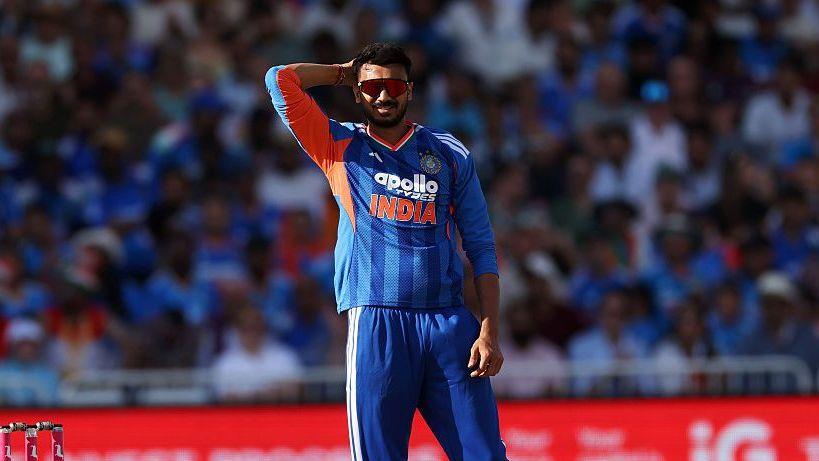 Image source, Getty Images
-
Published
One-off T20, Sano Cricket Ground
India 32-4 (5 overs): Iyer 16 (12); Hara-Hinze 2-17
Japan 30-3 (5 overs): Kadowaki-Fleming 12 (12); Washington 2-13
India won by two runs
World champions India avoided a shock defeat by Japan with a tense two-run win after a wide ball was controversially overturned in the final over.
In the one-off T20, which was reduced to five overs a side, Japan needed eight off the final over after their bowlers had remarkably restricted cricketing juggernauts India to 32-4.
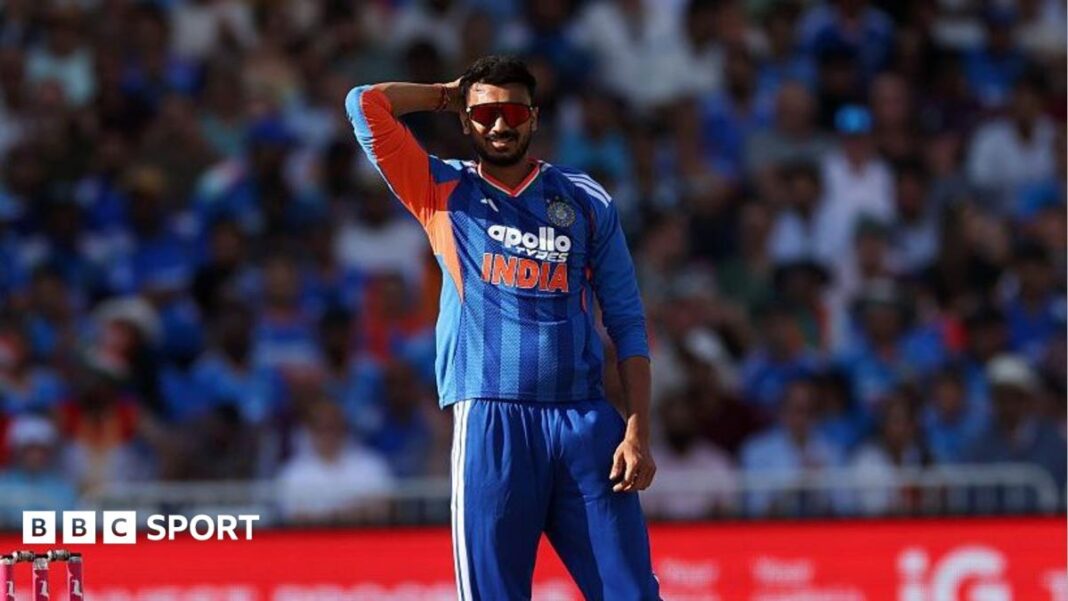
Left-hander Alexander Shirai-Patmore was attempting to reverse-sweep spinner Axar Patel and the ball passed down what would have been the leg side if he had not changed his stance. The umpire signalled a wide.
After the umpire’s signal, Axar was visibly frustrated with the decision and disputed the call alongside captain Shreyas Iyer.
The two umpires had a discussion after India’s complaints and the decision was overturned, significantly taking the equation to six runs needed off three balls instead of five off four.
Axar then closed out the over to finish with figures of 0-7 off two overs and Japan finished agonisingly short on 30-3.
In white-ball cricket, any delivery bowled down the leg side is usually called a wide, but the ICC’s playing conditions for men’s T20 internationals state a batter loses those privileges from the moment he or she changes the position of their hands or feet to play a reversed shot.
Essentially, if a reverse sweep is attempted, the guidelines say both sides of the wicket should be treated as the off side.
This suggests the correct decision was reached eventually, but the incident has gained attention for how it was overturned despite there being no decision review system (DRS) in place for the match.
The preamble for the playing conditions also refers to the “spirit of cricket”, with “accept the umpire’s decision” listed as one of these points, although this is not one of the game’s laws.
It was an agonising near-miss for Japan, who had struggled early on in their chase as they stuttered to 8-2 after two overs before taking 17 off the next two, which kept them in contention before the dramatic finale.
With the ball, they were led by 17-year-old spinner Charlie Hara-Hinze who took 2-17, including the wicket of destructive opener Abhishek Sharma first ball, before Shreyas’ 16 off 12 balls provided some relief from his side being 14-3.
It was the first time the teams had played each other internationally because Japan have never reached a T20 World Cup, and the game was played in preparation for the men’s Asian Games which start on 24 September.
Earlier, India cruised to victory in the women’s Asian Games final as they thrashed Sri Lanka by 147 runs.
-
-
Published28 August

-