
King’s role is not policy making, says Palace in slavery apology row
-
Published
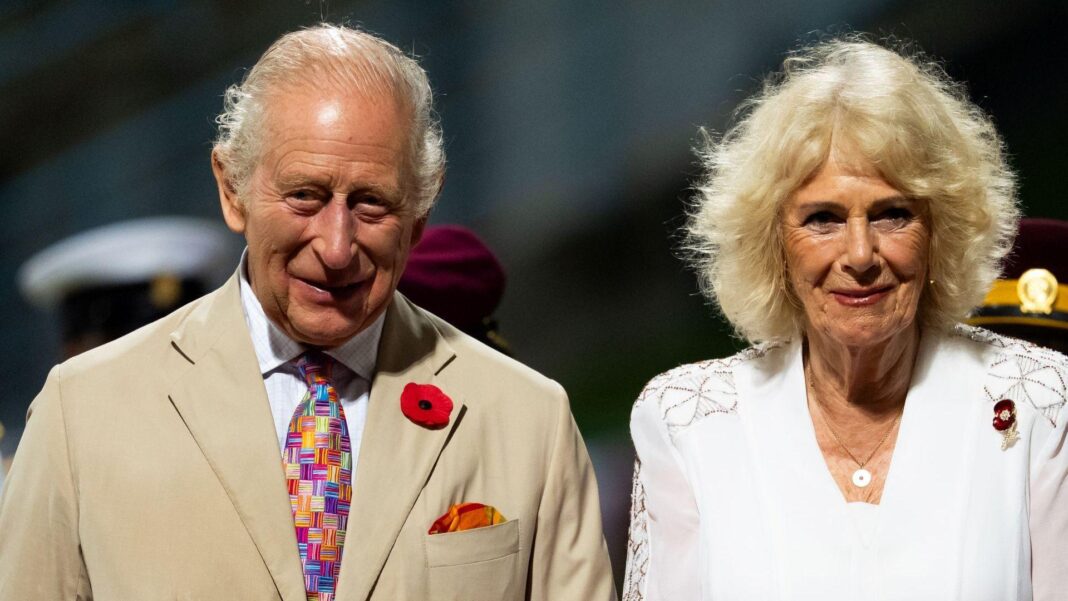
The King’s role as head of the Commonwealth is about “inspiring and convening, rather than policy making”, says Buckingham Palace – distancing him from rows over whether the UK should apologise and make reparations for its part in the Atlantic slave trade.
The Palace statement clarifying the King’s non-political role in the Commonwealth comes as the organisation’s leaders gather for a summit in Antigua and Barbuda.
The King is to deliver a speech on Tuesday which is expected to recognise the painful legacy of slavery. But his speech will reflect the position of the UK government.
UK Prime Minister Andy Burnham had suggested there could be some form of apology over slavery, but has ruled out financial reparations.
The British government has never formally apologised for slavery or offered to pay reparations.
On Saturday, the prime minister said that the UK “must face up to the past” over the “brutal and barbaric violation” of the slave trade, and that he was “open” to the possibility of a formal apology.
But on Monday, his official spokesperson said that while Burnham had “expressed his sorrow and regret for the pain and suffering caused by the transatlantic slave trade”, this was “distinct from a formal apology”.
Burnham thought it was “right that a formal apology is discussed properly with the countries and communities most affected”, his spokesperson said.
“An apology of this significance should be informed by the people and countries most affected,” they added.
Meanwhile Foreign Secretary Ed Miliband said the UK was “self-confident enough to have this conversation”.
“The dialogue we’re setting up will consider whether and how a formal apology could help acknowledge the history, help heal the division and support stronger relationships for the future,” he said.
Conservative Party leader Kemi Badenoch has rejected “endless talk about apologies” as a “distraction” from solving the UK’s current problems.
Gaston Brown, Prime Minister of Antigua and Barbuda, the country which is hosting the Commonwealth gathering, says that the consequences of slavery “have not disappeared with the passage of time” and wants to discuss reparations.
Whichever way the King’s speech addresses the subject of slavery will be a political decision.
On previous occasions, the King has used strong language, such as talking about his “greatest sorrow and regret” at the “abhorrent and unjustifiable acts of violence” of the colonial era on a visit to Kenya.
And in Antigua he is expected to voice his “sincere sorrow”, having spoken about the “great suffering of the past” in the Bahamas last week.
But any formal apology and any action on reparations on behalf of the UK would be a decision for political leaders – and the statement from the Palace defuses any expectation of such an intervention.
Instead the Palace sets out the King’s role as a unifying figure above such divisions, with the Commonwealth described as a “family” of nations.
The King’s “most significant contribution has been helping to connect leaders, institutions and investors – many of whom he knows personally from his many years of international diplomacy”, says the Palace.
And that relates to “shared areas of interest and concern, creating the conditions in which ambitious Commonwealth-led initiatives can emerge and succeed”.
It’s a view of a positive and collective approach of the King’s role in the Commonwealth, bringing together politicians with business leaders, philanthropists and civil society.
-
King to address slavery in Antigua as PM says he is open to possible UK apology
-
Published16 hours ago
-
-
King acknowledges ‘suffering of the past’ as Caribbean tour begins
-
Published5 days ago
-
-
King visits Guyanese slave rebellion site on Caribbean tour
-
Published2 days ago
-

Sign up here to get the latest royal stories and analysis every week with our Royal Watch newsletter. Those outside the UK can sign up here.