
When life seems to unfold as we’ve planned, our expectations are validated. We relax, and might even stop worrying about the future and believe that we’ll just sail through life without any large obstacles. And then, out of the blue, we’re taken down by a major disruption. It could be an unexpected firing, a debilitating illness, a death. Whatever it is, life as we’ve known it suddenly changes. We’re stopped in our tracks.
Now what?
After the event, the mind spins. Dozens of possibilities flood in at a time when it’s hard to think. Fear, grief, anxiety, sadness — so many unwanted emotions loom. The desire to circumvent them is strong but pushing them aside and pretending everything is fine doesn’t really work.
When our world shatters, it feels as if a gap opens. We not only lose our assumptions, but we may also lose our sense of identity. How do we reclaim ourselves and reconstruct who we are?
Finding Your Way Through Loss And Uncertainty
When a major disruption does break your life open, rebuilding can be overwhelming. So why not spend this transitional time experiencing the loss itself and exploring the possibilities opening in front of you?
It’s hard to think of major losses such as the death of an important person or the loss of capacity due to illness as a gain. Yet, the ability to live after such devastating loss is an achievement, and how we approach that offers benefits that can’t be felt at once.
Personally, it took me a long time to find any benefit in my own major losses until I began to discover how to live again. The deaths of my two husbands shattered my life and broke me open. Twice I’ve had to rebuild my life in new ways and let go of all my expectations, plans, and projections into the future. I’ve processed loss and discovered wholeness as a result.
When something ends, it’s useful to spend some time experiencing the finality of it. When we find ourselves teetering on the edge of an abyss, we don’t have to do anything. What would be most helpful, and the thing we resist the most, is to just sit. Stay here, right here, right now.
Silent contemplation offers some spaciousness in which insights can be found. Choosing not to do something is hard because we often believe that keeping busy is the best antidote to uncomfortable emotions. Distraction is useful sometimes, but simply waiting quietly and opening to whatever arises is beneficial.
Learning to sit comfortably in the seat of uncertainty is challenging, but it’s equally rewarding. Sitting in this discomfort opens a portal, leading to what’s hiding in wait just underneath uncertainty.
How To Move Forward After A Major Life Disruption
While navigating this uncertain terrain, allow yourself to:
- Ponder how the event came about. The questions of “What if” and “If only” are real, even though there’s no way to change what has ended. Yet, allowing yourself time to explore these questions, giving them some voice, it becomes easier to set them aside. Pretending you’re not affected is unrealistic. Giving space for these questions to arise, along with doing a little reality testing to finally release them, is a good idea. Releasing them (as much as you can) creates space for something new to enter.
- Grant yourself plenty of self-care.Fear, depression, frustration, and feeling stuck are common feelings after a major change. One way to deal with these uncomfortable obstacles is to apply some really good self-care. Take a nap, read a book, watch a silly movie or a show that’s distracting. Go for a walk and see if you can walk off whatever is holding you back.
- Find opportunities for growth.When life “falls apart” ask yourself, “How can I grow from this experience?” Consider how things were before the disruption. What was good about that time? Are there important lessons, ideas, or specific things you learned that you could bring forward with you? By dwelling on the past for a while, you can uncover and gather the seeds for how you want to live now and in the future.
Inside that liminal space of unknowing, figuring out how to navigate it leads to more than just surviving. Beginning to consider what might help you flourish in the future can begin to heal how you feel about what has ended. If nothing else, some time will pass between feeling as if you’re unable to move and seeing a light ahead of you that might lead you in a new direction.
Author Bio
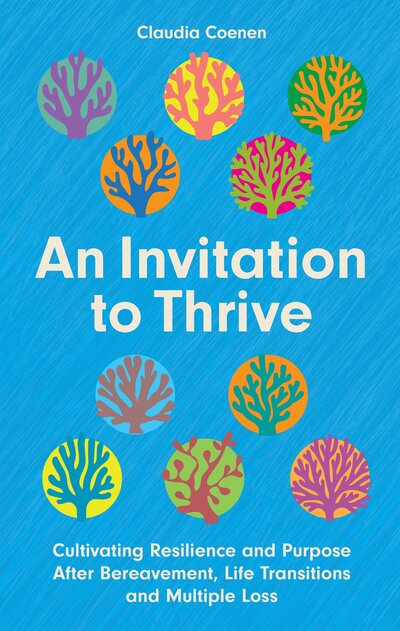
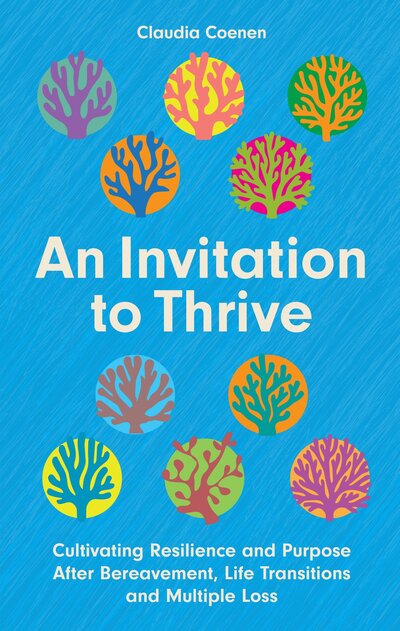
 Claudia Coenen is a grief counselor and Fellow in Thanatology. She presents internationally on resilience, grief, and posttraumatic growth. She has authored three previous books and developed tools to help people in their grief. Her new book is, An Invitation to Thrive: Cultivating Resilience and Purpose After Bereavement, Life Transitions and Multiple Loss (Jessica Kingsley Publishers, Nov. 19, 2026). Learn more at www.thekarunaproject.com.