
This post was originally published on this site.
Before going further into the museum, I stop at a photograph of a woman hanging on the wall. I continue to see her image, reappearing throughout the galleries like a thread you keep finding in the weave. Her name is Maria Solares, I learn. In the early 1900s, she was one of the last fluent speakers of Sʰamala. Between 1914 and 1915, she worked with linguist John Peabody Harrington, sitting for sessions that produced wax cylinder recordings of the languages and more than 100,000 pages of notes. The language survived because she sat in that room and spoke. “She’s my five-times great-grandmother,” Cogorno says, matter-of-factly. “Many of our volunteers are also descendants of Maria.”
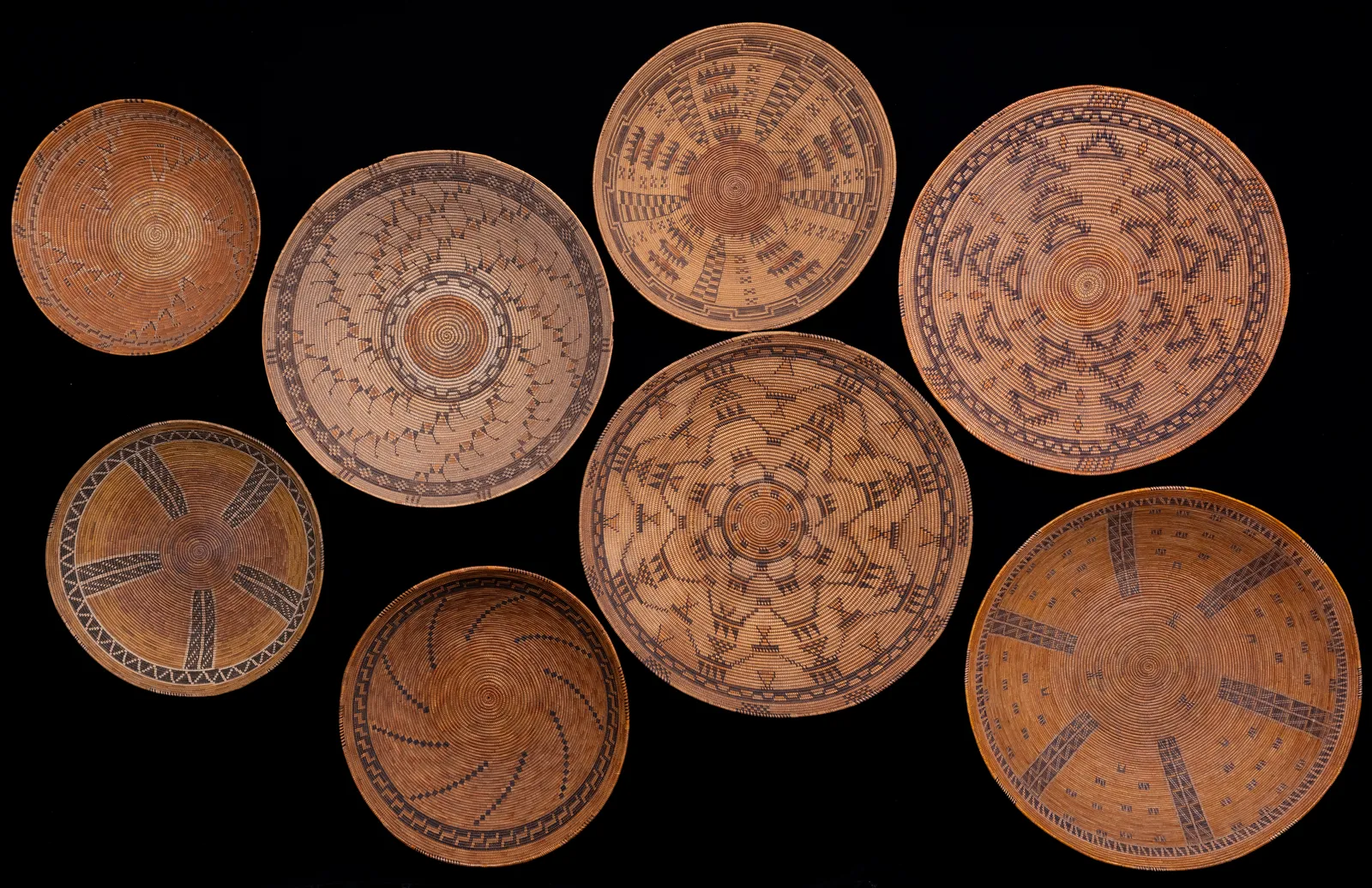
The permanent galleries are accessed off the ‘ap lobby area through a set of iron doors whose design, Cogorno mentions, was made by her aunt. Inside, the ceiling rises and the light changes, cooler, darker. The exhibit moves through the Chumash cosmology of three worlds—Upper, Middle, and Lower—stacked like basket trays. Most of what surrounds me is the Middle World, the et ya shoop (“here world”) display.
Cases hold stone tools, hunting materials, and abalone ceremony regalia. Paintings that line the walls show figures fishing, gathering, and paddling. The objects in the cases mirror what the figures carry. I stop at a case of abalone shells, cut into jewelry and adornments, and polished to a high shine, almost iridescent under the gallery lights. “My cousin made those,” Cogorno says. Nearby, there’s a swordfish headdress with intricate shell work—her aunt, who cast the door handles at the entrance, made that, too.
In the Upper World gallery, a taxidermied California condor has her own case, her own story. In 1986, when only 27 California condors remained on earth, she was the last wild female of her species before she was captured, then put into a breeding program. Because of this, she raised the next generation and was released with them, teaching the young birds, somehow, to be condors in a world that had nearly erased them. Nearby, a painting depicts the Condor dance, one of the newer dances in the Chumash tradition.