
This post was originally published on this site.
Sir Stephen Fry has launched a £100,000 personal injury claim against the organisers of a major London technology conference, in a case that should give every events business and SME conference organiser pause for thought on public liability and venue safety.
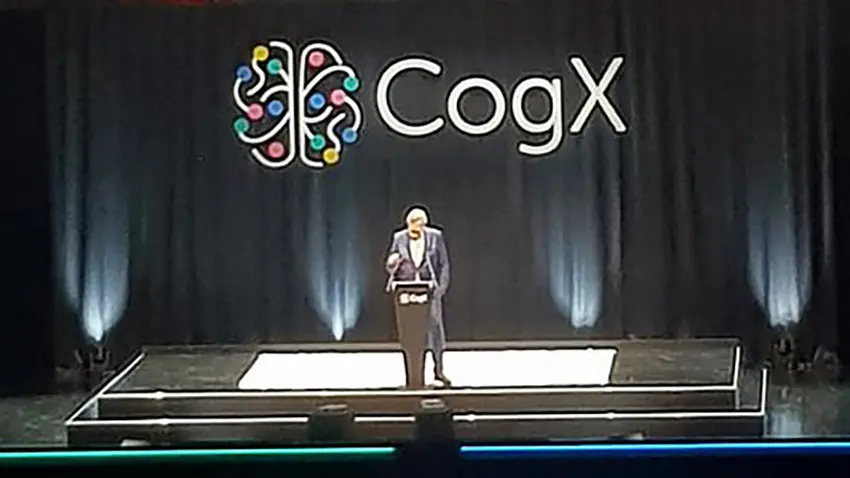
The 68-year-old broadcaster and author is suing CogX Festival Ltd and creative agency Blonstein Events Ltd after he fell roughly two metres from the stage at the O2 Arena in September 2023, sustaining multiple fractures to his right leg, pelvis and ribs. Court documents lodged on his behalf reveal that Sir Stephen had just delivered a keynote address on artificial intelligence when he stepped off the stage into what he later described as “nothing but a six-foot drop onto concrete”.
The legal filings allege that the incident “was caused by the negligence and/or breach of statutory duty of the Defendants, its servants or agents, in failing to ensure that the stage and backstage area were safe, adequately lit and properly protected to prevent a fall from height”.
Keith Barrett of Fieldfisher, the law firm acting for Sir Stephen, said: “It’s very unfortunate that court proceedings were necessary, but the Defendants do not accept Sir Stephen’s account of events, and we have had to ask the court to determine who is responsible for his injury and losses.”
A spokesman for CogX said the company was “unable to comment while the legal process is ongoing”, adding that the team had been “deeply concerned” when the accident occurred and continued to wish Sir Stephen a full recovery. Blonstein Events Ltd, meanwhile, struck a more combative tone, stating that no court proceedings had yet been served and that both the company and its insurers were “confident that our defence will be successful as we were in no way responsible for this incident”.
The case lands at a delicate moment for Britain’s £70 billion business events sector, which has worked hard to rebuild bookings since the pandemic and is now under renewed scrutiny over duty-of-care obligations to speakers, exhibitors and delegates. For the thousands of SMEs that operate within the conference, festival and corporate hospitality supply chain, from production houses and staging contractors to venue managers and creative agencies, the dispute is a sobering reminder of how quickly a flagship event can turn into a balance-sheet liability.
Under the Health and Safety at Work etc. Act 1974 and the Work at Height Regulations 2005, organisers carry a clear statutory duty to assess and mitigate fall risks on raised platforms. Public liability cover for events of this scale typically starts at £5 million, but legal costs, reputational damage and the disruption of a contested claim can dwarf any insurance pay-out. Industry insurers have been warning for some time that premiums are hardening, particularly where risk assessments, lighting plans and edge protection are not properly documented.
Sir Stephen, who relied on a walking stick for several months after the fall, told BBC Radio 2’s Claudia Winkleman in December 2023 that he considered himself fortunate. “The person treating me told me he was treating a patient who had fallen on the same day as me, half the distance, and would never walk again. So I really praise my lucky stars. If it had been the spine or the skull, who knows.”
Greenwich Council confirmed at the time that it had been alerted to the incident and was considering whether to open a formal investigation. The outcome of the High Court action, and any regulatory follow-up, will be watched closely by event organisers, venues and their underwriters.
For SME operators in the events space, the message is unambiguous. Robust risk assessments, certified edge protection, properly briefed stage management and watertight contractual indemnities between principal contractors and sub-contractors are no longer nice-to-haves. They are the difference between a profitable event and a six-figure claim.