
This post was originally published on this site.
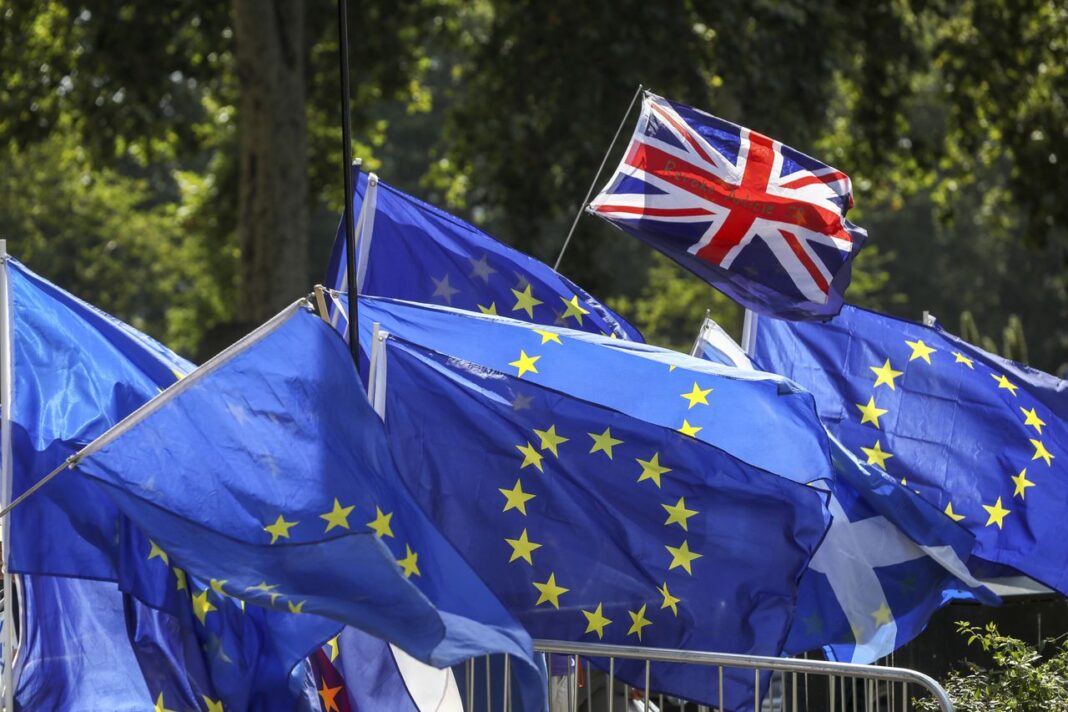
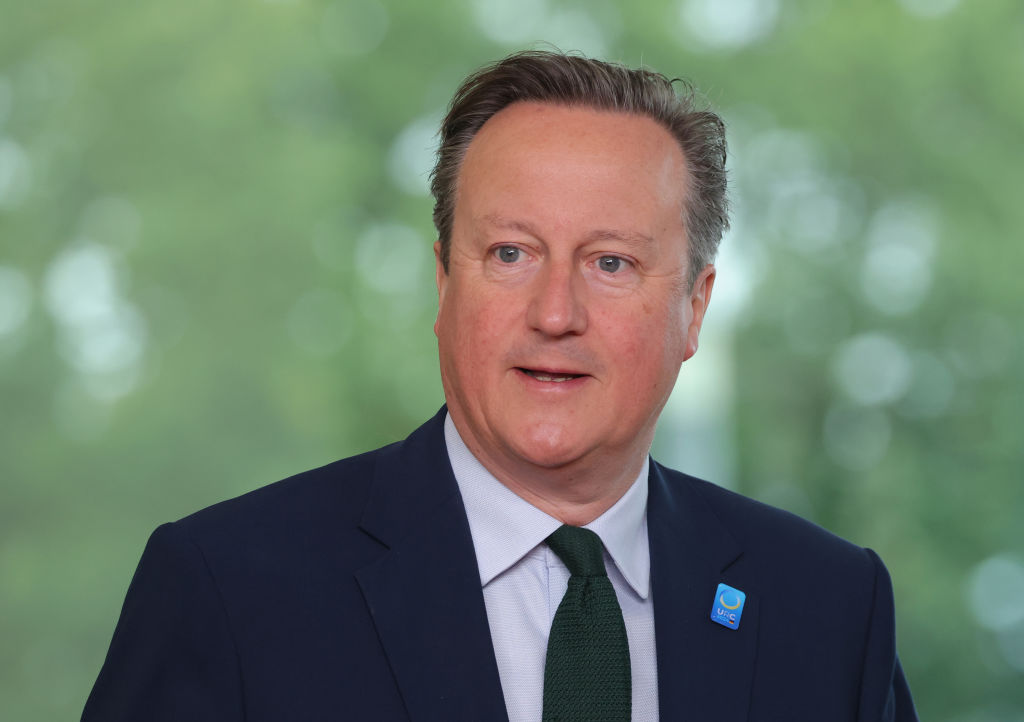
In January 2013, the then-prime minister David Cameron announced that there would be a “very simple” referendum on whether Britain should stay in or get out of the European Union. The result would draw a line under the whole issue for a generation, he said, so that we, and in particular his party, could all stop “banging on” about it. As the tenth anniversary of the Brexit referendum approaches in June of this year, we might all now reflect on just how simple the whole thing proved to be and how joyful it is that everyone has much better things to talk about.
That reflection would at least help us appreciate that God does indeed have a sense of humour. The process of leaving the EU and judging its consequences has turned out to be anything but simple, of course, and the conversation about our membership of the EU has not ended – in fact, in recent months it has all been rather stirred up again.
(Image credit: Thierry Monasse/Getty Images)
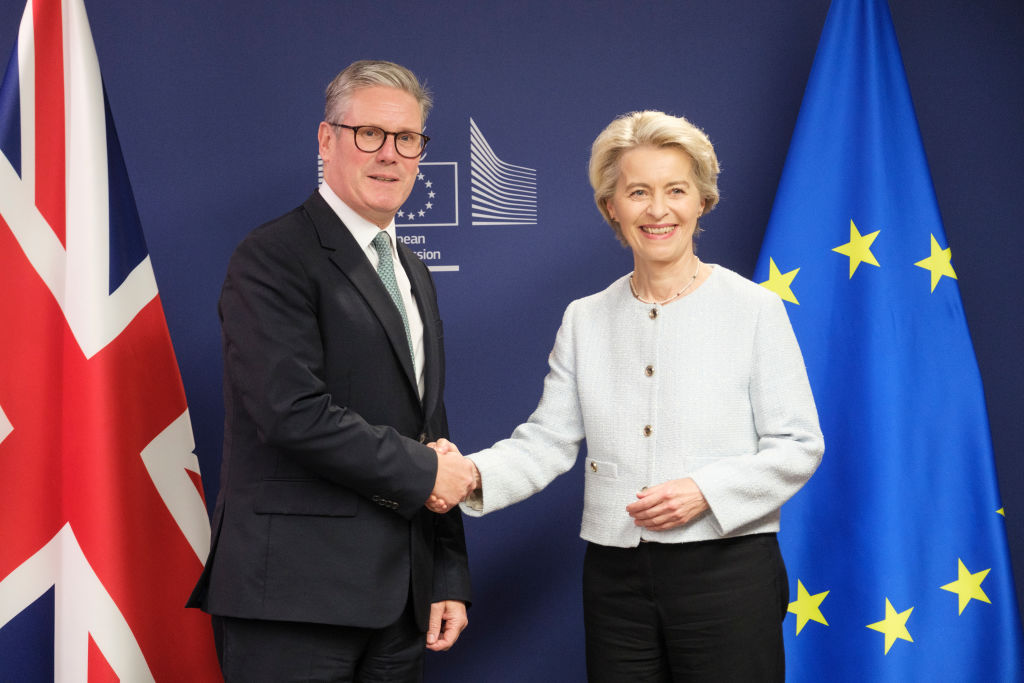
Prime minister Keir Starmer is exploring a deal that would align Britain with the EU’s single market for goods under his EU “reset” plans. He had already signed agreements to align with the bloc’s rules on food standards and carbon emissions. The latest plan would force British manufacturers to comply with hundreds of EU regulations, says The Telegraph, without having any say in how they are shaped. It would, in effect, return Britain to something like the “backstop”, the former prime minister Theresa May’s attempt to lock Britain into EU rules to avoid a hard border in Ireland. That idea was repeatedly defeated by MPs and ultimately scrapped by Boris Johnson when he became prime minister. The difference is that rejoining the customs union has been ruled out, to avoid breaking manifesto commitments and protect trade deals with India and the US.
Sign up to Money Morning
Don’t miss the latest investment and personal finances news, market analysis, plus money-saving tips with our free twice-daily newsletter
Don’t miss the latest investment and personal finances news, market analysis, plus money-saving tips with our free twice-daily newsletter
The cost to Britain of Brexit
Those on one side of the Brexit wars – and even some of those in the opposing camp – will say that this is all to the good, at least in principle, as very clearly something had to be done. Brexiters at the time of the referendum argued that disentangling from the EU would unlock long-term economic potential as it would free British policymakers from EU red tape and give them more freedom for manoeuvre, as Ryan Bourne, a member at the time of the referendum of Economists for Brexit, said in The Times towards the end of last year. Yet ten years on, “we cannot pretend things have gone well so far” on that score. A review of the data from the National Bureau of Economic Research (NBER) has suggested that GDP per person is 6%-8% lower today than it would have been if Britain had voted to remain in the EU. Business investment is down 15%, and employment and productivity by 3%-4%.
True, the NBER’s study has been loudly mocked. It requires us to believe that if only the vote had gone the right way Britain would have grown four times more than Japan and Germany, almost twice as much as France and Italy, and be performing as well as the US. “If you believe that I have a bridge to sell you,” as Andrew Neil put it on X.
But still, “let’s not kid ourselves”, says Bourne. The facts show that the UK has grown more slowly than Italy, France and Japan, and the microeconomic, firm-level data are “crystal clear” that Brexit had a “significant, depressive impact”. The NBER study showed that the more exposed to the EU a company was, the more likely it was to cut investment and slow hiring in the wake of the referendum. By 2023, average business investment was 12% lower and productivity within firms 3%-4% weaker. Roughly half of firms listed Brexit as a top source of uncertainty for years after the vote.
Such evidence cannot easily be dismissed, whatever your political inclinations. “Brexit did not cause Britain’s growth malaise, but it undoubtedly deepened it,” says Bourne. “Nor did it create our fiscal woes, although it worsened them too. Denial… helps no one.”
Indeed, Brexit was never likely to be a solution to the underlying complaints that provoked it, and “so it has proved”, says Jeremy Warner in The Telegraph. Ten years on, and the economy is in even more of a mess than it was back then. Immigration has “surged”, the public finances are in “a state of ruin”, many public services appear “broken beyond repair”, and voters are “angrier than ever”. This might not be the fault of Brexit as such, but nor did leaving the EU prove to be “the moment of national renewal that its cheerleaders promised”. Nor was it ever likely to be. “Economic salvation seems as far away as ever.”
Edging closer to the EU might be the best way forward
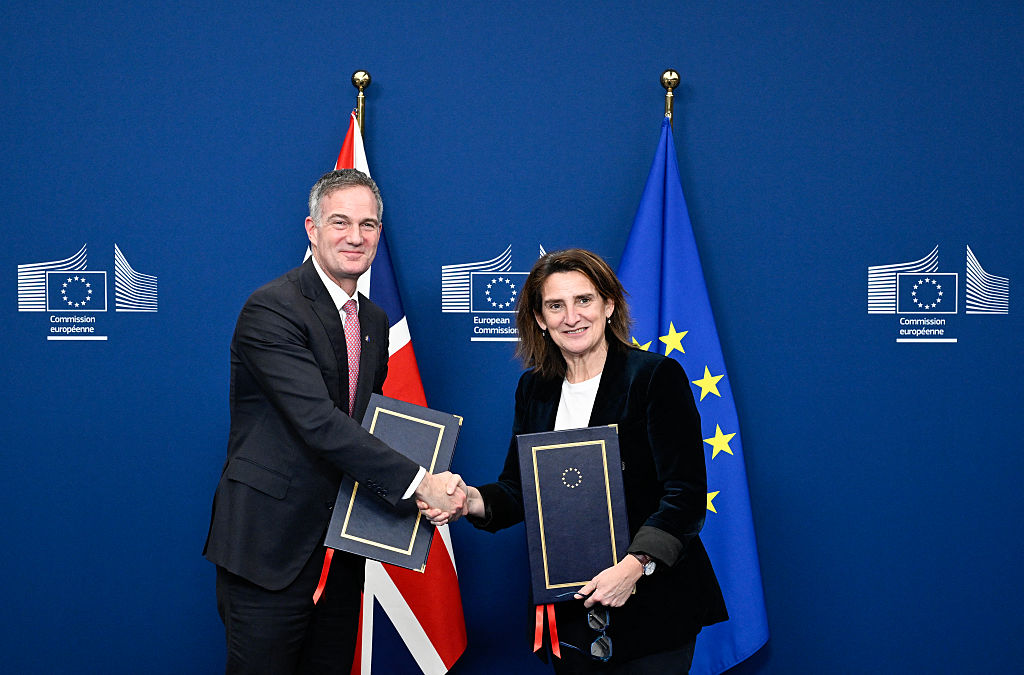
Secretary of State for Business and Trade, Peter Kyle, with EU Executive Vice-President Teresa Ribera
(Image credit: JOHN THYS / AFP via Getty Images)
Brexit remains an issue for a reason. The most obvious impact of the decision to leave the EU was on trade. UK exports since 2019 have been much weaker than in other G7 countries, and trade is an important driver of productivity growth, which in turn is the most important factor in improving living standards. Some of that weakness may be a result of Donald Trump‘s tariffs, but that in itself just goes to show how much the world has changed since the Brexit referendum, as David Smith has pointed out, also in The Times. Tensions with the US and with China show that “dreams of a painless transition to non-EU trade were the wishful thinking of a different age”. The Iran war quickly brought changing global geopolitical realities into even sharper focus and has bolstered the case for closer cooperation with the EU. “It is increasingly clear that as the world continues down this volatile path, our long-term national interest requires closer partnership with our allies in Europe and with the European Union,” as Starmer has said. The opportunity to strengthen security ties and improve economic relations is, says Starmer, “simply too big to ignore”.
That’s surely true, but reversing Brexit – or “resetting” relations – will be easier said than done, as The Economist points out. It would, for a start, be impossible to revert to the pre-2016 status quo. Britain would have to reapply for membership and negotiate its conditions, and would be unlikely to secure the opt-outs it had previously. It would not regain its special budget rebate, for example, and might have to agree to join the euro. The EU has also changed significantly in the interim and there is little desire to reopen a painful debate.
Starmer’s attempts to find pragmatic ways quietly to edge closer to the EU might be the best way forward. The EU is more open than it was to allowing non-members to cherry-pick bits of the single market and “new forms of partial membership, Swiss-style, may seem more acceptable to the EU as it considers its further expansion eastwards”, says The Economist. Different types of relationship with the EU could emerge from the reopening of debates about Norway and Iceland joining, or from forging closer links with the western Balkans, Moldova and Ukraine, which “might suit Britain better than a hard Brexit”.
“In retrospect, the 2016 referendum may come to be seen not to have permanently settled Britain’s place in the European project,” says The Economist. The relationship will keep evolving, sometimes in unpredictable directions. And for the next few years, that is likely to push the two sides closer together, not further apart.”
What David Cameron got right about Brexit
Whatever happens, Cameron was right about one thing. On one level, the issue voted on in the referendum ten years ago was a simple one. Economics is mostly common sense and the issue at stake and the likely consequences should have yielded to some simple logic. Britain was on the doorstep and a member of one of the largest free-trade blocs in the world. Making a decision that would certainly make trade with that bloc more costly and raise barriers would, all else being equal, surely leave Britain worse off.
(Image credit: Sean Gallup/Getty Images)
All else is never quite equal, of course, hence the arguments that Brexit could conceivably give the country more freedom to make better arrangements that would be more conducive to growth. In other words, alongside the fact that Brexit would probably make us worse off there was a judgement to be made about whether Britain’s elite and bureaucracy would in the long run prove more effective than the one in Brussels. A relatively simple matter of judgement on both counts, if ones that have had, as we have seen, some rather more complex ramifications.
There is no point relitigating the matter. We are where we are. But in the years since the vote we might draw two lessons from the experience of Brexit. The first is that Britain’s historical tendency to “muddle through” rather than plan might not be such a bad one, as Paul Cornish, a professor of strategic studies at the University of Exeter, points out in the Financial Times. As Charles Lindblom put it, “Policy is not made once and for all; it is made and re-made endlessly. Policymaking is a successive approximation to some desired objectives in which what is desired itself continues to change under reconsideration”.
What could be more appropriate, says Cornish, in “a time of seeming chronic volatility and complexity, particularly in matters of national strategy and international security”? Breaking free from the EU and setting out alone as “Global Britain” on the high seas of freedom and opportunity might have seemed like a great plan to some and far superior to all the muddling and compromise of EU membership. Following a raid from the pirates of reality, we’re back to the muddling.
“Populists” unwittingly make the case for a stronger Europe
The second lesson is that the EU may be less bad than all the alternatives, as Janan Ganesh puts it, also in the FT. At the time of the referendum, victorious Brexiters were fond of predicting that other countries would soon follow our good example and fall like dominoes out of the EU. A decade on, all of the EU’s 27 other dominoes stand and, despite having entered an “era of ardent nationalism”, no one really wants out of the “supranational club”. If anything, nationalist politicians on the continent go out of their way to reassure voters that they have no intention of leaving. Europeans still trust the EU above their national political systems, and support for the euro has grown.
“Few things are stranger about modern politics,” says Ganesh, but the explanation is not hard to find. Nigel Farage, Vladimir Putin and Donald Trump have all unwittingly helped to make the case for a stronger Europe and have “given a multilateral, technocratic and liberal institution a sense of existential purpose that it was starting to lack”. Moreover, the “debasement of our own political elite” post-referendum has “brought the UK closer to the European experience”. As Labour edges closer to the EU, Conservatives may “scream betrayal”, but “voters shrug”. “Through their comportment in office, Brexiters have forfeited the benefit of the doubt.”
This article was first published in MoneyWeek’s magazine. Enjoy exclusive early access to news, opinion and analysis from our team of financial experts with a MoneyWeek subscription.
Explore More