
This post was originally published on this site.
Who does Iran trade with and what could Trump’s ‘economic D-Day’ mean?
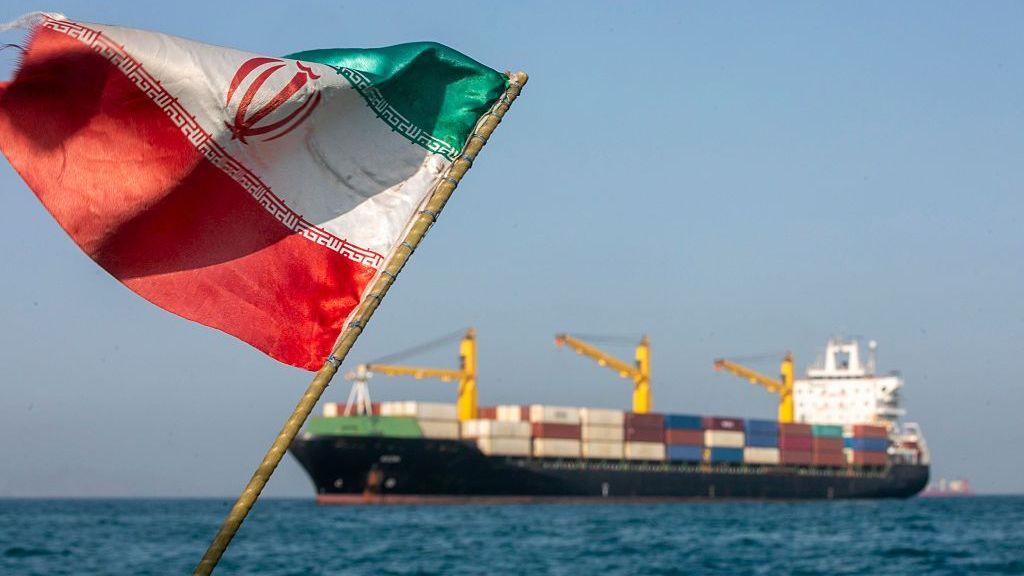 Image source, Majid Saeedi/Getty Images
-
Published
The US has said “the single greatest financial offensive ever” will help it and Israel end their ongoing war with Iran.
However, Iran is no stranger to these tactics.
The regime has faced near continuous US sanctions since the Islamic Revolution of 1979. In that time, it has developed deep trade ties with several countries which either have a history of ignoring US economic pressure themselves or cannot afford to stop trading with Iran.
As a result, Iran says it is “fully prepared” for the new US sanctions and many economists argue the impact of Washington’s latest move will be limited.
So, who does Iran trade with? And could what the US has called an “economic D-Day” have any real impact on Iran?
China
China is the biggest buyer of Iranian goods, making up 26.9% of its exports in 2025, according data from the International Trade Centre (ITC), a subsidiary of the United Nations and the World Trade Organisation.
There a few caveats to ITC’s data, which covers a period before the US-Israel war with Iran began.
First, several economists believe that even before the conflict started, a lot of Iranian oil sales, particularly to China, were underreported for political reasons.
Second, the ITC tallies Iran’s exports using mostly the import numbers reported by its trading partners – owing to the difficulty in getting up to date export data from Iran.
Third, import data for some of Iran’s trading partners, such as Iraq, is incomplete.
Despite this, Iranian trade’s importance to China is clear from its response to the US announcement of “economic D-Day”.
It said that it was firmly opposed to what it called “illegal unilateral sanctions”, that economic pressure tactics would not help resolve problems and that Beijing would safeguard its own interests.
Turkey
Turkey is another large trading partner of Iran, according to ITC data, but it has a much friendlier relationship with the US than China.
This puts it in a challenging position. The US has threatened to punish those who continue to trade with Iran as part of its economic pressure tactics.
However, economists point out that Turkey cannot stop trading with it without significant damage to its economy, which is already struggling with inflation running at 31.8%, according to official data, external.
In short, as the only Nato member to share a border with Iran, Turkey has to balance its relationship with military allies and maintaining a relationship with its close economic neighbour.
Pakistan
Like Turkey, Pakistan borders Iran and is one of its biggest export partners, according to ITC data, while also being keen to maintain a good relationship with the US.
But unlike Turkey, Pakistan’s top export partner is instead the US, meaning it has more to lose from any economic punishment imposed by Washington.
It is also a key mediator in peace talks between the US and Iran, meaning a breakdown in its relationship with either country could make finding a solution to the conflict even more challenging.
The other complicating factor is that not all of Pakistan’s trade with Iran is within the Pakistan government’s control.
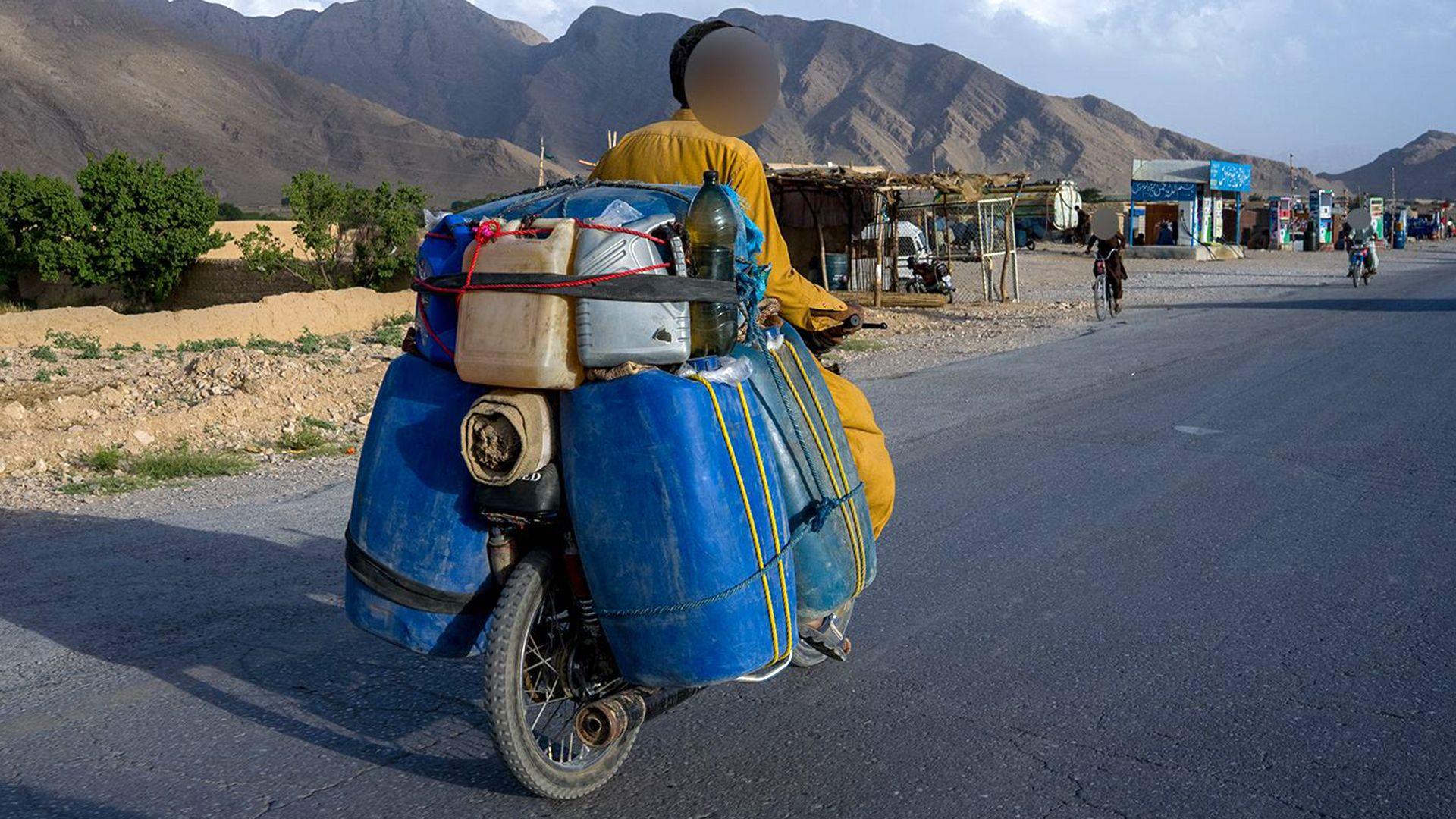
The BBC has seen evidence that oil is being smuggled across the border from Iran to Pakistan en masse by bikers, some as young as 15.
This was the case before the Iran war began, but data suggests the practice has picked up since.
And though the US and Pakistan’s oil firms have pressured Pakistan’s government to clamp down on the practice, it has struggled to police remote parts of the 900km border.
The BBC has previously asked the Iranian government to comment on the allegation that it is involved in the fuel smuggling. It did not respond.
Armenia
Armenia is another major trading partner of Iran, according to the ITC data.
Where it differs the most from others is that its top export partner is Russia, which accounts for 34.9% of all goods sold by Armenia in 2025.
This is despite the fact that Russia has faced sanctions from the US and its allies since its full-scale invasion of Ukraine in 2022.
This suggests Armenia may be willing to continue trading with Iran despite mounting US pressure.
The end result
US Treasury Secretary Scott Bessent said the sanctions against Iran will “tighten the noose and block every potential source of revenue”.
Yet, many experts disagree. Advisory firm Oxford Economics said the direct impact on Iran’s revenues would be “somewhat of a damp squib”.
Ali Vaez, deputy director at the International Crisis Group, said: “Anything that moves in Iran has already been sanctioned by multiple layers of sanctions, in fact.
“So the question now is one of enforcement. Does the United States have what it takes to impose fines and levies on countries that continue to trade with Iran?”
He noted how the US started an economic war with China, Iran’s biggest trading partner, last year but “backed out of it”.
Former senior advisor at the state department Aya Ibrahim said the US’s overreliance on them “incentivises countries to find ways around that system”.
She also raised concerns that the sanctions may have the biggest affect on people, rather than economies, as they “deny people necessities to stay alive”.
Meanwhile, global markets have had a muted response to the announcement.
Global oil prices fell following the announcement, but are still far higher than pre-war levels.
Stock traders were even less moved by the news, with the major indexes of the biggest companies listed in the US, Europe, and Asia barely shifting.
The US will has a way to go before it convinces economists, investors, and the nations trading with Iran that its sanctions threat is to be taken seriously.
Additional reporting by Miguel Roca-Terry
-
-
Published8 hours ago
-