

This post was originally published on this site.
 Getty Images
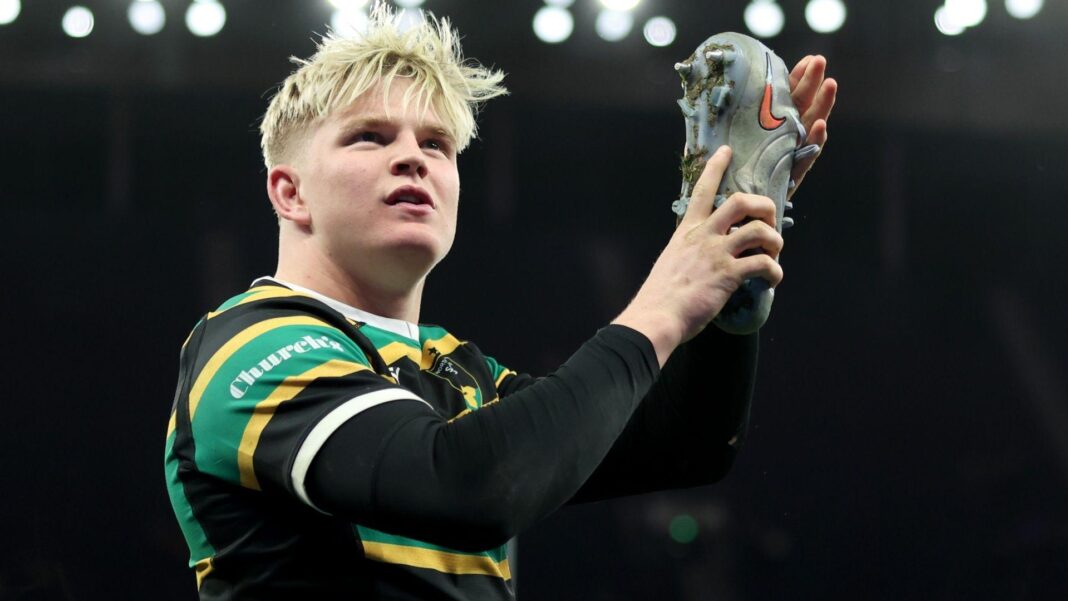
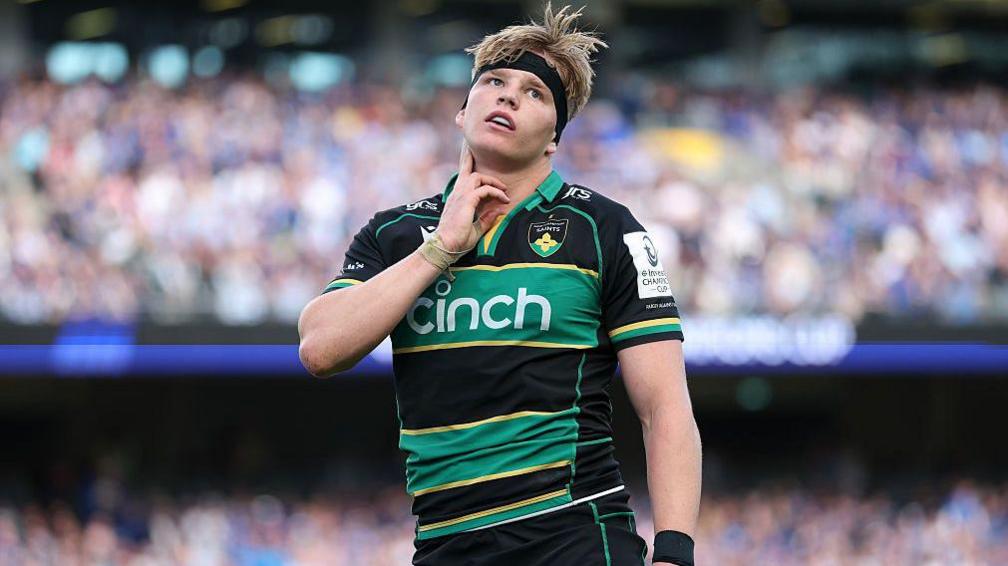
Henry Pollock would like his life to be a little harder.
The supermarket shop could take a little longer, the interruptions on nights out could be more frequent, his selfie-taking finger could get more of a work-out.
“A little bit,” he replied when asked by BBC Radio Northampton how often he gets recognised off the pitch. “But not as much as you probably think.”
The 21-year-old’s rise on the pitch has been fast. Two years ago he was playing in the second-tier Champ with Bedford.
Since then he has won 10 England caps, earned selection for the British and Irish Lions tour to Australia, played in a Champions Cup final and amassed a scorching top-flight highlights reel.
His profile has arguably grown even faster. But not fast enough.
Eddie Hearn, boxing’s Barnum-style promoter, says he believes Pollock can “single-handedly ignite the sport” after signing the Northampton back row to his talent agency.
The BBC is not responsible for the content of external sites.
Allow Instagram content?
This article contains content provided by Instagram. We ask for your permission before anything is loaded, as they may be using cookies and other technologies. You may want to read Meta’s Instagram cookie policy and privacy policy before accepting. To view this content choose ‘accept and continue’.
The BBC is not responsible for the content of external sites.
“We’re going to make sure he’s across all mainstream media,” Hearn told the Times.
“I’m going to make a huge difference to Henry’s profile. You’re going to see him everywhere. You’ll probably be bored of him after a while.”
There is some way to travel to get to that saturation point.
Research by YouGov shows awareness of Pollock runs at 37% of the British public.
For a rugby player, that’s good.
The figure places him joint-second among current players, alongside France captain Antoine Dupont (also 37%) and behind only former England captain Owen Farrell (41%).
However he, and rugby in general, are far behind football. The equivalent recognition figure for Real Madrid and England star Jude Bellingham is 71%.
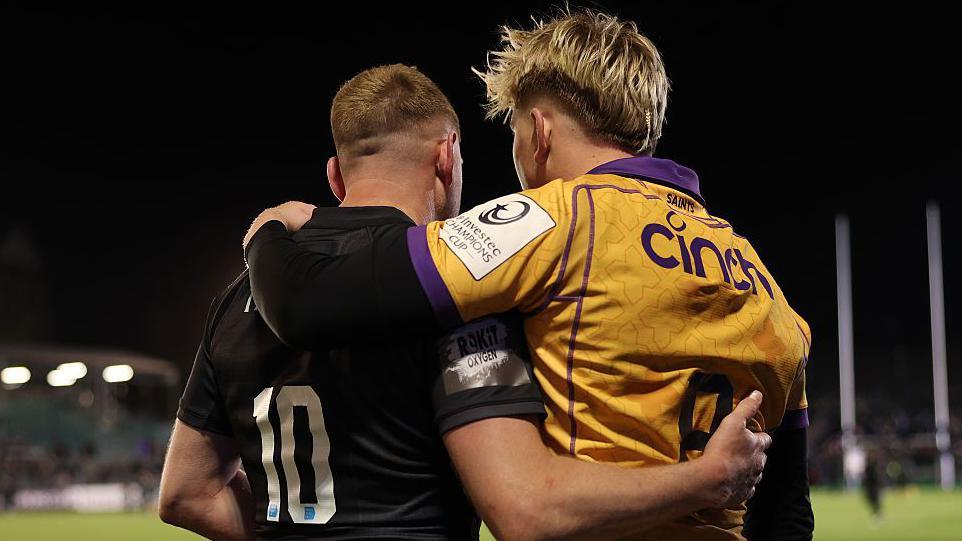
It is a gap Hearn would like to close. Along with Pollock, he has also signed Bath playmaker Finn Russell in the belief that rugby undervalues its individuals.
 Getty Images
“Look at Lamine Yamal over at Barcelona,” said Pollock. “He is only 18.
“We need to spotlight those young stars, those coming through the grassroots, and ultimately the game will grow through that.”
Rugby success spawning mainstream breakthrough names has been patchy.
After skittling tacklers as a 20-year-old at the 1995 Rugby World Cup, Jonah Lomu was linked to the NFL, starred in his own video game and became famous around the world.
Jonny Wilkinson, the steely calm at the centre of England’s success at the tournament eight years later, was similarly stratospheric.
Dan Carter, Siya Kolisi, Brian O’Driscoll, Richie McCaw, Gavin Henson, Sebastien Chabal and Danny Cipriani have also, to varying degrees and for differing reasons, cut through in the modern era.
But they are few and far between.
Chris Thompson is the founder of We Know Rugby, an agency that advises brands on the personalities and commercial properties within the sport.
“There is the perennial challenge of getting big names in people’s eyeballs all year round – and that’s for any sport,” he told BBC Sport.
“International and club rugby are two distinct products each with its own audience and experience and the more they can collaborate, particularly in relation to content, the stronger the sport will become.”
Thompson is hopeful that Pollock and the like will soon have the year-round publicity they need to burn bright.
England’s top flight has pulled in several big investors in the past year, with Red Bull buying Newcastle, Sir James Dyson becoming co-owner of Bath and an offer on the table from a US investor group for Exeter.
A reorganised international calendar has begun with the Nations Championship, a season-long north v south-themed series that culminates in a finals weekend at Twickenham’s Allianz Stadium, aiming to weave a narrative that tempts in more casual fans.
A free-to-air deal for the first two editions of that tournament has been struck with ITV, who also share the Six Nations rights with BBC Sport, maximising audience.
A Club World Cup is in the pipeline for 2028, bringing global stars up against each other in club colours.
As well as a tweak in formats, Thompson sees a change in culture as well.
“I think the response from fans in rugby to Henry Pollock has been genuinely really positive,” he says.
“No-one’s telling him ‘don’t do that’. As long as his performance stays at a high level, people want him to go and express himself and show everyone how he feels.”
Earlier this season, Pollock played away against Bordeaux-Begles.
Northampton’s previous meeting with the French side – in the final of last year’s Champions Cup – had been marked by bad blood and a scuffle, centred on Pollock, after the final whistle.
Pollock was jeered throughout but at the final whistle, as he applauded the Stade Chaban-Delmas, those same fans chanted his name in a show of respect.
Pollock’s fame has been supercharged by viral moments.
His gurning response to the haka in November, his pulse-check try celebration against Leinster last season, his sock-pulling, try-scoring England debut against Wales – the constant in each is an unabashed enjoyment of the game and his own proficiency at it.
To play this video you need to enable JavaScript in your browser.
This video can not be played
Those who already work with him commercially say Pollock has an authenticity and expressiveness that is still rare in rugby.
As part of a generation of ‘digital natives’ who grew up with an instinctive understanding of social media, he has also shown an ability to connect with a young online audience.
Inevitably he was part of England’s youthful chorus line of TikTok dancers in a post that went viral after the team’s win over New Zealand in November.
A self-mocking appearance in a comedian’s rugby skit also did big numbers.
“I’d boo me too,” he posted winningly after more barracking from across the Channel.
Ilona Maher’s genuine and funny content has propelled the United States centre and Olympic medal winner to become the most-followed rugby player ever.
Her example, alongside many more in the women’s game, has shown that, regardless of whether new schedules work out, individual players can keep the spotlight on themselves away from the pinnacle events and long after the final whistle.
Hearn’s promise to leverage expertise from other sports to create new superstars has been made before.
Roc Nation, the talent agency set up by music mogul Jay-Z, has moved into rugby and signed up the likes of Marcus Smith and Ellis Genge with similar aims.
Perhaps now though, the conditions, culture and calendar in rugby are right for making good on such promises.
“There is no better time to not just build fame, but to accelerate it at a pace quicker than any other period in our lifetime,” says Thompson.
“You will absolutely have more stars in rugby because the platforms are there – both on the pitch and online – as long as they are allowed to express their individuality.”
Pollock and Russell have never needed an invitation to do that.


