
This post was originally published on this site.
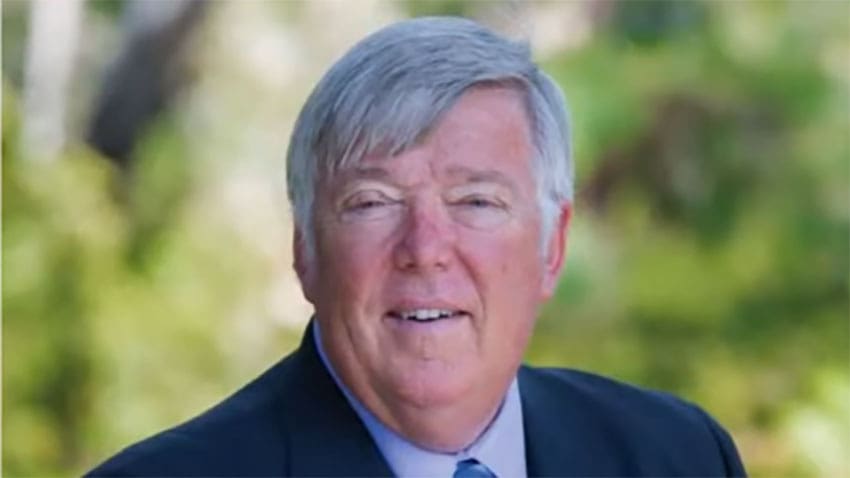
Lee Lorenzen is the founder and CEO of Cluster Solutions, a California-based research and development company focused on clustered water technology.
With a background in biology, pharmacology and biomedical consulting, Lorenzen has spent decades studying the structure of water and its role in hydration and cellular function.
Born and raised in Northern California as one of eight children, Lorenzen developed an early interest in science and the natural world. He earned a Bachelor of Arts from the University of California, Berkeley, before continuing graduate studies in biology at California State University, Fullerton. He also completed advanced graduate work under the supervision of Hoang Van Duc, M.D.
Lorenzen began his professional career in 1974 as a Graduate Instructor in Biology at Chapman College. He later joined the Department of Pharmacology at the University of California, Irvine, as a Research Associate. From 1976 to 1989, he worked in biomedical consulting, gaining experience in research and applied science.
A major turning point in his life came after his wife Stephanie developed serious health issues in the 1980s. The experience led Lorenzen to study water behaviour at the cellular level and eventually develop clustered water technology. In 1989, he founded Cluster Solutions to continue that research and product development.
Over the years, Lorenzen has received several U.S. patents related to clustered water processes, including U.S. Patents Nos. 5,711,950 and 6,033,678. His work has also been recognised by the Microsoft Alumni Foundation for research connected to AIDS and diabetes.
Today, Lorenzen continues to work with physicians, researchers and technical advisers while leading ongoing studies into water structure and hydration science.
Q: What first led you into science and research?
I grew up in Northern California as one of eight children, and I was always curious about how things worked. I enjoyed nature, biology and the outdoors from an early age. That interest eventually led me to study biology at the University of California, Berkeley. Later, I continued graduate studies in biology at California State University, Fullerton.
Early in my career, I worked as a Graduate Instructor in Biology at Chapman College and later as a Research Associate in the Department of Pharmacology at the University of California, Irvine. Those experiences gave me a strong foundation in research and scientific thinking.
Q: What originally sparked your interest in clustered water technology?
The biggest turning point was personal. My wife Stephanie became seriously ill during the 1980s. That experience pushed me to start asking different questions about health, hydration and biological systems.
At the time, I felt there were gaps in the traditional models I was studying. I remember thinking, “Something is missing with this model.” That thought stayed with me for years.
Eventually, I became interested in the structure of water itself and how water behaves inside living cells.
Q: Was there a specific moment when your research changed direction?
Yes. I remember reading work by Nobel Prize winner Albert Szent-Györgyi about cellular water. That research helped connect several ideas for me.
Later, I began studying natural healing springs around the world, including Lourdes in France. I noticed geological similarities in places where people reported unusual water properties. That led me deeper into research on water clustering and molecular structure.
The goal became understanding whether those natural conditions could be reproduced in a stable and controlled way.
Q: You founded Cluster Solutions in 1989. What was your original vision for the company?
The goal was to create a company focused entirely on research and development related to clustered water technology. I wanted a structure where the science could continue long-term.
My role has always been both scientific and operational. I oversee research direction, product development and strategic partnerships. I also stay directly involved in testing and evaluating the technology.
Q: What makes clustered water different from other hydration products?
Most hydration products focus on adding ingredients to water, such as minerals, electrolytes or supplements. Our focus has always been on the structure of water itself.
We study how water molecules organise and how that organisation may affect hydration and nutrient transport at the cellular level. The research is centred on stabilising smaller molecular clusters rather than simply adding substances.
Q: Has it been difficult working in a field that challenges traditional thinking?
At times, yes. When ideas challenge existing assumptions, they are often questioned early on. That is part of scientific history.
You can look at people like Otto Ampferer or Jacques Benveniste. Their work faced resistance before parts of it were revisited later. Even major scientific figures have made incorrect predictions about what was or was not possible.
That does not mean every new idea is correct. But it does mean research should be evaluated carefully and openly.
Q: How do you approach scientific credibility and long-term trust?
Consistency and transparency are very important. I work with physicians, researchers and technical advisers who can independently evaluate results.
I also believe in documentation and long-term testing. Research is not a one-time event. It is a continuous process of refinement, feedback and observation.
Over time, trust comes from staying involved and being willing to answer difficult questions directly.
Q: What challenges have shaped your leadership approach?
Patience has probably been the biggest lesson. Research takes time. Acceptance takes time. You have to stay focused on the work itself rather than short-term reactions.
I have also learned that leadership requires structure. Discovery alone is not enough. You need systems for testing, collaboration and maintaining scientific integrity over many years.
Q: What keeps you motivated after all these years?
Research and development still motivate me. I enjoy solving problems and continuing to learn.
I also value hearing feedback from people who use the products or study the technology. Those conversations often lead to new ideas or new areas of research.
Outside work, I enjoy spending time with my family and grandchildren and being outdoors. That balance is important.
Q: What advice would you give to people pursuing unconventional ideas?
Be prepared for scepticism. Document your work carefully and stay committed to the process.
Many discoveries take years to be fully understood. Patience, persistence and integrity matter more than quick recognition.