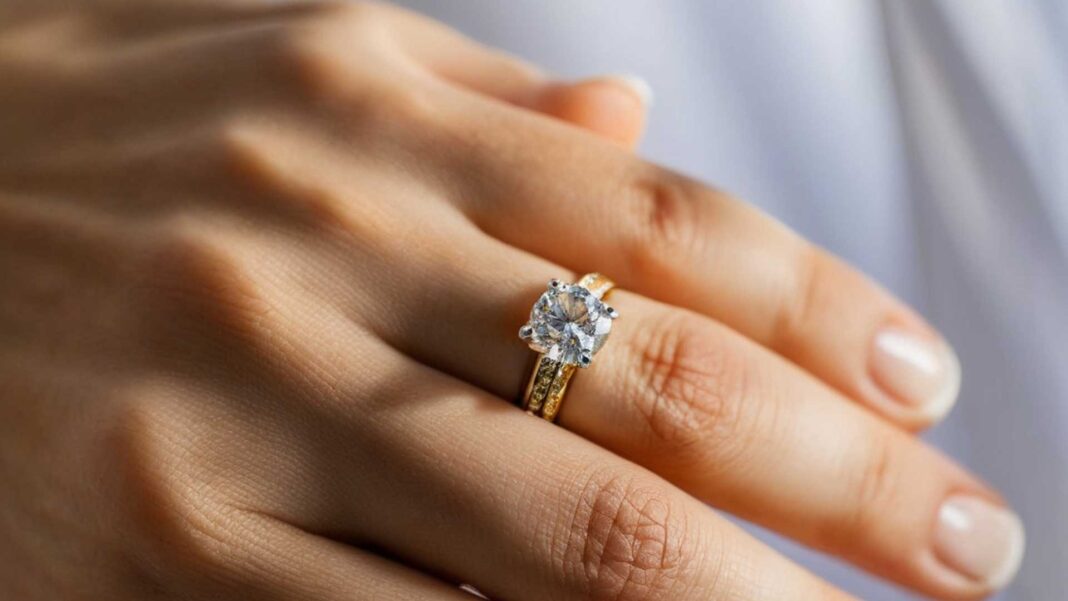

A diamond’s weight is usually the first thing people ask about. One carat, two carats, five carats: the numbers are easy to understand and immediately suggest scale. Yet for anyone buying, owning or assessing an important stone, carat weight tells only part of the story.
A two-carat diamond can be considerably rarer than another two-carat diamond. A three-carat stone may be less exceptional than a smaller diamond with an unusual colour or an exceptionally uncommon combination of characteristics. At the highest end of the market, rarity is not measured simply by size. It is measured by how difficult a stone is to find again.
“Size is one of the most visible characteristics of a diamond, but it is not the same thing as rarity,” says Dov Alter, founder and CEO of Auctentic, a European company specialising in diamonds, coloured gemstones, jewellery and high-end watches. “A large stone can still be relatively commercial, while a smaller natural diamond with unusual characteristics may be much harder to replace. The question is not simply how big the diamond is, but how many comparable stones actually exist.”
That distinction is becoming increasingly important as the diamond market becomes more segmented and buyers become more selective about what they acquire.
Size is only the beginning
Carat weight measures how much a diamond weighs. It does not describe its colour, clarity, proportions, origin or overall rarity. This is why comparing diamonds purely by carat can be misleading. Imagine two natural diamonds, both weighing three carats. One has characteristics that are relatively common within its category and can be matched by other stones on the market. The second has an unusual colour, exceptional clarity or a combination of characteristics rarely found together. On paper, they are the same size. In the market, they can be entirely different propositions. The difference becomes more pronounced as diamonds become larger. Large natural stones are certainly less common than small ones, but size alone does not determine whether a diamond is exceptional. A stone’s rarity emerges from the combination of its characteristics. This is one reason the highest-value diamonds often resist simple comparisons. There may be very few genuinely comparable stones available at any given moment.
The four characteristics everyone knows, but few consider together
The traditional framework for describing a diamond is built around the familiar 4Cs: carat, colour, clarity and cut. Carat refers to weight. Colour describes how much colour is present in a white diamond, with the most colourless stones occupying the highest grades. Clarity concerns the presence of internal inclusions and external blemishes. Cut considers how effectively the stone’s proportions and facets interact with light.
Each characteristic affects value, but their importance cannot be considered in isolation. A high clarity grade does not automatically make one diamond more desirable than another. Nor does a large carat weight guarantee that a stone is particularly rare. What matters is the combination. A natural diamond with a rare colour and unusual size may occupy a very different market from a colourless commercial stone of greater weight. Likewise, an exceptionally well-cut stone may command attention because of its visual performance rather than simply its specifications.
“The interesting stones are often the ones where several characteristics come together in an unusual way,” says Alter. “That is where you start moving away from a standard commercial product and towards something that is genuinely difficult to replace.”
When rarity becomes more important than size
There is a point at which a diamond stops being viewed primarily as a piece of jewellery and starts being considered as an exceptional natural object. At this level, the usual comparison with retail diamonds becomes less useful. A rare natural diamond may attract interest because of an unusual colour, an exceptional combination of clarity and size, distinctive characteristics or a documented history.
In some cases, its appeal comes from something that cannot be recreated simply by producing another stone with similar specifications.This is particularly evident in fancy-colour diamonds. Pink, blue, green and other naturally occurring colours can result from geological processes that are fundamentally different from the characteristics associated with conventional colour grading.
The most exceptional examples are extraordinarily scarce. Here, a smaller stone can sometimes be more remarkable than a significantly larger colourless diamond. For a collector, that distinction matters. The question becomes less “how many carats?” and more “how difficult would it be to find another one?”
Natural scarcity and laboratory production
The growing presence of laboratory-grown diamonds has made the distinction between size and scarcity even more relevant. Laboratory-grown diamonds are real diamonds, but they are produced under controlled conditions rather than formed naturally over geological time. Their ability to be manufactured at scale has created a fundamentally different supply dynamic. A consumer can therefore encounter stones that have very similar physical characteristics but very different levels of natural scarcity.
This does not make one category universally better than the other. They serve different purposes and occupy different markets. But for buyers interested specifically in rarity, provenance and the characteristics of a natural stone, the distinction is fundamental. A natural diamond’s scarcity is ultimately linked to the geological conditions that created it and the limited number of stones that possess a particular combination of characteristics. That is something manufacturing cannot simply reproduce in unlimited quantities.
Why the certificate is not the whole story
A diamond grading report is an essential piece of documentation, particularly for an important stone. It records characteristics such as carat weight, colour, clarity and cut and provides an independent description of the diamond. But a certificate does not, by itself, tell an owner how rare a stone is in the context of the wider market. Two diamonds can receive strong grades and still have very different levels of desirability among specialist buyers. The same is true in other areas of luxury.
A watch’s technical specifications do not necessarily tell you how collectible it is. A piece of jewellery’s weight does not reveal the significance of its maker or provenance. Documentation establishes facts. Expertise is needed to interpret what those facts mean. This is particularly important when a diamond is being valued years after it was originally purchased. Market conditions change, buyer preferences evolve and the availability of comparable stones can shift. A valuation therefore needs to consider the stone as it exists today, rather than simply relying on what it cost in the past.
The difference between expensive and exceptional
There is another distinction that matters at the top of the market: an expensive diamond is not necessarily an exceptional diamond. A stone can be expensive because it is large, because it is set into an elaborate piece of jewellery or because it carries a prestigious retail price. Exceptional diamonds are different. Their value may come from a combination of factors that makes them genuinely difficult to substitute. A rare natural colour, significant size, remarkable clarity, unusual characteristics or important provenance can all contribute. The more unusual the combination, the smaller the potential pool of comparable stones. This can have a direct effect on demand. A commercial diamond can be compared with dozens or hundreds of similar stones. A truly rare diamond may have no direct equivalent available when a buyer is looking. That changes the conversation from price comparison to scarcity.
Why this matters when buying a significant stone
For someone buying an important diamond, the distinction is more than academic. A buyer spending a substantial sum may assume that paying more automatically means acquiring something rarer. That is not always the case. The first step should be to understand exactly what is being purchased and why it commands its price. Is the premium coming primarily from size? From quality? From colour? From provenance? From the design of the jewellery? Or from a combination of characteristics that makes the stone unusually difficult to replace? These questions become particularly relevant at the higher end of the market, where the difference between a very good stone and an exceptional one can be substantial.
The same principle applies to existing collections. A family may own several diamonds accumulated over decades, each accompanied by different documents and acquired at very different moments. One may have been expensive when purchased but relatively easy to replace today. Another may have attracted little attention at the time but possess characteristics that are now much harder to find. Without a proper assessment, there is no obvious way for the owner to know the difference.
Scarcity is ultimately about the next stone
The simplest way to think about diamond rarity is to ask one question: If this stone disappeared tomorrow, how difficult would it be to find another one like it? For a commercial diamond, the answer may be relatively straightforward. There may be numerous comparable stones available. For an exceptional natural diamond, the answer can be very different. Perhaps another stone of the same size could be found, but not with the same colour. Perhaps another stone has the same colour, but not the same clarity. Perhaps a comparable diamond exists somewhere in the market, but it may take years to appear. That is where scarcity becomes meaningful.
“The strongest stones are not necessarily the ones with the biggest numbers,” says Alter. “They are the ones where the combination of characteristics is difficult to reproduce in the market. That is what gives a diamond its individuality.” For owners and buyers of significant jewellery, this is perhaps the most useful way to look beyond the headline figure. Carat tells you how much a diamond weighs. It does not tell you how often nature has produced another one like it. And in the upper reaches of the diamond market, that difference can be worth far more than another carat.