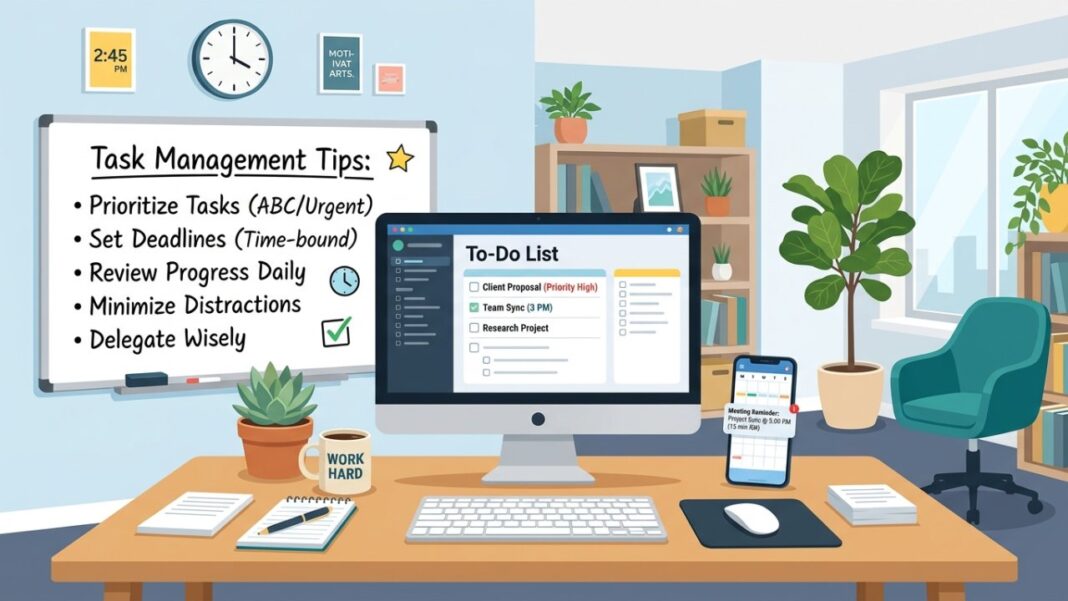

To boost your productivity, start by analyzing how you spend your time. List your daily tasks, then categorize them using the Eisenhower Matrix to identify what’s urgent and important. Next, break larger projects into smaller, manageable goals. Implement time-blocking to create focused work sessions, and don’t forget to use task management tools like Asana or Trello to stay organized. Curious about how to create an organized workspace? Let’s explore that next.
Key Takeaways
- Utilize the Eisenhower Matrix to categorize tasks by urgency and importance for effective prioritization.
- Implement the Pomodoro Technique to maintain focus with structured work intervals and breaks.
- Regularly review and adjust your task priority list to align with goals and stay on track.
- Use task management apps like Asana or Trello for organized task tracking and collaboration.
- Schedule key tasks using time-blocking to ensure dedicated focus on high-impact activities.
How to Effectively Analyze Your Time Usage?
How can you effectively analyze your time usage? Start by keeping a time log, noting your activities in 15-minute intervals. This simple practice helps you pinpoint peak productivity times and identify tasks that eat up excessive time.
Regularly assess your time management strategies; you might find patterns, like mid-afternoon slumps, that allow for better scheduling. To enhance your analysis, utilize time tracking tools. They provide insights into how you allocate time across tasks, revealing areas needing improvement.
Additionally, consider using the Eisenhower Matrix to categorize your tasks by urgency and importance. This method helps you focus on high-impact activities first.
How to Prioritize Tasks for Maximum Impact?
Prioritizing tasks effectively can transform your productivity and help you focus on what really matters. Start by utilizing the Eisenhower Matrix to categorize tasks into four quadrants based on urgency and importance. This helps you identify what requires your immediate attention.
Next, implement the ABC prioritization method: assign ‘A’ for high-impact tasks, ‘B’ for medium, and ‘C’ for low-impact. This streamlines your daily focus.
Adopt the “two-minute rule” by completing any task that takes less than two minutes right away, preventing distractions from piling up. Regularly review and adjust your priority list to align with your current goals and deadlines.
Finally, tackle the most challenging tasks first each day, following the principle of “eating the frog” to build momentum. These task management techniques will guarantee you focus on what leads to maximum impact.
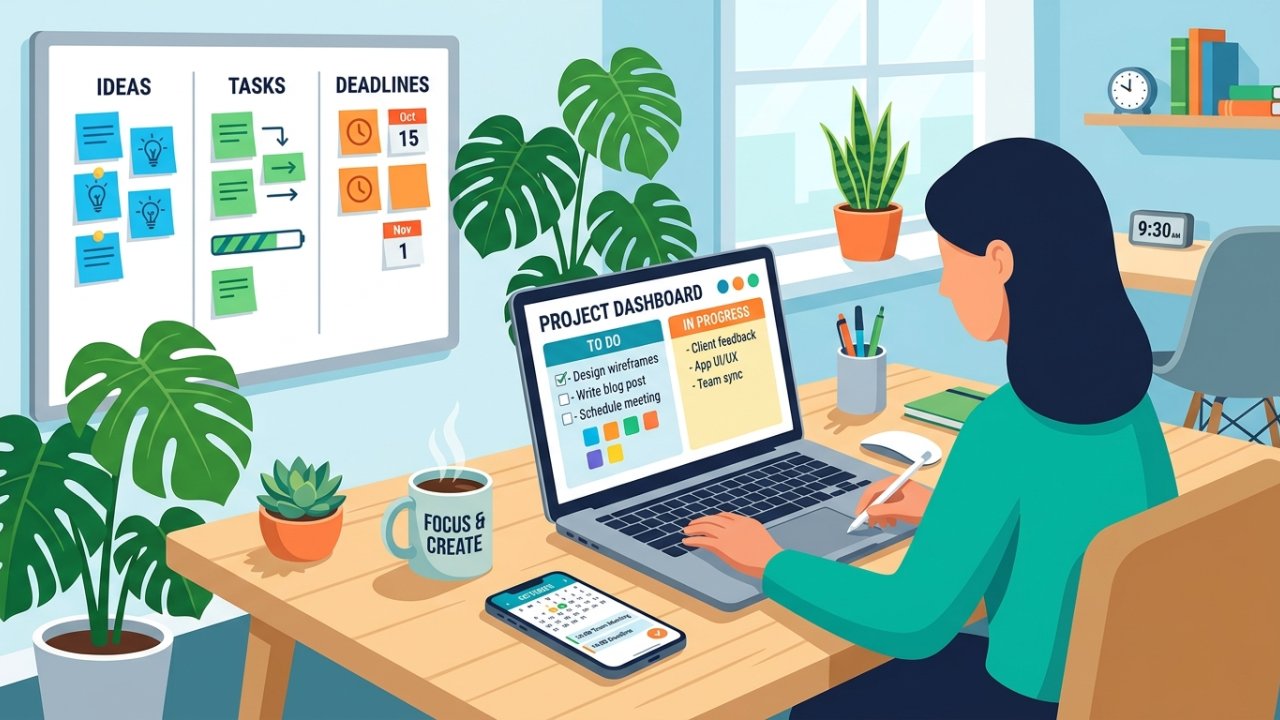
Effective task management relies on the right tools to streamline your workflow and boost productivity. Start by using task management apps like Asana, Trello, or Todoist. These tools help you create, prioritize, and track tasks visually, keeping your projects organized.
Incorporate the Pomodoro Technique by using timers or dedicated apps to work in focused 25-minute intervals, followed by short breaks, to maintain your productivity.
Don’t overlook time tracking tools like RescueTime or Toggl; they let you monitor how much time you spend on various tasks and help identify inefficiencies.
For team projects, collaboration platforms such as Slack or Microsoft Teams facilitate seamless communication and task assignment.
Finally, set up automated reminders in your calendar or task management apps to guarantee you meet deadlines and don’t overlook important tasks.
How to Create an Organized Workspace?

An organized workspace makes a significant difference in your focus and productivity. To tackle clutter, start with the “Keep, Give Away, Toss” method. This helps you prioritize essential items, reducing distractions.
Ask yourself, “How can I organize my daily tasks better?” Use labeled storage solutions like bins or file folders to streamline your workflow. This way, you won’t waste time searching for documents or supplies.
At the end of each day, dedicate a few minutes to tidy up. This simple habit can boost your motivation and prepare you for the next day’s challenges.
Additionally, personalize your workspace with motivational items or plants. These can improve your mood and creativity, enhancing your productivity by as much as 15%.
How to Optimize Your Daily Schedule for Peak Productivity?
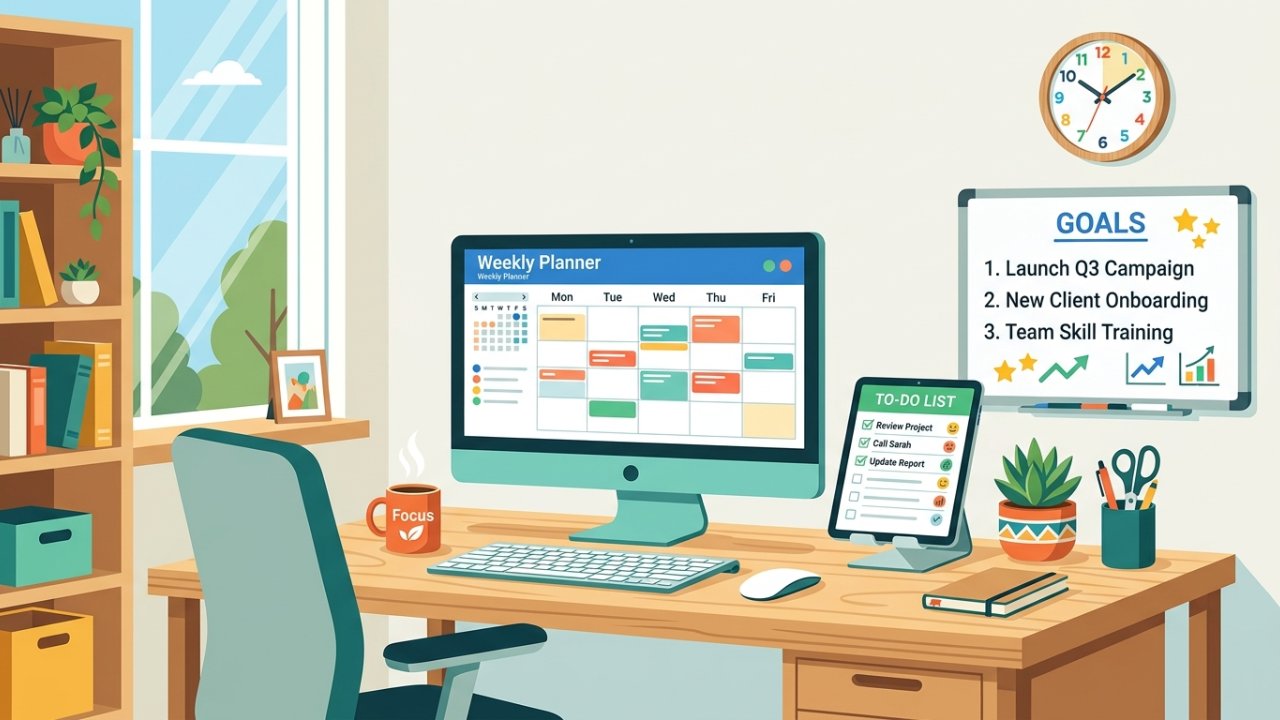
To optimize your daily schedule for peak productivity, start by identifying 1-3 key tasks that align with your goals and prioritize them.
Then, use time-blocking techniques to allocate specific periods for focused work, and don’t forget to schedule breaks strategically to recharge your mind.
Prioritize Key Tasks
When you prioritize key tasks, you set yourself up for a more productive day. Start by identifying high-impact activities that align with your goals.
Use the Eisenhower Matrix to categorize tasks by urgency and importance, so you focus on what truly matters. Implement the “Two-Minute Rule”—if a task takes less than two minutes, do it immediately to reduce clutter.
Set dedicated time blocks for deep work, minimizing distractions from less critical tasks. Regularly review and adjust your task list based on deadlines, ensuring you tackle urgent items first.
2. Schedule Breaks Strategically
Scheduling breaks strategically can significantly enhance your productivity throughout the day. Start by using the Pomodoro Technique: work for 25 minutes, then take a 5-minute break. This helps you focus and prevents burnout.
After completing more intense tasks, incorporate longer breaks of 15 to 30 minutes to recharge your mental energy. Research shows that taking short breaks every hour boosts concentration and creativity, making your output more effective.
Plan these breaks during your peak productivity times, especially after tackling challenging tasks. By scheduling breaks strategically, you not only manage your time better but also maintain a balanced workload, reducing feelings of overwhelm and keeping you refreshed for your next challenge.
3. Utilize Time Blocking
Utilizing time blocking can transform your daily schedule into a powerful tool for productivity. By dividing your day into specific segments dedicated to particular tasks, you can focus your energy effectively.
Start by identifying your peak productivity hours and assign challenging tasks to those times. This method minimizes distractions, creating dedicated periods for deep work and reducing task-switching, which can enhance productivity by up to 30%.
Regularly review and adjust your time blocks as needed, based on completed tasks and shifting priorities. For example, if you finish a task early, don’t hesitate to use that time for another important activity.
With time blocking, you’ll find clarity and efficiency in your daily routine, making your work more manageable.
How to Delegate Wisely for Greater Efficiency?

Effective delegation can greatly boost your team’s efficiency and help you focus on what truly matters. Start by identifying tasks that don’t need your specific skills. Communicate clear expectations, deadlines, and desired outcomes to your team members. This clarity guarantees they understand their roles.
Use tools like Asana or Trello to track delegated tasks. This adds transparency and accountability, keeping everyone aligned. Foster skill development by delegating tasks based on individual strengths and interests, enhancing job satisfaction.
Regularly assess your delegation strategies based on team feedback and performance, adjusting as necessary. This continual improvement bolsters your task management workflow, driving greater productivity.
Here’s a simple framework to guide your delegation process:
| Task Type | Delegate To | Expected Outcome |
|---|---|---|
| Routine Tasks | Team Member A | Complete by Friday |
| Client Follow-Up | Team Member B | Weekly updates |
| Research | Team Member C | Summary report |
| Admin Work | Team Member D | Streamlined process |
| Creative Work | Team Member E | New ideas presented |
How to Tackle Procrastination and Stay Focused?

To tackle procrastination effectively, start by identifying your triggers and patterns.
Take note of what tasks tend to make you hesitate, then set clear deadlines to create a sense of urgency.
Identify Triggers and Patterns
How often do you find yourself putting off tasks until the last minute? To tackle procrastination, start by identifying your personal triggers, like distractions or overwhelming tasks. Use task tracking methods to analyze your productivity patterns and pinpoint when procrastination strikes. This insight helps you schedule challenging tasks effectively.
[embedded content]
Consider implementing the Pomodoro Technique: work for 25 minutes, then take a short break. This structured approach keeps you focused and reduces procrastination temptations.
[embedded content]
Additionally, break tasks into smaller, achievable goals to create urgency. Finally, reflect on your daily accomplishments; this debriefing process will help you adjust strategies for better focus. By recognizing patterns, you empower yourself to stay on track and improve productivity.
Establish Clear Deadlines
Clear deadlines can be a game changer when it comes to tackling procrastination and staying focused. To establish clear deadlines, start by breaking larger tasks into smaller segments, assigning specific due dates to each. This makes challenging projects feel more manageable and can boost your productivity by about 25%.
Use tools like calendars or task management apps to visualize these deadlines, enhancing your accountability and organization. Regularly review and adjust deadlines based on your progress; this flexibility helps keep your goals realistic.
Studies show that individuals with defined timelines are 60% more likely to complete tasks on time. By setting clear deadlines, you create a sense of urgency that motivates you to stay on track.
Frequently Asked Questions

What Is the 3 3 3 Rule for Productivity?
The 3 3 3 Rule for productivity helps you focus your efforts. Start by listing three tasks to complete today, three for the week, and three for the month.
This approach breaks down larger goals into manageable steps, reducing overwhelm. Review your list regularly to adjust as needed.
What Are the 5 P’s of Productivity?
The 5 P’s of productivity are Purpose, Planning, Prioritization, Performance, and Perseverance.
First, define your goals clearly to stay focused.
Next, plan your tasks with deadlines to structure your time.
Prioritize using tools like the Eisenhower Matrix to tackle what’s important.
Regularly assess your performance for improvements.
[embedded content]
Finally, cultivate perseverance to push through challenges.
What Is the 1 3 5 Rule for Productivity?
The 1-3-5 Rule for productivity helps you manage your daily tasks effectively. Each day, choose one big task, three medium tasks, and five small tasks to complete.
This method keeps your focus sharp and your goals attainable. For example, your big task might be finishing a report, while medium tasks could be organizing files or making calls.
Small tasks can include replying to emails or scheduling meetings. Stick to this structure for better results and less stress.
What Are the 4 P’s of Productivity?
The 4 P’s of productivity are Purpose, Planning, Prioritization, and Performance.
First, define your purpose to align tasks with your goals.
Next, plan by breaking projects into smaller steps and scheduling them.
Then, prioritize tasks using methods like the Eisenhower Matrix to focus on what’s urgent and important.
Finally, regularly assess your performance to identify patterns, ensuring you adjust your approach for continuous improvement and greater efficiency.
Conclusion
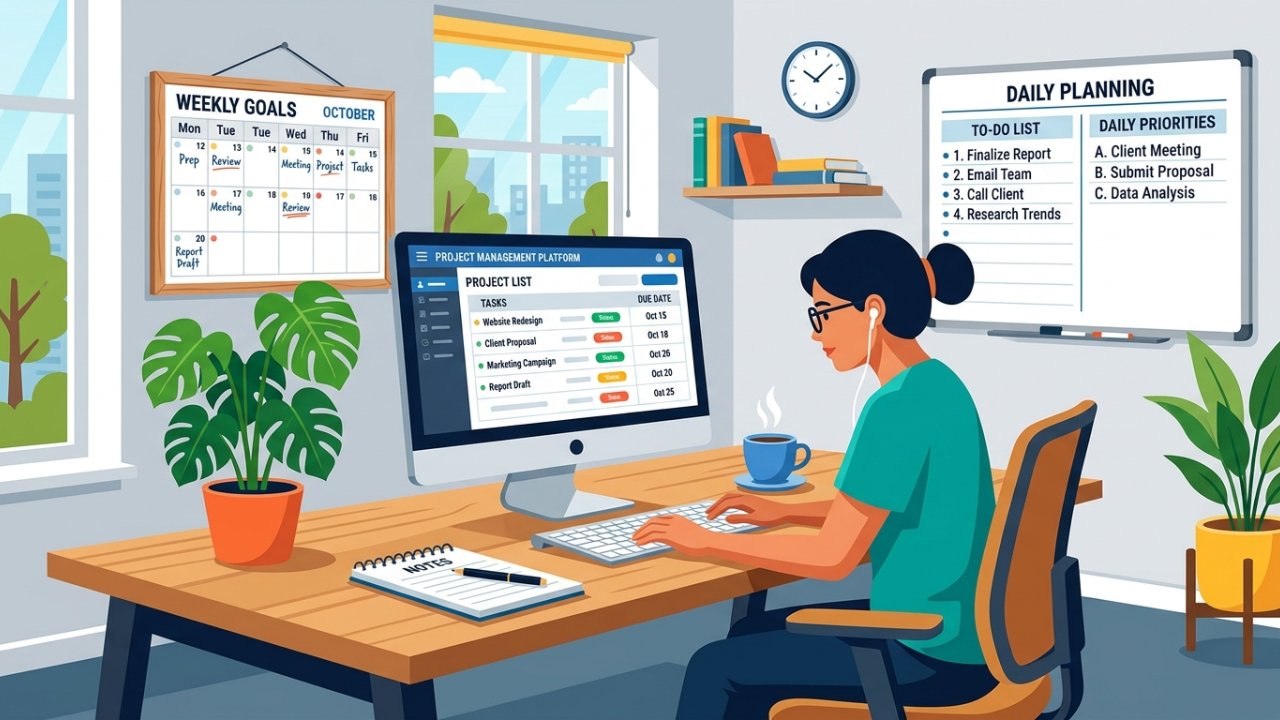
By implementing these task management techniques, you can enhance your productivity greatly. Start by analyzing how you use your time and prioritize tasks based on their importance. Use tools like Asana or Trello to stay organized, and maintain an organized workspace. Optimize your daily schedule and delegate tasks when possible. Finally, tackle procrastination by setting specific goals and using techniques like the Pomodoro Method. With consistent effort, you’ll see improvements in your efficiency and focus.
Image via Google Gemini and Small Business Trends