
Netanyahu’s bloc leading Israel election but short of majority, partial results show
To play this video you need to enable JavaScript in your browser.
This video can not be played
-
Published
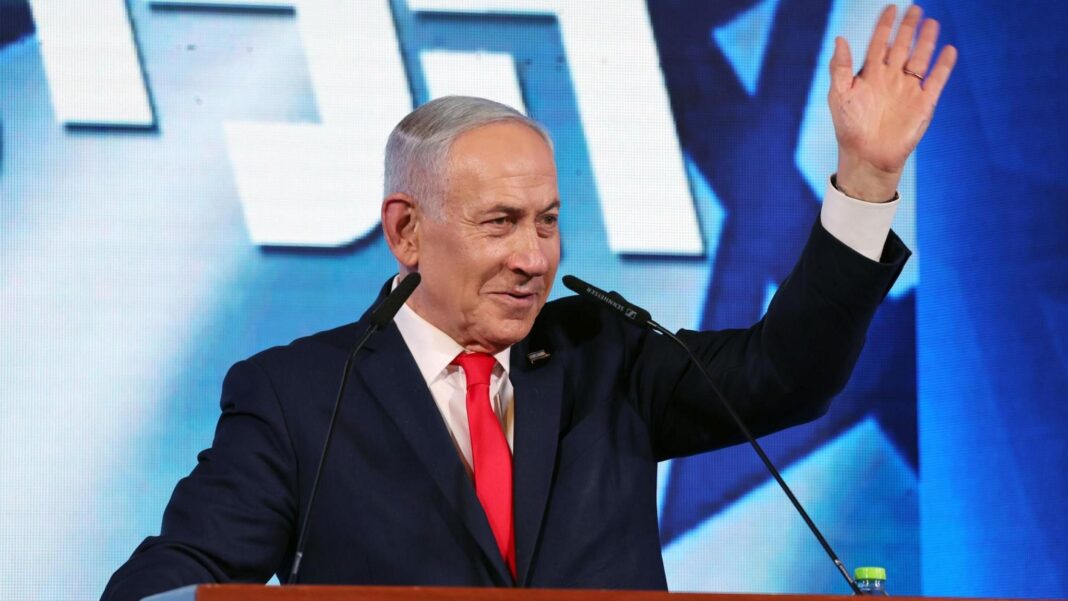
Partial results from Israel’s general election show veteran Prime Minister Benjamin Netanyahu is leading his rival, former military chief Gadi Eisenkot, but is still short of a majority in parliament.
With 85% of ballots counted, Netanyahu’s Likud party and its far-right and ultra-Orthodox Jewish allies were on track to win 53 seats in the 120-seat Knesset. Eisenkot’s Yashar party and three other Jewish opposition parties in his bloc were set for 48.
Both leaders have said they will try to form a governing coalition.
Arab-led parties, who are on course to win an unprecedented 19 seats, could emerge as kingmakers, but all but one of the Jewish parties have pledged not to work with them.
With between 430,000 and 480,000 absentee ballots from groups including soldiers, diplomats and hospital patients yet to be counted, it could still take a day or two for the final election results to emerge.
Once they are confirmed, President Isaac Herzog will hold consultations with all the political factions and invite the leader whom he believes has the best chance of success to form a government – a process that could take weeks.
If they fail, then ultimately there would have to be another election.
-
How could Israel break election deadlock? Here are four scenarios
-
Published9 hours ago
-
-
Netanyahu and Eisenkot face difficult paths to power as neither set to win majority
-
Published13 hours ago
-
During a meeting at his residence in Jerusalem, Herzog praised the 77.7% turnout in Tuesday’s election, which was the country’s highest in more than two decades.
“It is a badge of honour for Israeli society, and it was remarkable to see how deep the desire for democracy is in Israel,” he said.
He added that he expected to receive the official results next week, after which he would begin discussions with every faction.
“We must do everything we can, certainly after yesterday, to avoid another round of elections. So, I expect everyone who comes here to come with an open mind.”
Both the prime minister and his main rival have insisted that they should be tasked with forming a governing coalition.
Eisenkot declared that the public had “spoken in favour of change”, after initial exit polls published by three Israeli broadcasters projected that his “Change Bloc” would emerge with between 52 and 53 seats in the Knesset, compared to 50 seats for Netanyahu’s bloc.
“The coalition of failure has lost the people’s trust,” he told supporters at Yashar’s election headquarters in Tel Aviv. “I will work with my partners to ensure that the people’s decision is translated into a Zionist government.”
Later, the broadcasters updated their exit polls, with two projecting that the rival blocs would be tied on 51 seats and one giving Netanyahu’s bloc a narrow three-seat lead.
Netanyahu then appeared at Likud’s headquarters in Jerusalem and declared that his right-wing bloc had won a “great majority”.
“We must put in place a strong right-wing national government,” he said. “It is forbidden, simply forbidden, to endanger Israel by forming a government that relies on anti-Zionist Arab parties.”
As the votes were counted on Wednesday, it emerged that his bloc had done better than the exit polls predicted and was on course to win 53 seats. However, that figure is 15 seats fewer than it had once controlled in the last Knesset.
Tuesday’s election was the first since the deadly Hamas-led attacks on Israel on 7 October 2023 and the wars that followed in Gaza, Lebanon and Iran.
It was also seen by Israelis as one of the most consequential in the country’s history, because it could decide not just their leadership but whether the country continues on its current hard-line, religious-nationalist trajectory.
Key campaign issues included accountability for the security failures that led to the 7 October attacks, the conduct of regional wars, conscripting ultra-Orthodox Jewish men into the military, judicial reforms and Israel’s international standing.
Avigail Levine from Kfar Saba, who voted for former prime minister Naftali Bennett’s opposition Beyachad party, told the BBC that she was disappointed with the election results.
“I was hoping for new leadership. I feel we need it as a nation,” she said. “The people in power on 7 October should not be in power now.”
She said people were frustrated that Netanyahu had not shouldered responsibility for what happened three years ago, when about 1,200 people were killed and 251 others were taken hostage. Her husband’s grandmother was among those who died in Kibbutz Be’eri.
Gal from Ramat Gan said he voted for Netanyahu because Israelis “cannot relax and live in peace with neighbours when all they want is to erase us from the map”.
He also said he was “afraid of the strengthening of the Arab political parties”.
Likud complained on Wednesday that they had “stolen” the election. It alleged that they had resorted to “bribery, threats, violence, fraud and the use of prohibited software to encourage voters”, without providing any evidence. The Central Elections Committee said it would examine the claims as part of a post-election review.
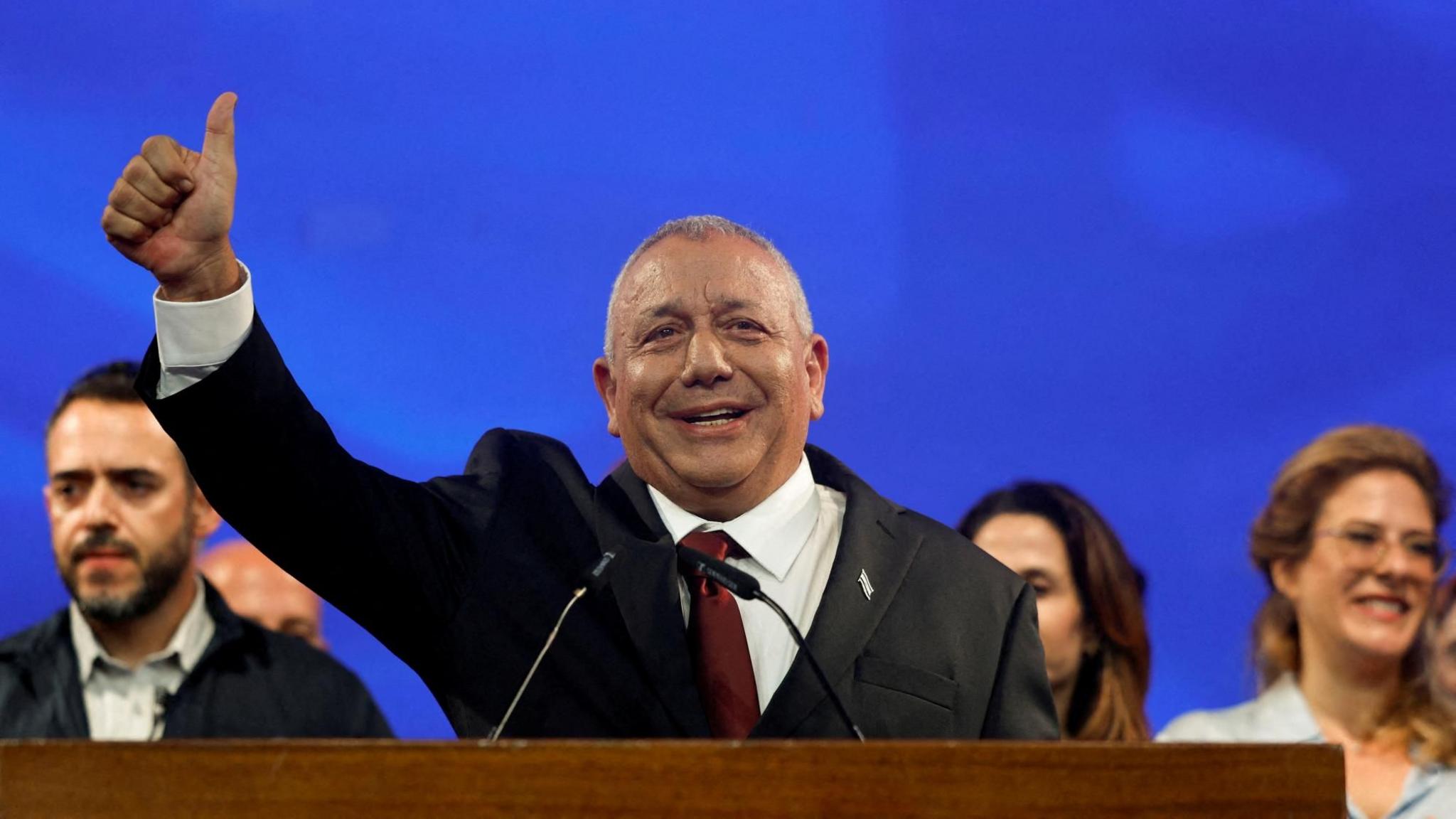 Image source, Reuters
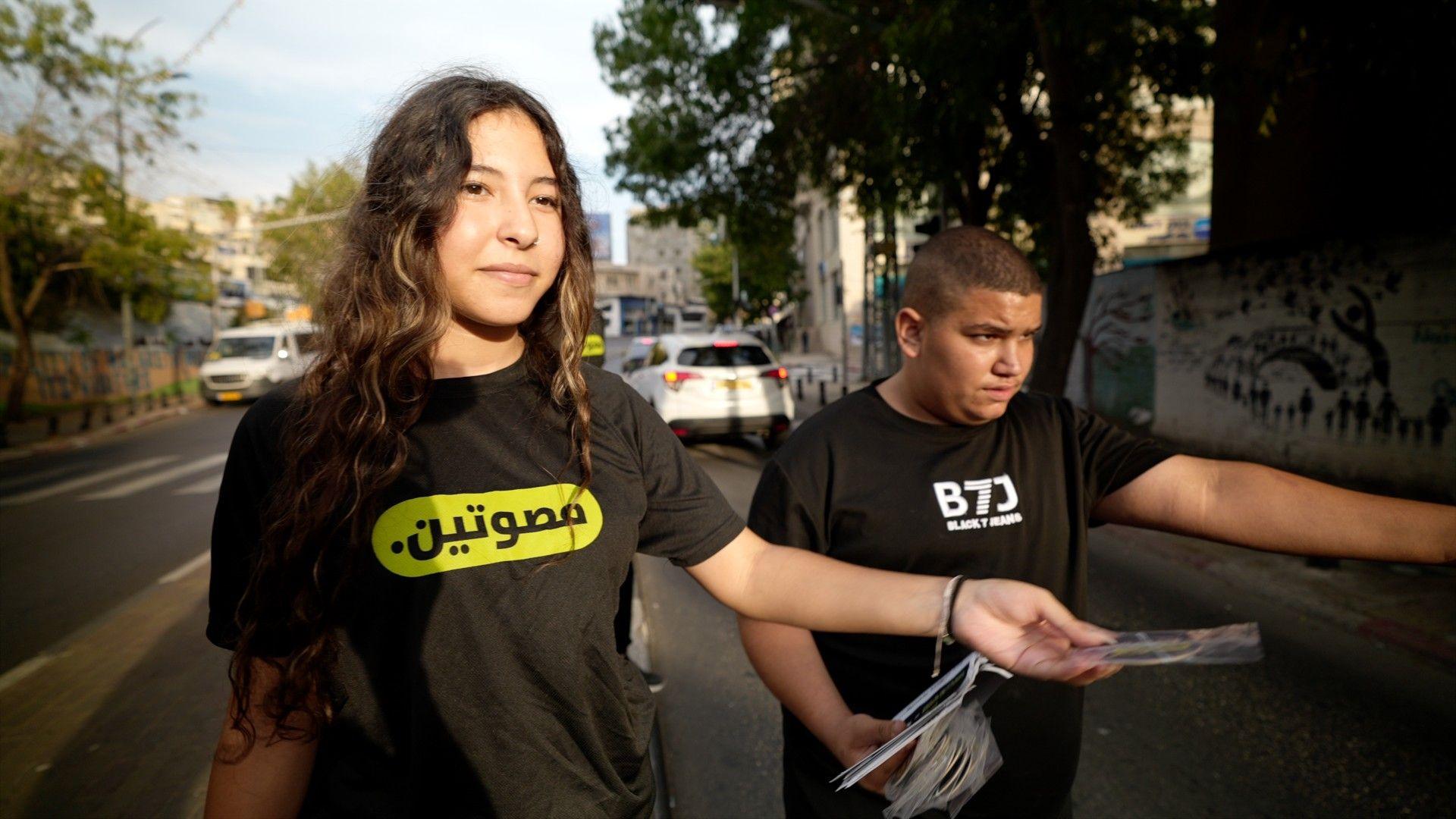
The two Arab parties – the United Arab List and the Joint List – are set to almost double their representation because of a surge in turnout among Arab Israelis, who account for about a fifth of the population and often describe themselves as Palestinian citizens of Israel.
Mahdi Kabaha who lives in a village near Haifa and campaigned to get out the Arab vote, described the result as “historic”.
“Arab citizens came out and said clearly: we want a real say in this country,” he said.
The head of the Joint List, Yousef Jabareen, told the BBC that Arab voters had been motivated in part by the opportunity to remove far-right National Security Minister Itamar Ben-Gvir from office, whom he accused of racism and “provocation against our community”.
Ben-Gvir, the leader of the Jewish Power party, has called for the annexation of the occupied West Bank, Jewish settlement of Gaza, and the “voluntary emigration” of Palestinians. Several Western countries have imposed sanctions on him for incitement against Palestinians.
United Arab List leader Mansour Abbas, who served in a short-lived governing coalition formed after the 2021 elections, said on Tuesday night that he hoped “the numbers will work out and we, the Change Bloc and the UAL, can ensure that there are 61 Knesset seats”.
The leader of the left-wing Democrats party, Yair Golan, told his partners in Eisenkot’s bloc that there was an “opportunity to form a change government in partnership” with the Arab parties and replace Netanyahu’s coalition.
“We have no future here if we don’t stop being afraid. And if we don’t put an end to racism,” he wrote on X.
Eisenkot has previously raised objections or attached conditions to that kind of alliance, including recognising Israel as Jewish and democratic, and Hamas as a terrorist organisation that must be destroyed. The right-wing parties in his bloc, meanwhile, have flatly rejected it.
“The opposition parties cannot dictate any conditions,” Jabareen said. “If the opposition in Israel are willing to afford real and substantive change, and an alternative for the dangerous, extreme-right-wing government… they will have to negotiate with us.”
-
-
Published4 days ago
-
-
-
Published6 days ago
-
-
-
Published20 October

-