
The UK economy will grow by 1.1 per cent this year, according to new forecasts from the Organisation for Economic Co-operation and Development (OECD), up from the 0.9 per cent it projected in June.
The Paris-based organisation said in its interim outlook, published today, that output had held up better than expected in the face of the US-Iran war. It pointed to “solid domestic demand growth in the second quarter” of the year.
The OECD said household spending could get a further boost from government measures to cut taxes on energy bills and cap bus fares.
The 1.1 per cent estimate is the joint second highest in the G7, behind the United States on 2.2 per cent and level with Germany, which has begun to recover from three years of industrial stagnation.
Slower growth and lower inflation
The OECD expects UK growth to slow to 1 per cent in 2027, down from the 1.1 per cent it forecast in June. When it last published forecasts, the organisation had cut its UK growth projection to below 1 per cent for this year.
It also lowered its inflation projection for this year from an average of 3.7 per cent to 3.1 per cent. For next year it expects inflation of 2.6 per cent, higher than the 2.4 per cent it forecast in the summer.
UK GDP figures and measures of private sector activity and household sentiment have improved in recent months, despite global oil prices rising to between $90 and $100 a barrel since August. Economists have warned that higher oil and gas prices will add to inflation and cost-of-living pressures, and that spending and activity are likely to be squeezed during the winter months.
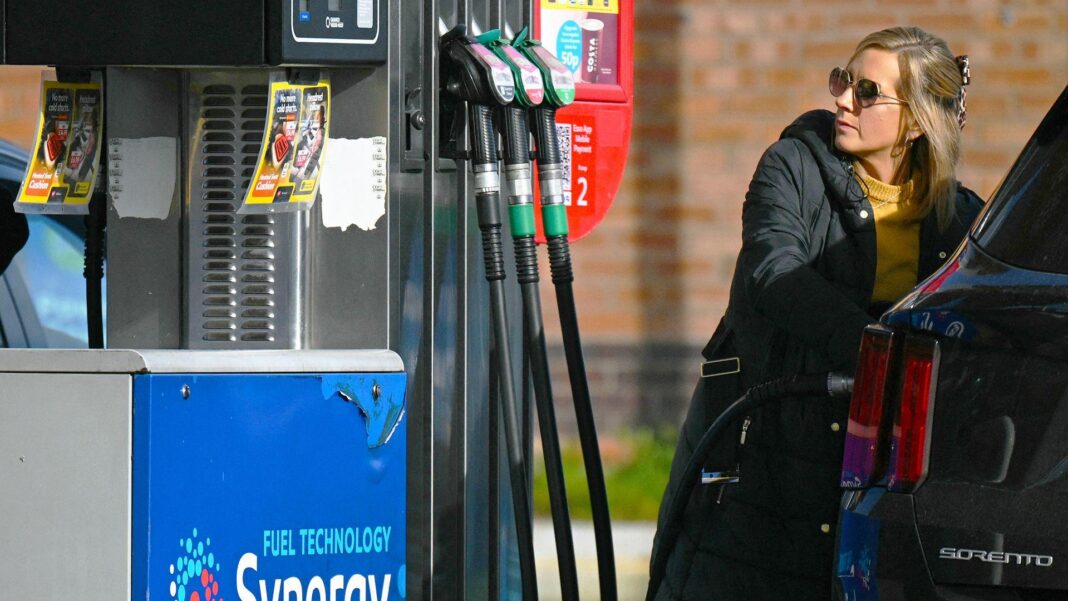
The OECD said British consumers were among those “dedicating a higher proportion of their spending towards fuel, amid very rapid growth in gasoline and diesel prices since the onset of the conflict”.
Emma Reynolds, chief secretary to the Treasury, said: “Despite unprecedented pressures and conflict in both the Middle East and in Europe, the UK economy is showing strong resilience. We had the fastest growth in the G7 in the first half of the year and we are starting the big, long-term changes needed to create good jobs and growth in every postcode.”
The OECD said it expects no change this year to UK interest rates, which stand at 3.75 per cent.
Last week the Bank of England held Bank Rate at 3.75 per cent and warned it could tighten policy for the first time in three years before the end of 2026, should consumer prices breach 4 per cent. Governor Andrew Bailey said a rate rise was likely if the Iran war went on. Annual inflation is currently running at 3.1 per cent.
The OECD said the picture for the UK and world economy was “heavily dependent on whether a durable resolution to the Middle East conflict is achieved”.
“Energy prices have recently risen again amidst intensified disruptions to production and exports in the Gulf economies. Elevated refining margins due to production bottlenecks are placing additional upward pressure on consumer prices and business costs. Prices for some agricultural commodities have also risen markedly in recent months, partly due to the impact of extreme weather on supply,” the interim report said.
The organisation raised its global growth projection from 2.8 per cent to 2.9 per cent. It said “sizeable oil inventories, additional supply from outside the Gulf economies and discretionary government support measures all helped to cushion the impact on the global economy”.
Its biggest downgrade was to Canada, where projected growth fell from 1.2 per cent to 0.9 per cent after the US imposed new tariffs on its neighbour.
France was also downgraded, to 0.4 per cent, the lowest in the G7. The OECD’s forecast comes as the EU’s second-largest economy faces pressure to reduce its rising budget deficit before presidential elections next year.