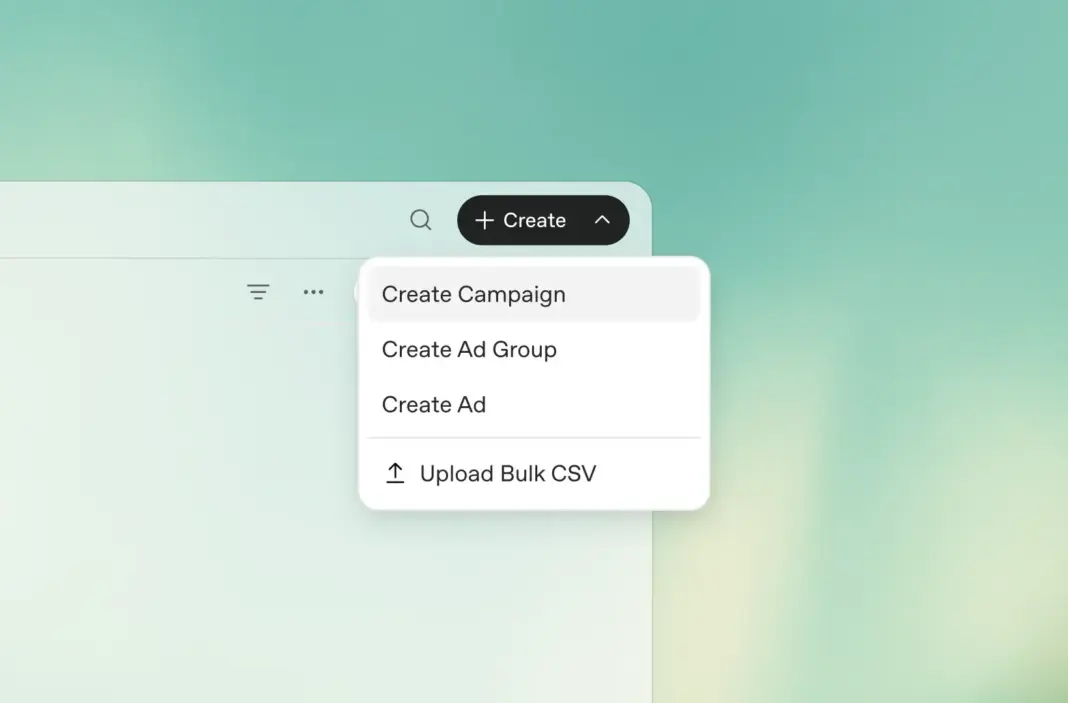

It’s hard to believe anything could rival Google’s impact on our digital lives and habits, but ChatGPT is on its tail — especially now that it shows ads.
For many marketers and businesses, this means debating ChatGPT Ads vs Google Search Ads for the first time. Should you move budget from Google Search ads to ChatGPT ads?
Short answer: Not without more data, you’d better not.
ChatGPT and Google Ads work in different ways. On Google, you bid on keywords, and Google surfaces your ad on those results pages. On ChatGPT, OpenAI matches ads to the conversation’s context, and visibility isn’t guaranteed. Which fits better depends on your goals, your buyers, and how well you can measure results.
This guide unpacks five key differences to help you compare ChatGPT Ads vs Google Search Ads for your needs, and also share a decision matrix and simple hybrid test to try with your team.
Note: ChatGPT ads are still in beta. Every claim below is current as of publication and linked to documentation from OpenAI, Google, or HubSpot, but things change quickly. Make sure to double-check any information before taking action.
Table of Contents
What are ChatGPT ads? (And how do they work?)
ChatGPT ads are paid placements in ChatGPT that appear below relevant answers and are labeled as sponsored. According to OpenAI’s Help Center, each ad includes an advertiser’s name, logo, headline, short description, landing page, and image. ChatGPT ads only appear on Free and Go plans, not on Plus, Pro, or Business plans, or to any user under 18.
On October 5, 2026, OpenAI also announced a new visual ad format. It will be tested during image generation, starting later this month in the U.S. with a first group of advertisers.
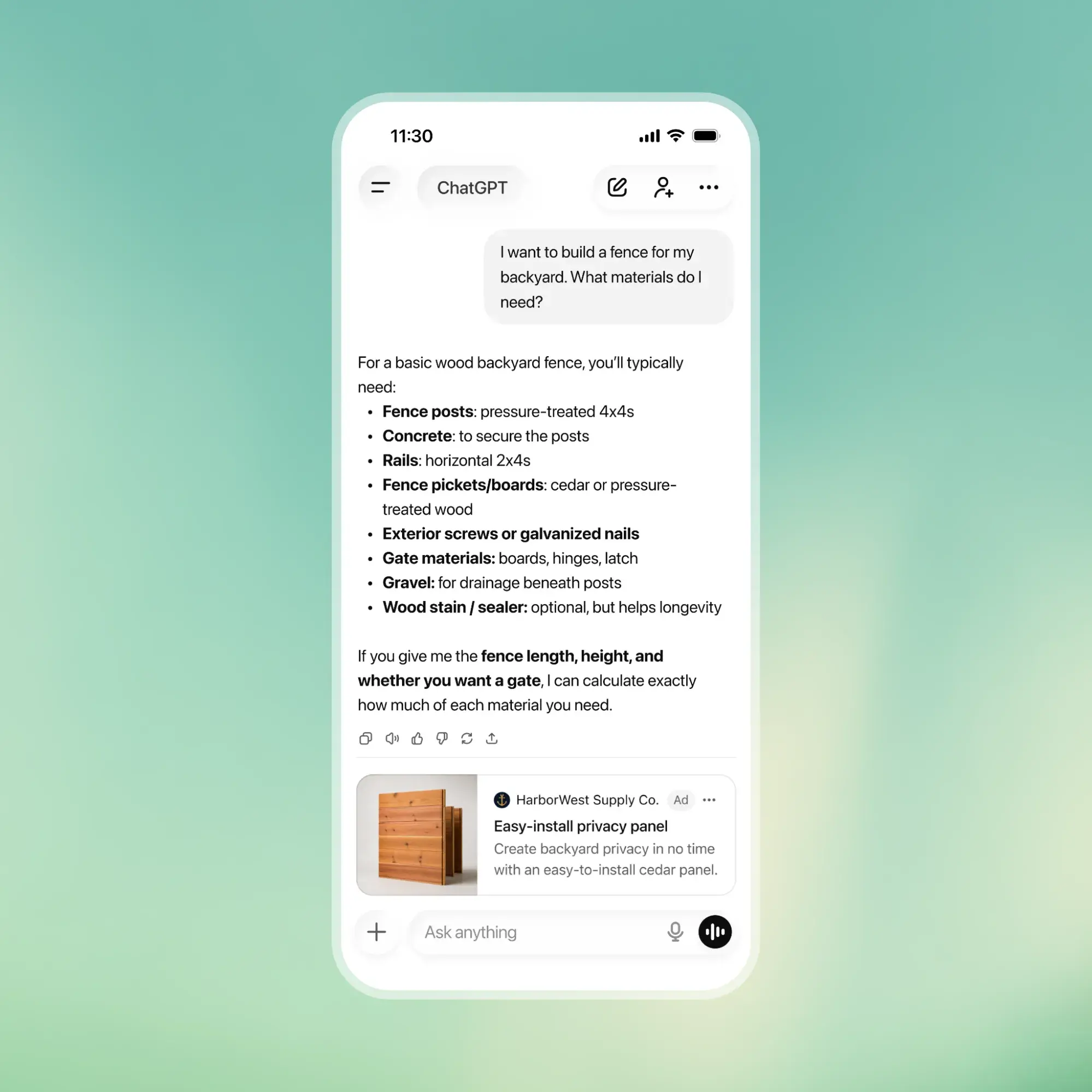
You may be thinking, with privacy and accuracy concerns already surrounding AI, won’t ads just make things even worse?
OpenAI reassures users its taking precautions. The company claims ads don’t change ChatGPT’s answers, and advertisers can’t see your chats. They only get totals, like views and clicks. OpenAI won’t show ads near sensitive topics, such as health, mental health, and politics.
So how do they work?
Advertisers on ChatGPT add “context hints” to describe where their product fits. OpenAI says these hints are not exact-match keywords and don’t guarantee delivery; rather, they help it select which conversations an ad fits into.
How does this fit the buyer journey? Think of it this way: Google Search ads catch shoppers who arrive asking for a specific item. ChatGPT ads meet shoppers who walk in saying, “I need help picking.” It’s more like a personal shopper.
Note: OpenAI calls ChatGPT Ads a beta in the early stages of scaling, so everything shared here was accurate as of October 15, 2026.
Can you run ads on ChatGPT today?
Yes, if your business is in a supported country, you can run ads on ChatGPT as of October 15, 2026.
OpenAI’s beta self-serve Ads Manager is now live at ads.openai.com, available in dozens of countries. The list is changing, however, so check it before you plan. If your country isn’t listed, you can register your interest, and OpenAI will notify you when access opens.
You can also buy ChatGPT ads through agency partners like Dentsu, Omnicom, Publicis, and WPP. Its technology partners also include Adobe, Criteo, Kargo, Pacvue, and StackAdapt.
Pro tip: HubSpot customers can connect ChatGPT Ads to Marketing Hub. The integration is in beta, and a Super Admin opts in.
Now that you understand how ChatGPT ads work, let’s see how they compare more directly to Google Search Ads.
ChatGPT Ads vs. Google Search Ads
ChatGPT ads and Google Search ads both put a paid message in front of someone looking for an answer, but they reach them in different ways. Google matches ads to the keywords people type and businesses buy. OpenAI says ChatGPT primarily matches ads to the conversation’s context and intent.
Below, we compare ChatGPT ads and Google Search ads across five key factors that can determine their effectiveness for your brand:
- User intent,
- Audience reach,
- Creative formats,
- Measurement and attribution, and
- Cost.
Not familiar with Google Ads? Brush up on the basics in our free Google Ads Training in HubSpot Academy.
1. ChatGPT Ads vs. Google Search Ads: User Intent
User intent is one of the biggest areas where advertising on ChatGPT and Google Search diverges.
A Google search states a need in a few words, while a ChatGPT conversation often unfolds over several messages. In turn, advertisers and ads function differently on each platform.
On Google, you choose keywords you want to appear for, and on ChatGPT, you describe topics and “hints” and trust OpenAI to match ads to relevant conversations.
Many ChatGPT chats are about making choices. A 2025 NBER working paper from OpenAI’s economic research team and Harvard’s David Deming found that about 49% of messages were “asking” messages. That means people were seeking information or advice to help them make a decision.
But the line is blurring. Google Ads appear above, below, or within AI Overviews, and in 2025, Google began testing ads in AI Mode. So Google Search ads are getting more conversational, too, but for now, the buying lines of Google starting from keywords, and ChatGPT starting from context, remain.
Here are three illustrative examples to help show the difference:
Looking at this, match your offer or content to the channel.
A good rule of thumb for comparing ChatGPT ads vs Google Search ads based on intent:
- ChatGPT ads: Aim for the top and middle of the funnel. Offer help, such as a guide, a comparison page, a calculator, or a free template.
- Google Search ads: Aim for the middle and bottom. Offer action, like a pricing page, demo, free trial, or signup.
2. ChatGPT Ads vs. Google Search Ads: Audience Reach
Both channels are huge, no doubt, but their headline numbers can’t be compared head-on.
Google says it sees more than 5 trillion searches every year, while OpenAI says ChatGPT reaches 1.2 billion people each week. Google counts searches, not people. And OpenAI counts people across all plans because not all its conversations are “searches.”
What’s a business to do?
What matters more for advertisers is who can actually see your ad; in other words, the size of the reachable audience. And on ChatGPT, that’s a far smaller and limited group. Ads run on Free and Go plans.
They don’t run for users under 18, near sensitive topics, or outside supported countries. In other words, if your buyers use ChatGPT through a work plan, they won’t see ads there. Or if your product is mainly for younger teenagers, ChatGPT won’t let you reach them.
Google, on the flip side, is consistently the highest-visited website in the world.
It’s estimated to rack up over 100 billion visits a day, and its Search ads reach people on Google Search across many markets with little to no exclusions. Google reports ads can show above or below AI Overviews in all 200+ markets where AI Overviews are available. ChatGPT cannot compete on size.
3. ChatGPT Ads vs. Google Search Ads: Creative Format
When it comes to creative, both channels use short, text-led ads, but Google ads give more freedom.
For instance, in a responsive search ad, you can add up to 15 headlines and 4 descriptions, with headlines up to 30 characters and descriptions up to 90 characters.
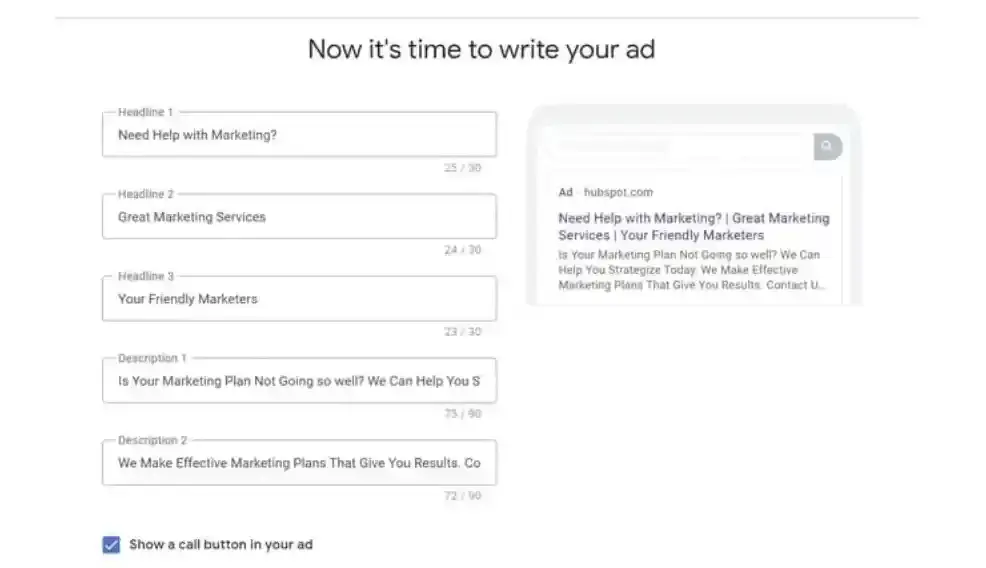
Google also tests different combinations to learn what works, so you can write many angles and let the data pick. To keep it all tidy, see our guide to organizing Google Ads campaigns.
OpenAI’s ad unit has fewer parts: advertiser name, logo, headline, description, landing page, and image, though it plans for more formats over time. The newly announced visual format is still in early testing.
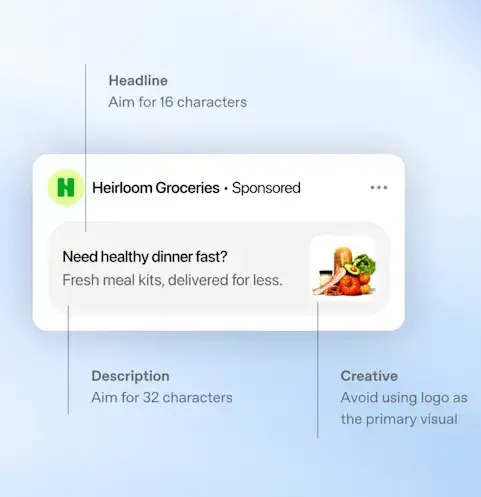
Creative tips for ChatGPT ads:
- Write like a helpful answer, not a slogan.
- Lead with the problem the person is trying to solve.
- Make your landing page consistent with the ad’s promise.
- Use an image that shows the product or the result.
4. ChatGPT Ads vs. Google Search Ads: Measurement and Attribution
Smart business decisions are made on data, and Google’s measurement tools are more established than ChatGPT’s.
When someone signs up or makes a purchase, Google Ads tracks which ads and keywords led to the conversion. For most conversion actions, Google then splits the credit among the ads a person interacted with. It doesn’t give all the credit to the last click.
Google can also use that data to adjust your bids automatically each time someone searches. Google calls this Smart Bidding. Thanks to its seniority, Google search ads just inherently have more data to support and optimize their performance.
ChatGPT is newer, but it’s moving fast. Here’s what’s currently available:
- ChatGPT Ads Manager Beta reports impressions, clicks, spend, CTR, average CPC, average CPM, and conversions.
- In May 2026, OpenAI also launched a pixel and a Conversions API to track purchases, leads, and sign-ups. Results are aggregated.
- More recently, OpenAI added integrations with Hightouch, Tealium, and LiveRamp. It also names attribution partners such as AppsFlyer, Triple Whale, Adjust, Northbeam, and Singular.
- OpenAI says its work on incrementality is still in its early stages. It is exploring geo-based experiments with Haus, Measured, and WorkMagic.
What do early results show?
In early October, OpenAI shared three encouraging early use cases:
“According to DV Rockerbox, WeightWatchers’ attributed cost per acquisition on ChatGPT Ads was 15.3% lower than its blended paid-search benchmark. WorkMagic reported statistically significant lift for wellness brand Dose, with 67% of incremental purchases coming from net-new customers. And according to Triple Whale, 93% of Portland Leather’s visitors from ChatGPT Ads were new.”
Early ChatGPT data is thin. Each result covers one brand and one vendor’s method. So, treat them as encouraging test results, not promises. Your own ad tracking matters most.
Three habits will help you compare ChatGPT ads vs Google Search ads measurement:
1. Tag every ad link the same way on both channels.
OpenAI says static UTM parameters persist on ad clicks, so your analytics tools can read them. UTMs are short tags added to a link’s URL that tell your analytics tool where a visit came from.
Use the same naming rules for both channels. For example, use utm_source=chatgpt and utm_source=google, then match your campaign names. This is easy in HubSpot. Need a refresher? See our guide to tracking online campaigns.
2. Look at the whole path, not just the last click.
A buyer might ask ChatGPT for options, then Google your brand name a week later. (It’s more common than you think.) Last-click reporting gives all the credit to Google, even though ChatGPT started the journey. Compare channels by lifecycle stage and revenue, not clicks alone.
3. Let your CRM do the connecting.
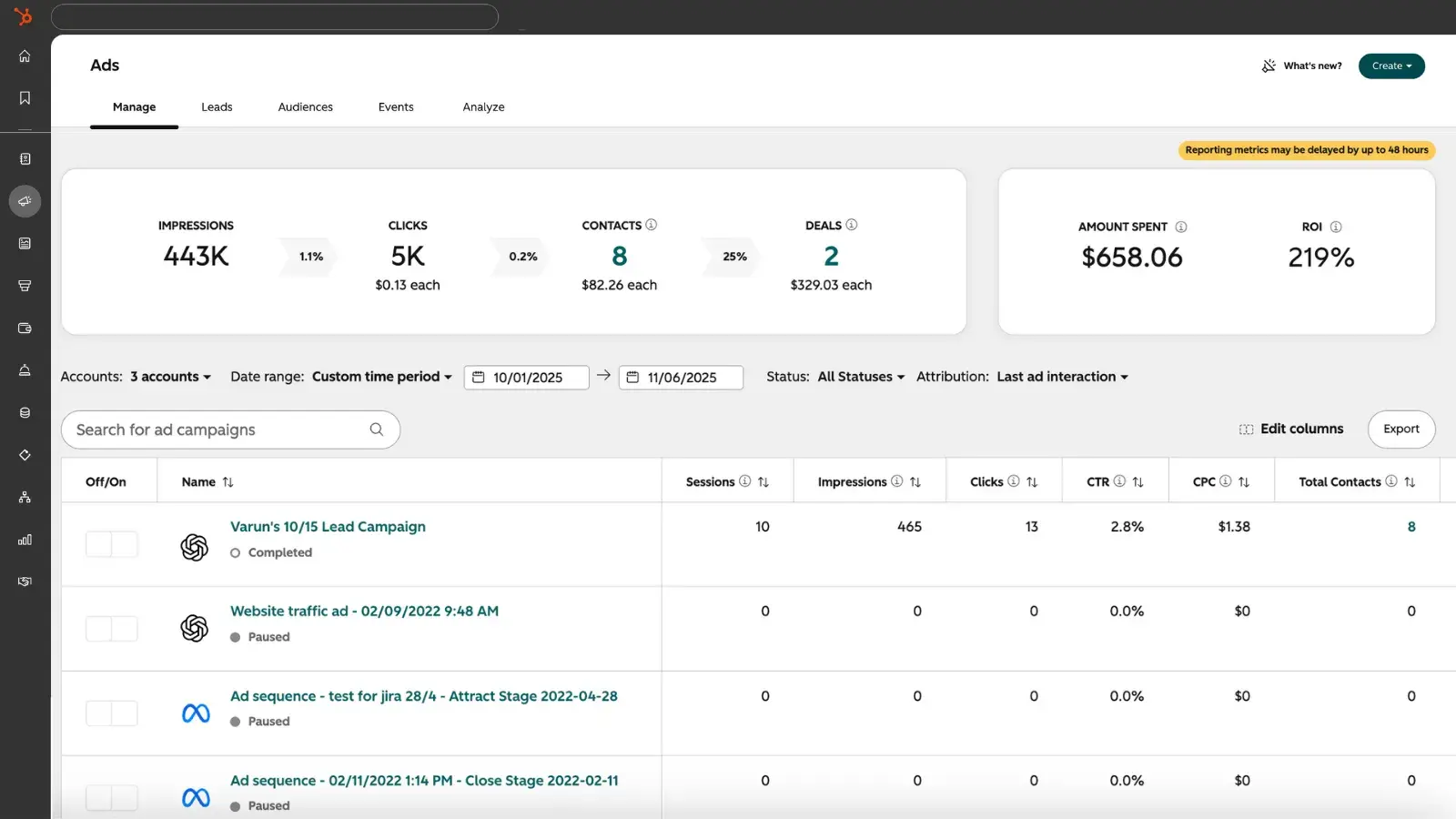
Some CRMs, like Marketing Hub, let you connect ChatGPT Ads (beta) next to your other ad channels.
You can set up ChatGPT ads while HubSpot’s auto-tracking adds UTM parameters to your URLs, so you can see which contacts clicked and measure ROI.
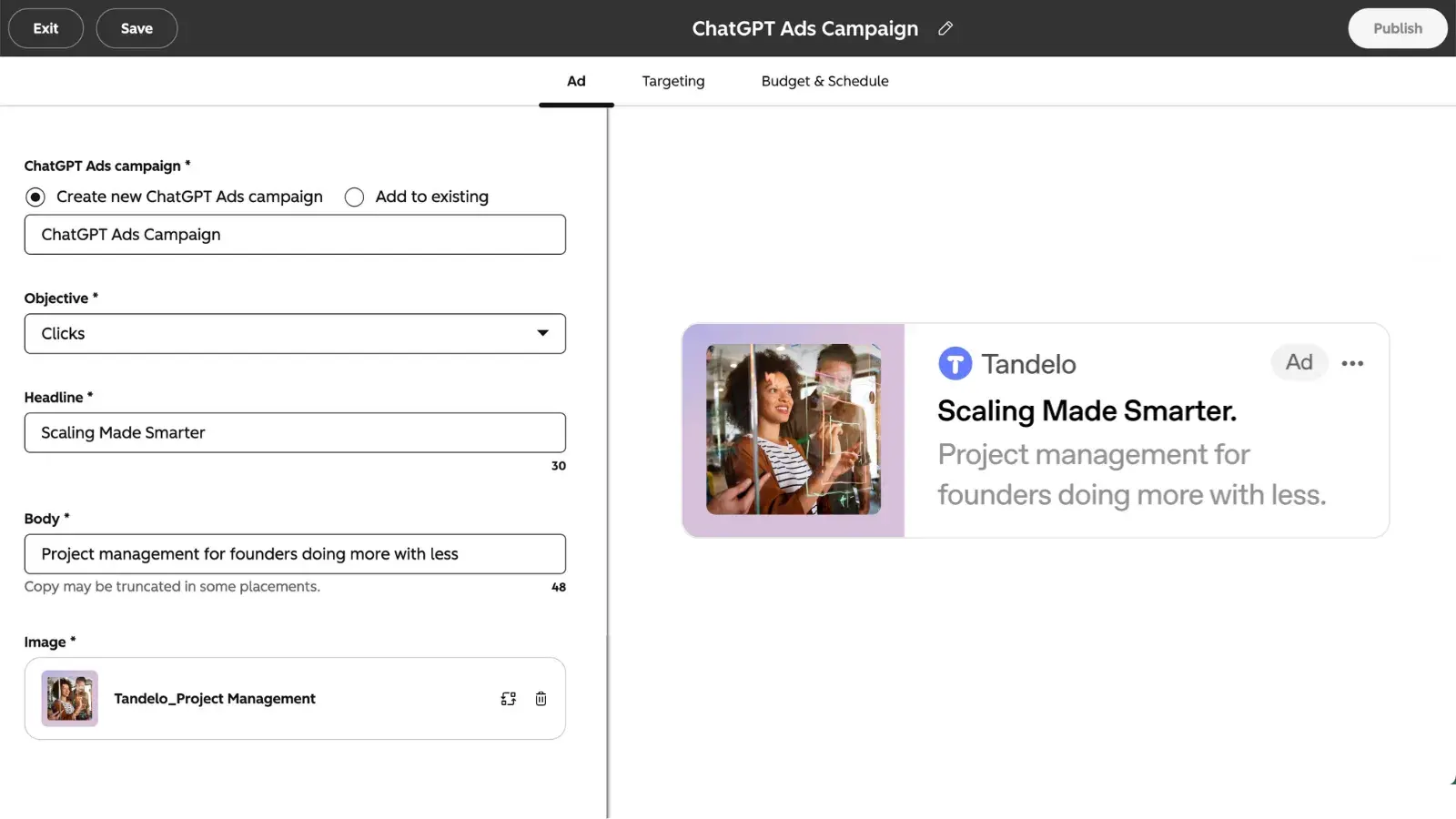
Clicks aren’t customers. What happens after the click decides whether either channel pays off. That’s why it’s valuable that with HubSpot, you can also send conversions back to ChatGPT when a contact changes lifecycle stage or submits a form — if contacts must have permitted sharing their information.
CRM Follow-Up and Operational Readiness in HubSpot
Set up these basics in HubSpot before launching your ads:
- Send every click into your CRM with its source. Use UTMs and forms. In HubSpot, auto-tracking ties ad clicks to contact records.
- Segment and nurture by source and intent. For instance, someone who found you in a ChatGPT chat may still be researching and may need nurturing with helpful content. Someone who searched “ pricing” may be ready for a faster sales touch. Source channel doesn’t necessarily signal sales qualification.
- Get leads into your CRM and follow up fast. When leads land in your CRM tagged by channel, you can see which ones turn into qualified leads and revenue, and follow up in the way that fits each one. OpenAI’s HubSpot guide says the integration can add new leads to your CRM and trigger follow-up workflows.
- Score leads and alert sales. Paid channels bring in a mix of casual researchers to ready buyers, and sales has limited time. Use lead scoring and automated notifications so hot leads get attention fast.
- Agree on a service-level agreement (SLA). Decide how quickly sales follows up on each source. It stops arguments over whether bad results came from the leads or the follow-up. It also gives you something to measure. Having an SLA matters for this article’s test because ChatGPT-led and Google-led leads may need different handling.
- Send outcomes back. HubSpot can sync lifecycle stage changes and form submissions to your ad accounts as conversion signals. That helps each platform learn from qualified outcomes, not just clicks.
- Use lifecycle stages to follow the money. Track each contact from lead to marketing qualified lead to sales qualified lead to customer, by source. That shows which channel drives revenue, not just form fills.
Marketing Hub brings forms, workflows, ad tracking, and reporting into one place, so your team can see the whole path.
5. ChatGPT Ads vs. Google Search Ads: Cost and Bidding
Both ChatGPT and Google use auctions to sell their ads. Neither has a fixed price.
Google offers four Smart Bidding strategies: Maximize conversions, Target CPA, Maximize conversion value, and Target ROAS, with costs varying by industry and keyword. For typical ranges, see our Google Ads cost guide.
OpenAI uses a relevance-weighted, second-price auction. Here’s how bidding works:
- You can buy by CPM (Reach objective) or CPC (Clicks objective). You set a maximum bid at the ad-group level.
- For CPC campaigns, OpenAI recommends starting with a maximum bid of $3-$5 per click. That’s a bid suggestion, not a price list.
- OpenAI’s developer docs also describe Maximize clicks and Maximize conversions strategies that use a daily budget.
- A conversion objective is billed per valid click, not per conversion. It tries to find clicks more likely to lead to your chosen conversion event. You need conversion tracking first, and the account must support it.
Because ChatGPT ads are priced by auction, your costs will depend on competition for the conversations you target. So, compare value, not just price.
Cheap clicks aren’t the goal; qualified leads are. Compare the channels by cost per qualified lead, cost per sales opportunity, and revenue. This starts by knowing your own customer acquisition cost. Our customer acquisition guide can help.
How to Advertise on ChatGPT
ChatGPT ads are available in select countries, including the United States. If you are in those locations, here are a few things to remember before getting started:
- ChatGPT ads are a beta. Features and rules will keep changing.
- No exact-match keyword buying. You guide matching with context hints.
- Targeting is limited. OpenAI’s docs list location, platform, and customer-list audiences. Platforms are the iOS app, Android app, and web. A customer-list audience requires at least 25,000 matched users to be included.
- Sensitive topics are off-limits. Ads won’t run near them.
- Reporting is aggregate. You see totals, not conversations.
Here’s How to Buy Ads on ChatGPT Today
- Sign up at ads.openai.com.
- Add payment details. Then set your budget, bid, and pacing. OpenAI says Ads Manager supports these steps.
- Pick an objective. The Reach objective charges per 1,000 impressions (CPM). The Clicks objective charges per valid click (CPC), per OpenAI.
- Add context hints, ad copy, an image, and a landing page.
- Submit for review. OpenAI checks ads against its advertising policies.
- Add UTM parameters, the pixel, and the Conversions API before you launch.
You can also buy through an agency or technology partner.
ChatGPT Ads vs. Google Search ads: Which should you choose and when?
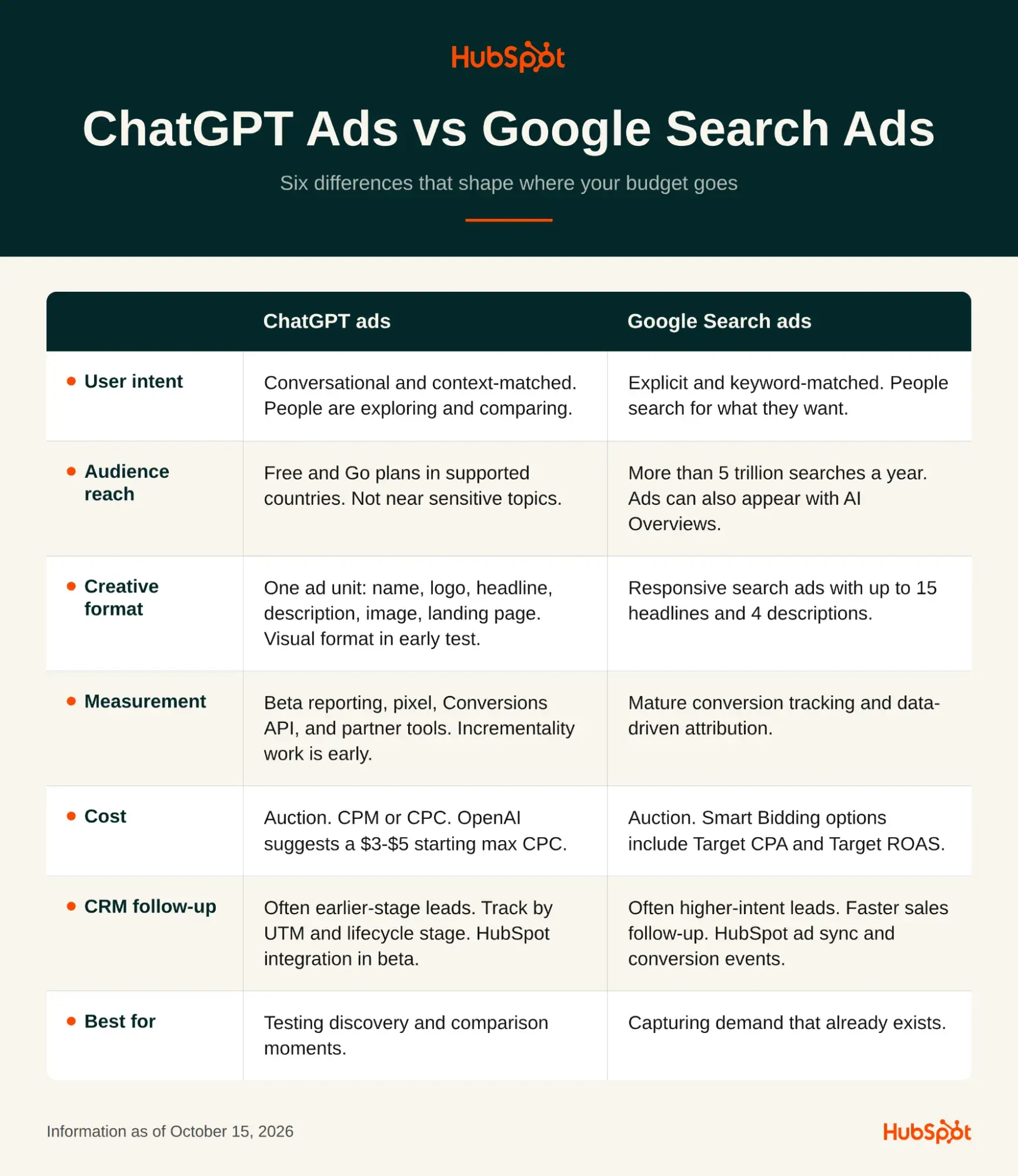
Here’s the full side-by-side. Use it to decide where to start.
Where should you start?
Your starting point depends on your goal and your audience. If you need leads this quarter, it may be wise to begin with Google Search ads. Google matches ads to exact keywords, so you have a better idea of who you’re getting in front of, and its conversion tracking is well-documented.
However, according to HubSpot’s January 2026 survey of 3,000+ CRM purchase decision-makers, AI search was the strongest predictor of purchase intent. Buyers who used AI search were 36% more likely to purchase.
That said, if your buyers use AI to research and compare options, add a small ChatGPT test. Focus it on comparison topics, like “which tool should I pick?” If you have the budget, consider running a hybrid test like the one below.
How to Run a Hybrid Test of ChatGPT ads vs. Google Search ads
A hybrid test lets you compare ChatGPT ads and Google Search ads fairly, without giving up what already works. Here’s how to set it up:
- Keep your best Google campaigns running. They’re your baseline.
- Add a small ChatGPT campaign. Aim it at discovery and comparison topics, where people are still weighing their options. OpenAI says many ChatGPT conversations are about learning a category or comparing options, so your ad can meet people at that stage. Because there is no proof yet that these topics perform best, keep the test small and let your own cost-per-lead and revenue data guide your optimization decisions.
- Keep everything else the same — use similar offers, the same landing page setup, and the same UTM naming rules on both channels. Keeping variables consistent minimizes the number of factors in the experiment so you can truly evaluate whether the platform is making a difference.
- Send leads from both ChatGPT and Google Search into your CRM. Then compare them by lifecycle stage, not just clicks, since clicks show who visited, not who bought. In your CRM, you can see how far leads from each channel advance and which channel delivered the most return.
- Measure. Finally, measure the performance of both channels and compare the results by qualified leads, revenue, and cost per acquisition.
How to Make the Call
Before launching your hybrid test, document what you want each platform to achieve. Use these goals as your decision rules so the numbers decide the outcome, not your hopes.
Scale up if your cost per qualified lead is close to Google’s, or if the ChatGPT ads bring in clearly new customers. Adjust your ad offer or context hints if you are generating clicks, but the resulting leads are not qualified, as a weaker lead pool often indicates misalignment between the ad and audience intent.
Stop your ChatGPT ad campaign if ad-to-CRM tracking fails, your cost per qualified lead stays well above your target benchmark, or the leads generated do not meet your qualification criteria.
Getting your Google side in shape first? Use our free Google Ads PPC Kit to plan and organize your campaigns.
Note: Don’t forget organic search.
Whether using ChatGPT or Google Search, remember: paid ads are only one part of search. To see how paid and organic compare, read our guide to paid vs. organic search.
How HubSpot Can Help
HubSpot AI can handle some of the busywork in your ChatGPT and Google Search ads strategies. HubSpot’s campaign agent can turn a single goal into a planned, multi-channel campaign. Its content agent drafts landing pages in your brand voice, and its nurture agent personalizes follow-up emails. Then, Marketing Hub pulls your ad data, forms, and CRM records into one place, so you can see which channel drives revenue.
Frequently Asked Questions About ChatGPT Ads vs. Google Search Ads
Can I target specific keywords with ChatGPT ads?
No. OpenAI’s context hints are not exact-match keywords and don’t guarantee delivery. On October 5, 2026, OpenAI also added Negative Phrases for qualifying advertisers to help keep ads from appearing in unwanted contexts. You can also target by location, platform, and customer-list audiences.
How do I measure ChatGPT ad performance if reporting is limited?
Layer your tools.
Add UTM parameters to every ad URL. Install the pixel and the Conversions API. Send CRM outcomes, like lifecycle stage changes, back to the platform. Then compare channels by qualified leads and revenue. Treat early numbers as directional until you have enough data.
When should a B2B brand test ChatGPT ads?
You should test ChatGPT ads if your target buyers research solutions using AI chatbots before searching for specific vendor names on Google Search.
As OpenAI claims, many users turn to the tool to compare and explore options, you also need comparison content worth clicking and tracking, and that you trust. One catch: OpenAI doesn’t show ads to Business plan users. If your target buyers access ChatGPT primarily through a work plan, your reachable audience on ChatGPT ads will be smaller because OpenAI does not display ads on Business plans.
How do I compare costs across channels without identical metrics?
Convert everything to the same outcome. Use cost per qualified lead, cost per sales opportunity, and revenue per dollar spent. For a cleaner match, run ChatGPT’s Clicks objective (CPC) against Google’s CPC campaigns. Then track both through the same CRM lifecycle stages.
The Bottom Line: ChatGPT Ads vs. Google Search Ads
ChatGPT ads and Google Search ads aren’t interchangeable. Google matches your ad to what people type, while ChatGPT matches it to what people are talking through. That one difference shapes everything else, from reach and creative to measurement and cost.
For most teams, the smart move today isn’t to pick a winner. Keep Google Search ads for the demand you can already see. Then add a brief ChatGPT test to see whether your buyers respond when they’re comparing options.
Whichever channel you use, track every click back to your CRM to compare the channels by qualified leads and revenue, not clicks.
HubSpot’s Marketing Hub can bring your ad data, forms, and CRM records into one place for easier analysis. Before scaling your ChatGPT ads investment, check OpenAI’s and Google’s documentation again, since both platforms frequently update their features and policies.