
Mahmood scraps settlement plans for migrant care workers
To play this video you need to enable JavaScript in your browser.
This video can not be played
-
Published
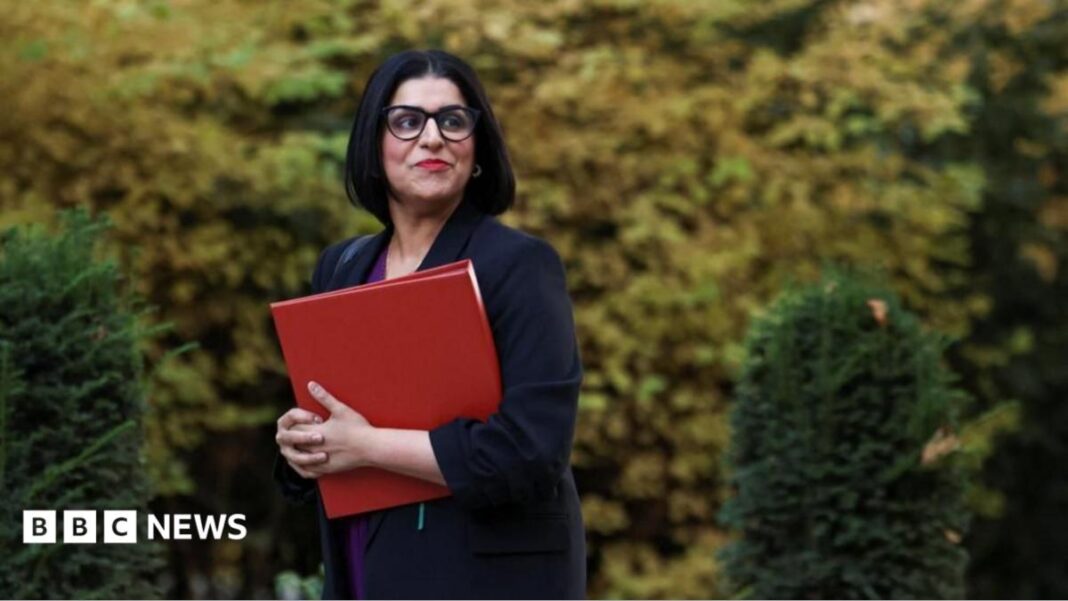
Home Secretary Shabana Mahmood has scrapped plans to make foreign care workers already in the UK wait 15 years to qualify for permanent settlement.
Mahmood had proposed doubling the wait for indefinite leave to remain (ILR) from five years to 10 for most migrants, with some facing a 15-year wait.
But following a backlash from several Labour MPs, Mahmood revised the policy and care workers who earn at least £25,000 a year and arrived in the UK before May 2025 would continue to qualify after five years.
The Conservatives said Mahmood’s “U-turn” would cost taxpayers billions of pounds.
ILR, also known as settlement, gives a person the right to live, work and study in the UK for as long as they like and apply for benefits if they are eligible. They can also use it to apply for British citizenship.
Last November, Mahmood announced plans to delay settlements in response to concerns over the number of people approaching eligibility, in the wake of record post-Brexit net migration figures under the previous Conservative government.
The Home Office has said its figures show net migration – the difference between those entering and leaving the country – added 2.6m people to the UK population between 2021 and 2024.
The department estimates that between 2026 and 2030 between 1.3m and 2.2m people will settle in the UK, adding its central estimate has increased to 1.9m.
The home secretary faced criticism for proposing to apply the changes to migrant workers already in the UK, with Housing Secretary Angela Rayner previously saying this would “change the goalposts”.
Several Labour MPs also described the retrospective approach as “un-British” and warned it could worsen the UK’s skills shortage, particularly in the care sector.
Making a statement to the House of Commons, Mahmood said settlement “should not be automatic, it should be earned”.
-
What are the planned changes to immigration rules?
-
Published2 hours ago
-
She said those who do not come under the various exceptions would be on a 10-year path to settlement status. This will still affect many people who came to the UK expecting to qualify after five years.
One of those affected is Ashfak Juned, a Bangladeshi chef working in Birmingham, who told the BBC he was “crying” when he heard the new rules, which will double his wait for settled status.
The changes will move those earning less than £50,000 a year onto a 10-year path to settlement status, unless they are exempt, so he will have to wait until 2033, five more years than expected, before he can qualify for permanent settlement.
Mahmood also told MPs the government would provide a five-year path to settlement for care workers who “answered our call when we needed them” following the Covid-19 pandemic.
Mahmood said: “Those who earn £25,000 a year working in the social care sector, which was the condition of their visa, will therefore be able to settle on their existing five-year path.”
She added those care workers who did not meet the conditions of their visa will be offered “a second chance to make the contribution that they came to this country to make”. They can apply for another five-year visa and seek settlement after this.
The home secretary confirmed a number of groups would see their settlement path remain as it is today – including Hong Kong British nationals overseas, armed forces members, people with a British connection and those on legacy routes including the Windrush scheme.
MPs were also told:
-
higher earners on salaries of more than £50,000 and those who have contributed in healthcare and education, such as doctors and teachers, will be able to qualify for settlement after five years
-
the highest rate taxpayers earning more than £125,000 will be able to apply after three years
-
refugees who arrived in the UK after crossing the Channel by small boat or another illegal route will have to wait 20 years if they work or study, and 30 years if they do not.
Mahmood said: “Our changes ensure those who are net contributors are encouraged to come to this country and stay here.”
She added: “As a result, the Department for Work and Pensions estimates that our reforms will reduce the benefits bill by billions of pounds.”
The original version of the plans announced by Mahmood last year would have delayed 799,000 people from gaining permanent residency.
Under the updated plans announced on Monday, that number will now drop to 517,000.
To play this video you need to enable JavaScript in your browser.
This video can not be played
The Refugee Council’s Imran Hussain condemned the plans for those who had travelled to the UK illegally or by small boat and do not work or study to wait 30 years for indefinite leave to remain as “unfair and unworkable”.
He said the plans would “condemn refugees to decades of deep insecurity” and “create another bureaucratic nightmare” for the Home Office.
“There is no evidence to suggest that harming refugee integration will act as a disincentive to refugees fleeing the Taliban or brutal conflicts like Sudan,” he said.
“The fairest reforms would be making fast and good quality asylum decisions, with those refugees granted protection being helped to rebuild their lives and to contribute, and those with no right to remain helped to leave with dignity.”
For the Conservatives, shadow home secretary Chris Philp said: “It took a year for the home secretary to build her reputation as tough on immigration.
“But what took a year to build, she has just dismantled in 12 short minutes.”
Philp said opposition from fellow ministers and the “Labour open borders left” had resulted in the changes, adding Mahmood was “no longer running the government’s immigration policy”.
He highlighted figures from March in which Home Office calculations suggested 196,000 care workers and their adult dependants could settle between 2026 and 2030, at an estimated lifetime cost of £9.5bn to taxpayers.
Philp said this was the “cost of today’s U-turn”.
But Father of the House Sir Edward Leigh, the longest-serving male MP in the Commons, criticised his Conservative colleague for overseeing the so-called Boriswave after Brexit, where net migration peaked at nearly one million in 2023.
“Some of us don’t have amnesia,” he said. “Many of us in that period in 2023 were putting this to our then government and anybody who was serving as a Home Office minister in that period should wear sackcloth and ashes, and frankly we will never move on until we accept that.”
Philp was a Home Office minister from 2022 to 2024, a period when the government relaxed immigration rules to introduce a post-Brexit Australian-style points-based system and welcomed an influx of non-EU migrants.
How do people come to the UK legally?
Most people who come to the UK do so legally, after being granted a visa before they travel.
A visa gives someone permission to enter or stay in the UK for a specific purpose, such as work, study or joining family members.
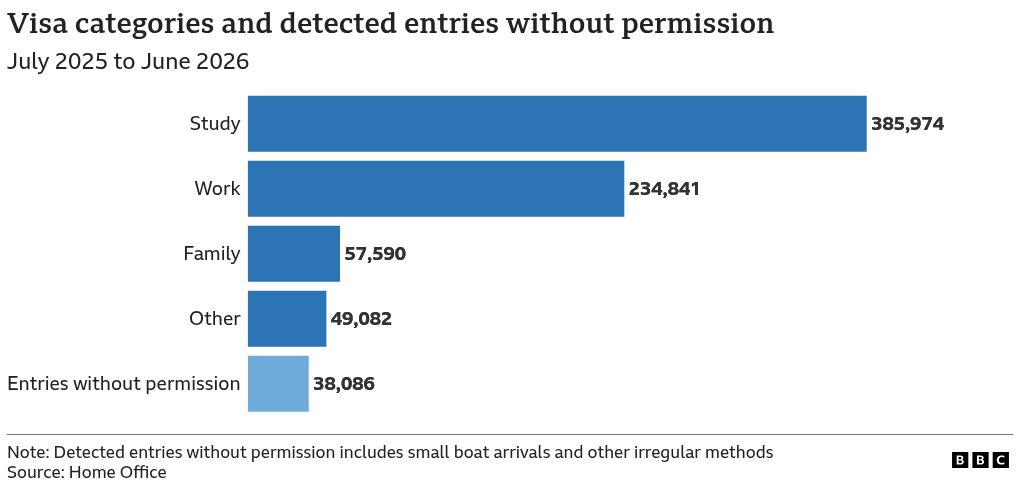
There were 727,487 people who came to the UK via visas from July 2025 to June 2026, not including visitors or people transiting through the UK. This was down by 15% on the same period the previous year.
That does not mean all those people travelled to the UK, only that they were approved to do so.
What are the most common reasons for entry each year?
The most common type of visa people came to the UK on was study, which made up 53% of all visa entries from July 2025 to June 2026.
Who gets the most common UK visas?
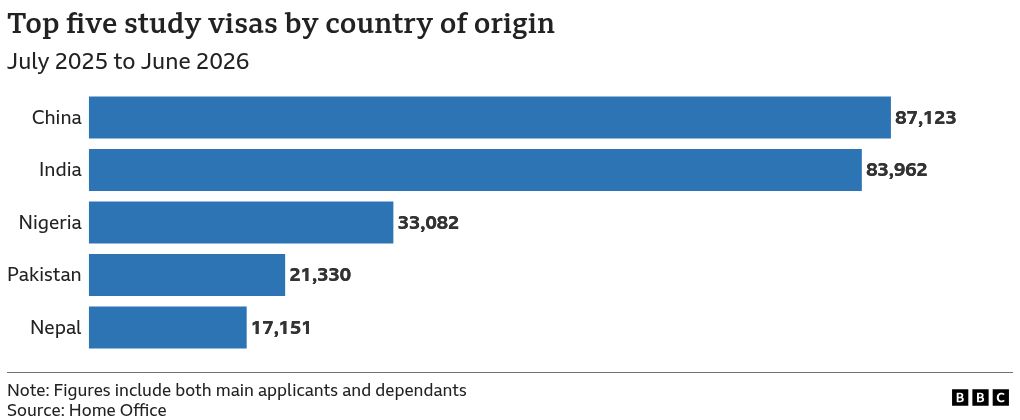
People from China were the most common group to come to the UK on study visas, making up 23% of the total.
Together, people from China and India accounted for nearly half of all study visas. This has been the case for many years.
Labour MP Diane Abbott welcomed the exemption for care workers from the new ILR arrangements, adding: “But for the rest of the workforce the retrospective nature of these new arrangements still seems to be unfair.
“Because you can come in legally, you can work legally but then have your residency rights turned upside down.”
Mahmood said she did not agree with Abbott’s characterisation, adding every government needs to be able to make changes to immigration rules to respond to circumstances.
Liberal Democrat home affairs spokesman Max Wilkinson said the government’s reforms were “unravelling”.
He added: “Viewing immigration simply as a matter of raw numbers and images of small boat arrivals is degrading this nation’s ability to have the informed national discussion that we need.”
Reform UK leader Nigel Farage accused Mahmood of U-turning under pressure and pledged his party would “take decisive action to avert the looming fiscal catastrophe that is the Boriswave”.
“Shabana Mahmood has shown her true colours: she talked a big game on immigration but has u-turned at the first sign of trouble from her left wing Labour colleagues,” he said.
Pointing to Home Office estimates that more than 200,000 immigrants arriving on Health and Care visas would be eligible for British citizenship before the next election, he claimed this would cost the taxpayer £50bn over their lifetimes.
He vowed to review citizenship of all those arriving on care visas from today and extend the qualifying period for citizenship to a minimum of 10 years.
Green Party MP Siân Berry said Mahmood had provided a “new obstacle course of hoops and barriers” for migrants living in the UK.
On Monday, the Institute for Public Policy Research (IPPR) think tank said that skilled workers and their dependants due to settle in the UK under current rules are expected to make a net lifetime contribution of around £115bn through the taxes they pay.

Sign up for our Politics Essential newsletter to keep up with the inner workings of Westminster and beyond.

Get in touch
Are you affected by issues covered in this story? Share your experiences.