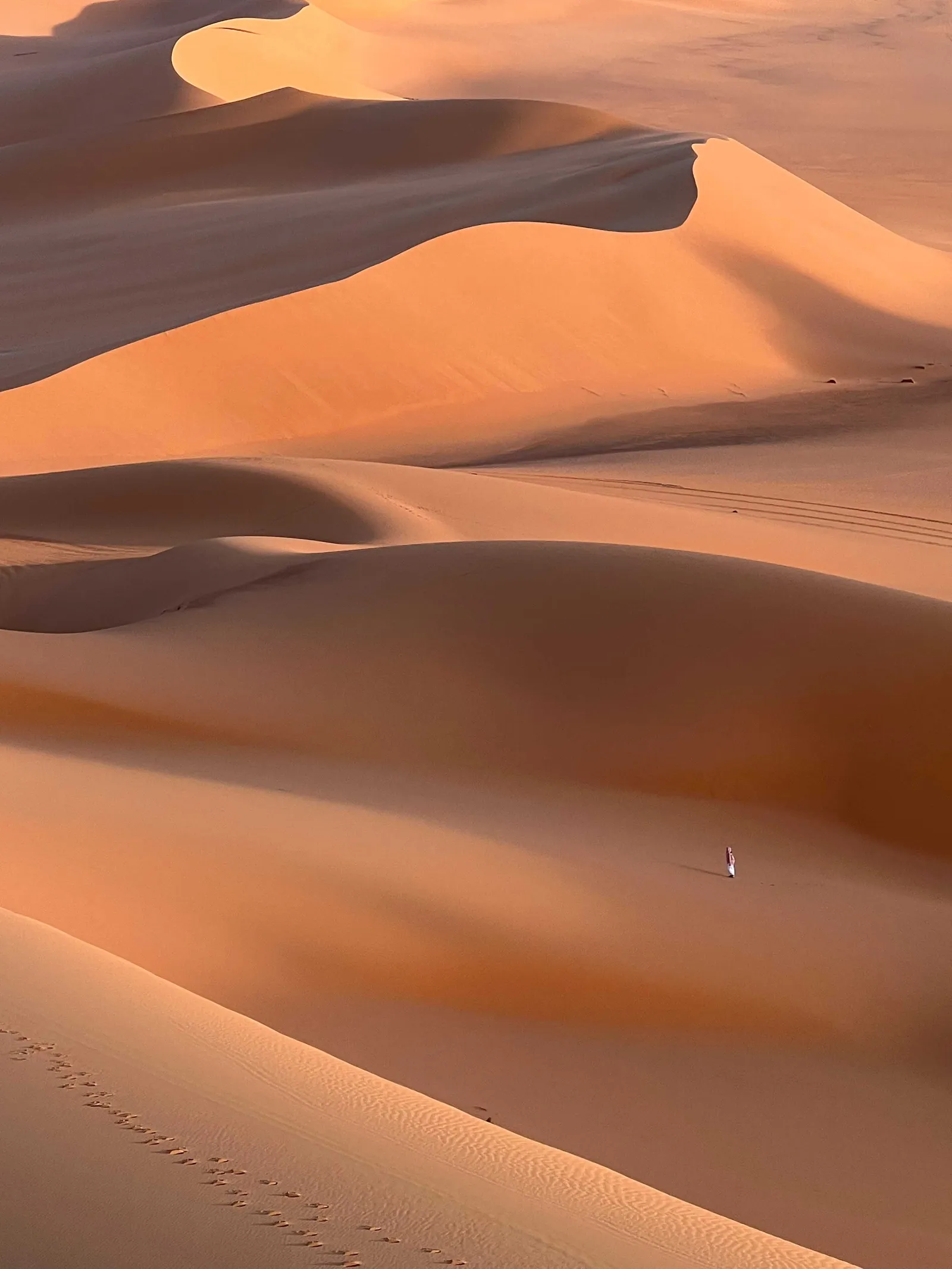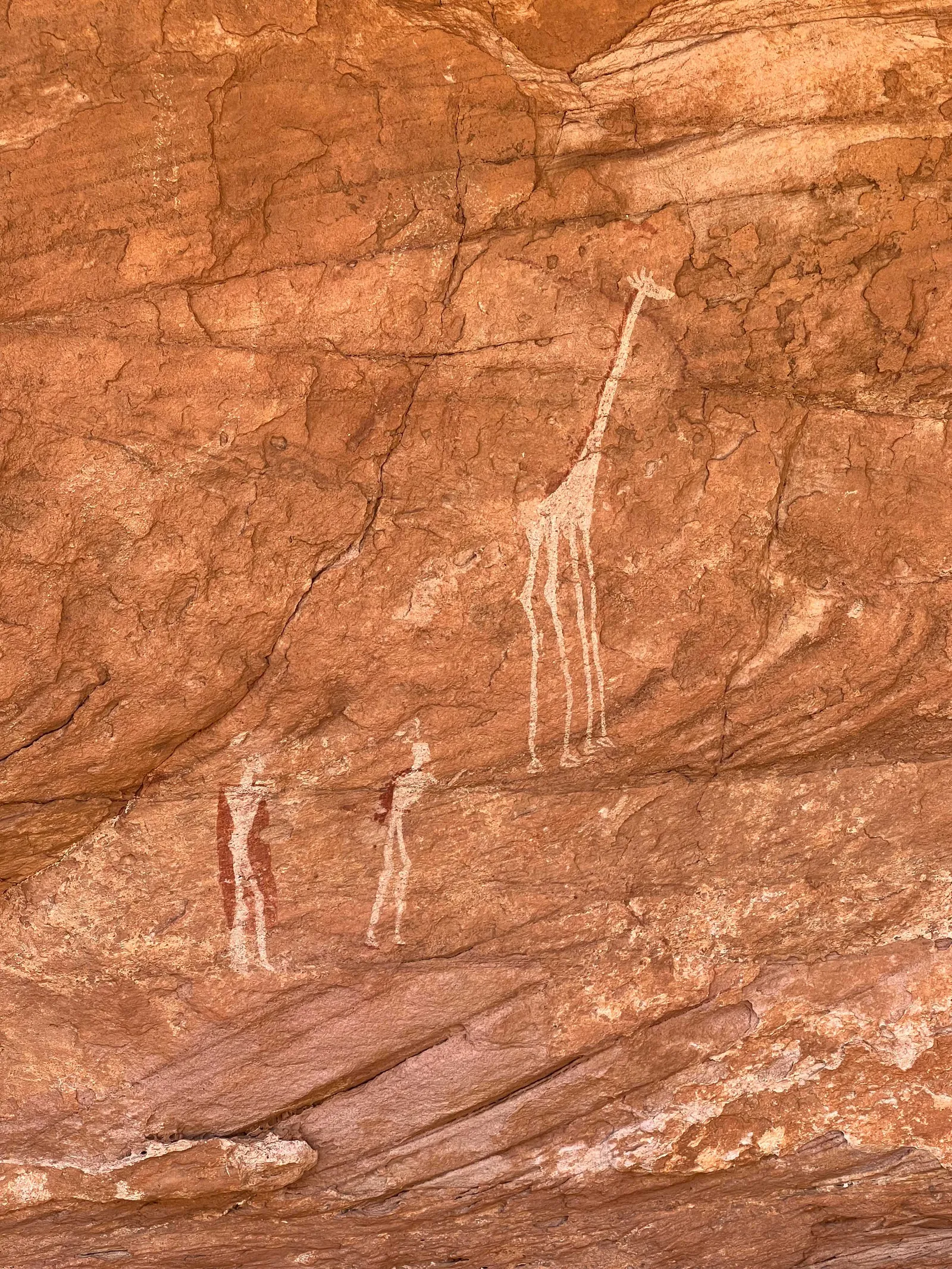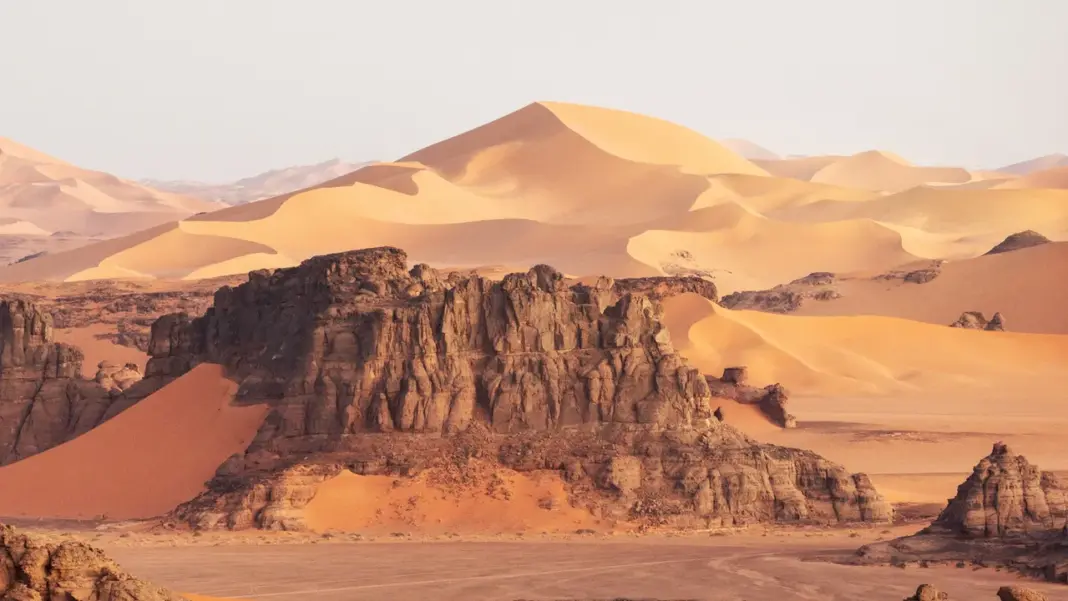

After breakfast—typically, baguette, soft-cheese triangles, a hard-boiled egg, and cookies—we’d pack up camp and head out to explore on foot or in the cars. Around midday, we stopped for lunch (usually salad and chunks of juicy melon) at a shady spot and took a siesta on our camping mattresses, before driving to the next campsite in the late afternoon. Our cook, Khaled Hamaoui, prepared dinner—grain-based soups and couscous or chunky vegetable stews—while we clambered dunes as the sun set, chatted around the fire, and watched Moussa Hemaya start the hour-long process of stewing Maghrebi mint tea on the embers, then high-pouring the earthy, sugar-laced brew to give it a frothy top. We seemed to be the only people for miles. Khirani hopes it stays that way.
“To be honest, I don’t want Algeria to be like Morocco or Tunisia or Egypt,” Khirani told me, as we drove out of Djanet in a convoy of four Toyota four-wheel-drives, echoing sentiments Messgo had also shared. Both guides spoke about how relaxed Algeria currently feels for visitors; when I visited Djanet’s market, for example, we’d been greeted but otherwise left alone to browse the stalls of jewelry and fabrics.
As for the desert, Khirani continued, it still feels remote. “The desert to me means peace of mind,” he said. “It’s a sensation like emptiness, but with it a kind of happiness that you cannot describe.” He hopes to protect that experience, while encouraging tourism “in a smart way.”