
You don’t need to mark down your whole business for Black Friday. A well-chosen bundle, a useful extra, or a handful of appointments can give customers a reason to buy without putting everything on sale.
That’s good news when you’re the person making the products, answering the emails, and delivering the work. Your calendar doesn’t get bigger just because your prices get smaller.
These ten Black Friday ideas for small businesses start with what you already do well. The goal is one offer your customers understand, your business can afford, and you’ll still feel good about delivering in January.
Choose an offer that fits your business
The most useful starting point is often a question a customer has already asked. Can these products be bought together? Can I give this as a present? Will you help me get started?
Your reviews, inbox, and on-site searches can help you spot the opportunity.
| What you sell | A good place to start |
| Products or digital downloads | A useful bundle, limited edition, or spending bonus |
| Services and appointments | A defined package, extra help, or quieter-season dates |
| Newsletters, courses, or memberships | A joining benefit or early access |
| Classes and local experiences | A giftable booking or credit toward a return visit |
Now it’s time to check the numbers. Imagine a product priced at $100 that costs $60 to make and deliver.
Here’s how three offers would compare:
- No promotion: $40 profit
- 20% off: $20 profit
- Add a $5 gift instead: $35 profit
The gift example leaves $15 more per sale than the discount, but it only works if customers value it. When you calculate the real cost, include your time, payment fees, packaging, and delivery.
A targeted discount can still be the right choice. The test is whether the customer gets something worthwhile and you have the money, stock, and time to fulfill it.
Black Friday offer ideas for each business
Some of these ideas suit a shop; others work for a one-person business selling expertise or experiences. Borrow the part that fits yours, rather than trying to run all ten.
1. Bundle what customers need
A good bundle saves the customer some thinking. Instead of choosing several separate products, they can buy the gift, starter kit, or finished solution they came for.
Take last year, for example: 27% of surveyed merchants planned to lead with Black Friday product bundles or buy-more-save-more offers.
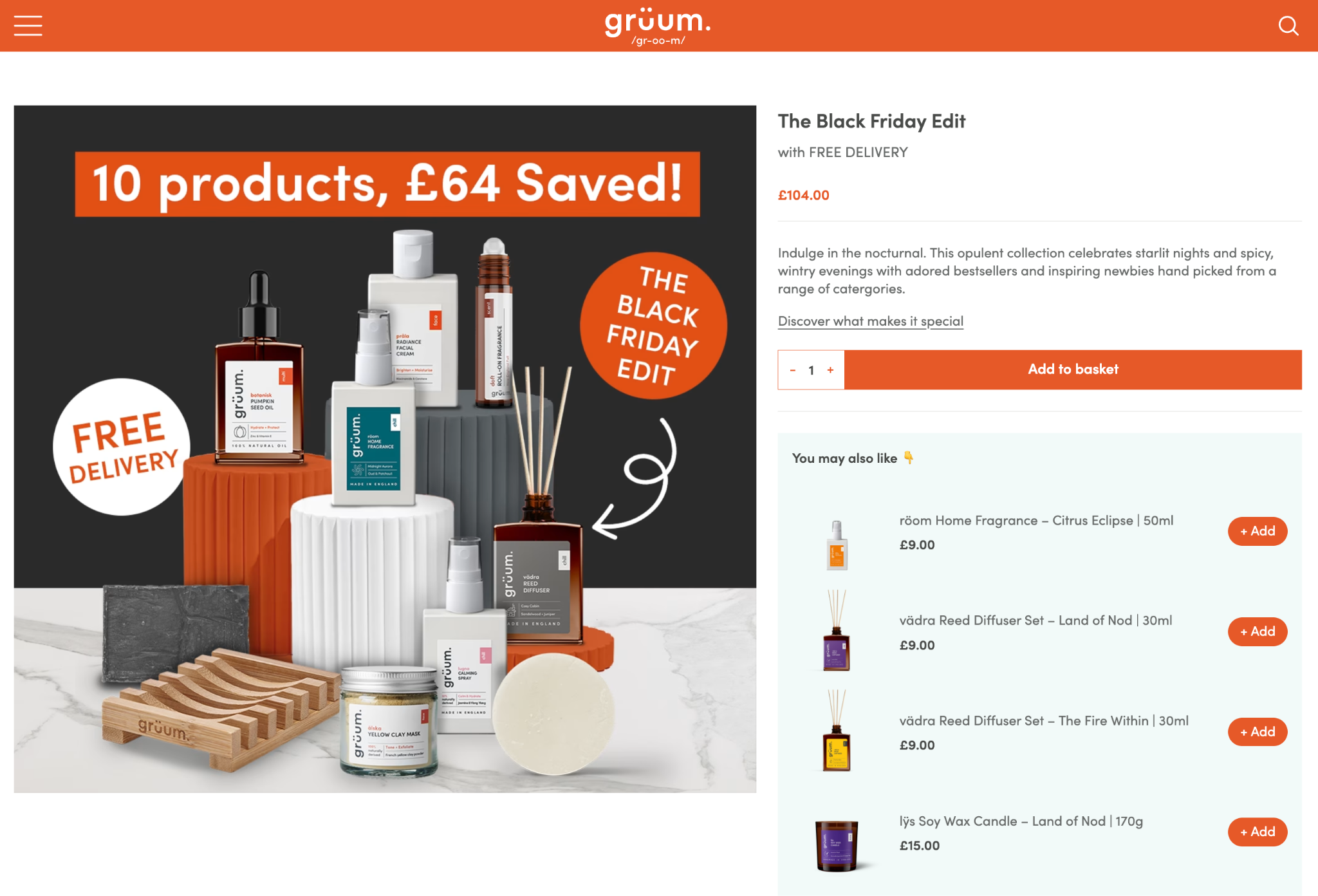
Skincare brand grüum’s Black Friday Edit brings skincare, home fragrance, and accessories into one seasonal collection. The offer is more concrete than “browse our sale”: here’s a collection already put together for you.
For a digital creator, the equivalent might be a project planner, budget tracker, and walkthrough for someone taking on their first freelance client. Each item should help with the same job. A bundle isn’t improved by padding it with things nobody needs.
Once the contents work together, tools such as Product Bundles can turn them into a single purchase.
2. Add help that makes the purchase more useful
Sometimes the thing stopping a customer is not the price. It’s wondering whether they’ll know what to do after buying.
That makes a useful extra a good Black Friday offer. Rather than adding more content to a course or another file to a template bundle, help customers use what they already bought.
You could include:
- A group feedback session for learners working through the same course.
- A guided setup workshop for people buying your templates.
- One follow-up review after a client puts your recommendations into practice.
Keep the promise specific. A 45-minute session on a published date gives buyers something they can plan around. It also lets you account for preparation and follow-up, instead of turning a modest sale into open-ended support.
3. Make a service or experience easy to give
A pottery class, portrait session, or cooking lesson can make a thoughtful gift. The key is making it easy to give now and enjoy later.
Trentham’s Black Friday promotion offered £100 gift vouchers for £80, redeemable against garden visits, memberships, gift-shop purchases, and selected events. Buyers could give someone a choice of experiences without having to pick a date or activity for them.
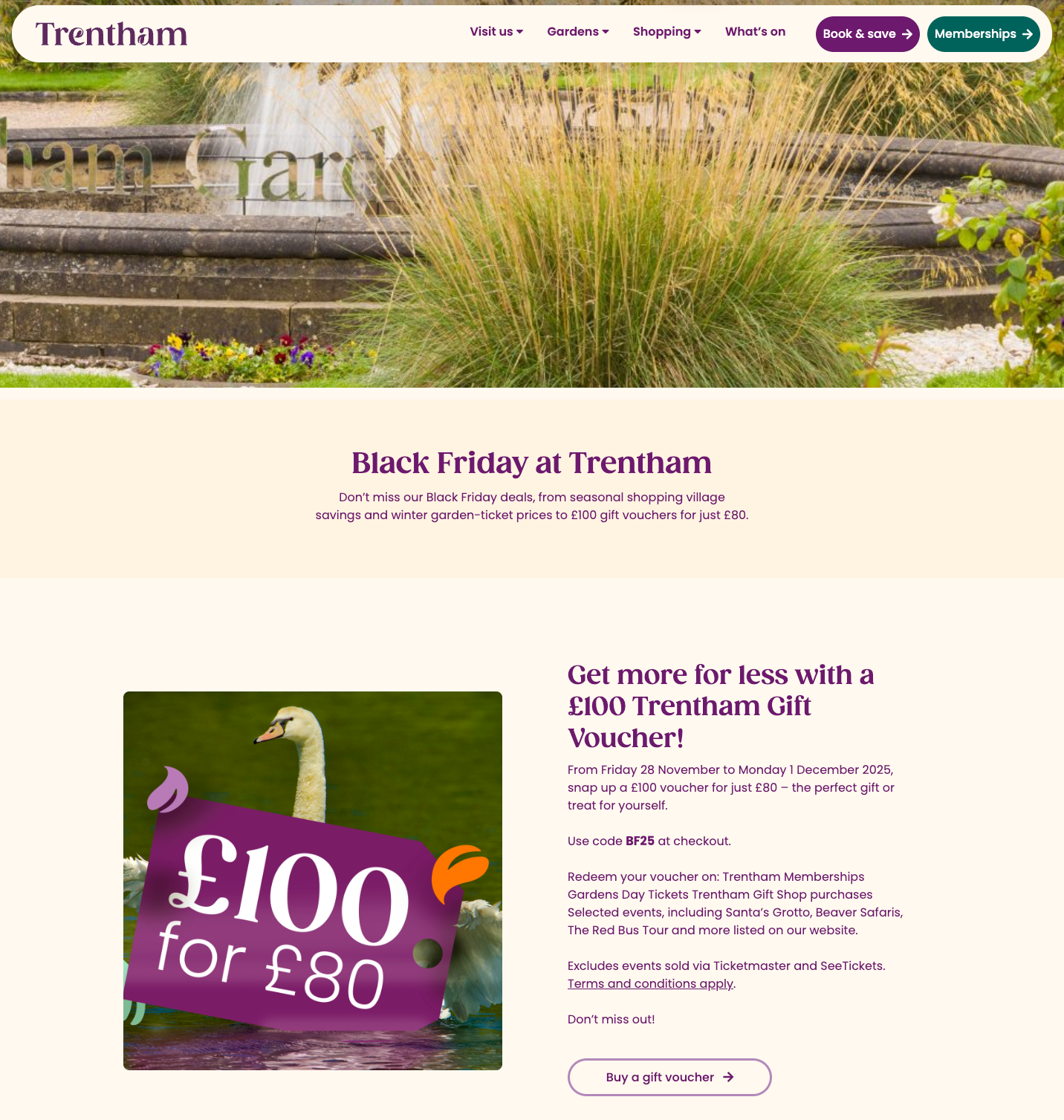
The idea to borrow isn’t the discount; it’s making an experience easy to give. A smaller business could offer a voucher for a two-hour pottery session, with materials and firing included.
Make it clear what the buyer receives, how the recipient books, and whether there are any extra charges.
4. Fill a few quieter-season appointments
Black Friday can be a way to plan next month’s workload, not squeeze more into this one.
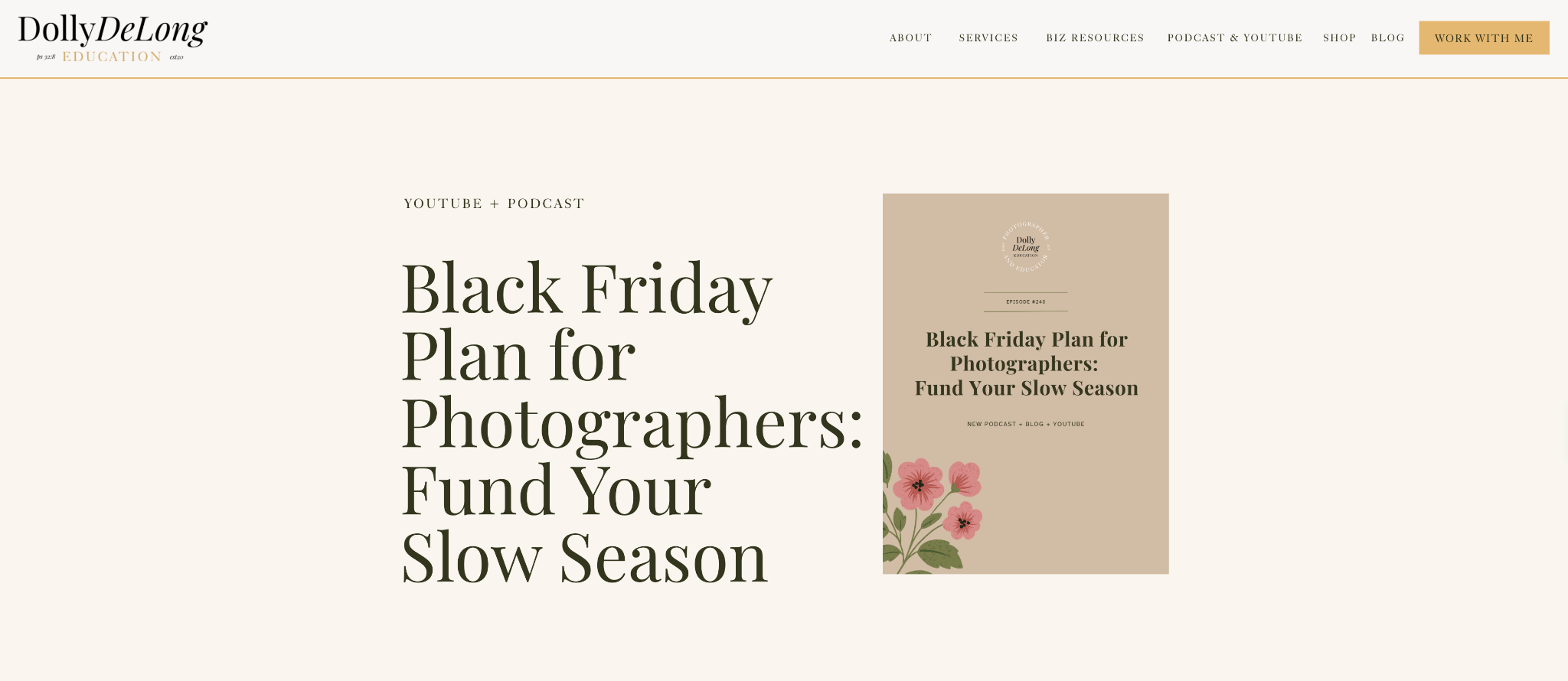
Dolly DeLong’s Black Friday plan for 2026 sets aside four branding-photography sessions to deliver in December and early January. The offer matches the dates she can work with clients who need fresh marketing images. As she puts it: “My scarcity is arithmetic.”
That’s a useful model for tutors, consultants, and other appointment-based businesses. Offer specific dates or a clearly bounded redemption window, and count the preparation and follow-up too. Money collected now still comes with work you owe later.
5. Give annual subscribers something to start with
An annual subscription asks customers to commit to a year. A joining benefit can give them something worthwhile in the first week.
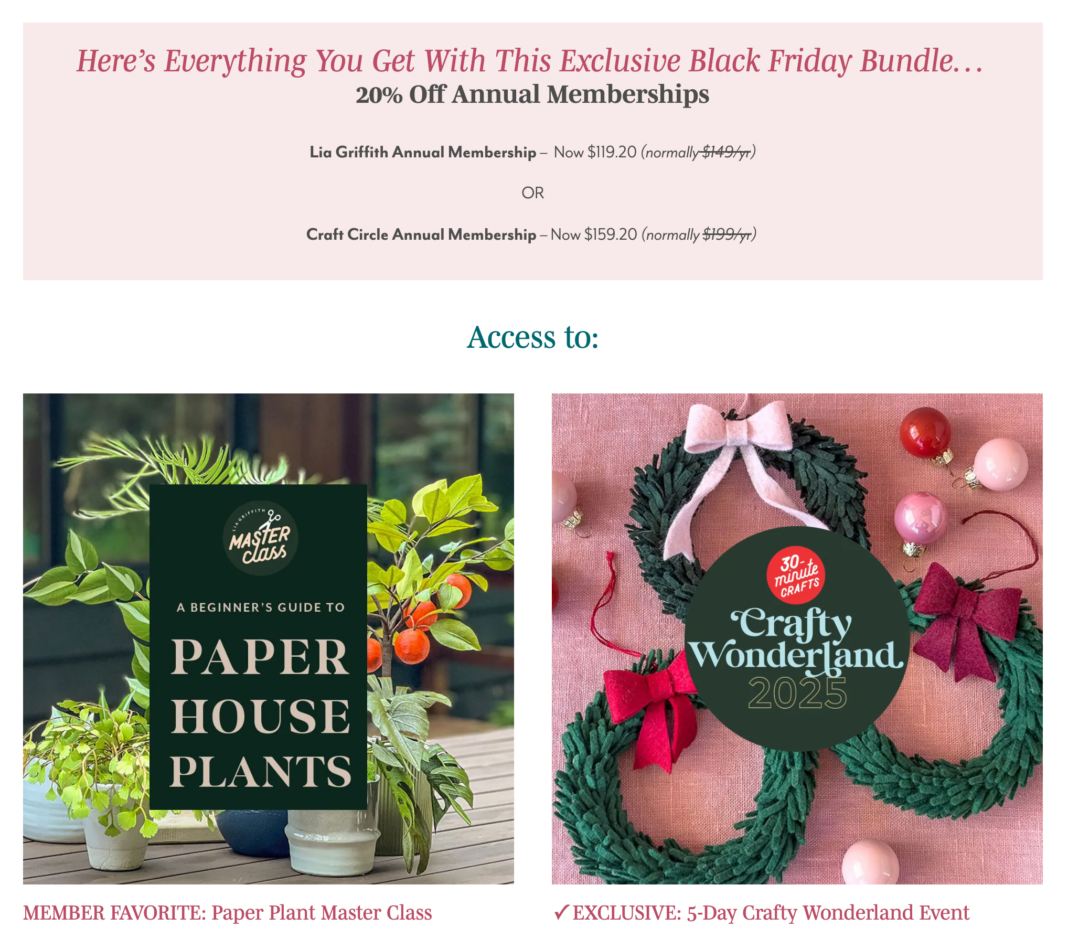
Craft educator Lia Griffith’s Black Friday membership offer paired discounted annual plans with bonuses including masterclasses and a five-day Crafty Wonderland event featuring ten projects. New members had something specific to make, rather than just a library to browse.
A paid newsletter might offer a curated starter collection; an educational membership could run a welcome workshop. Choose something you can deliver without adding another permanent weekly obligation, and consider including existing members. They shouldn’t feel overlooked for having joined earlier.
Whatever the format, make the first charge, renewal price, and ongoing access clear. A good joining benefit helps people enjoy the membership, rather than distracting them from what they’re signing up for.
6. Give your subscribers first choice
Early access means more when there’s something worth choosing first: a popular workshop date, a limited-edition product, or the last few places in a small group.
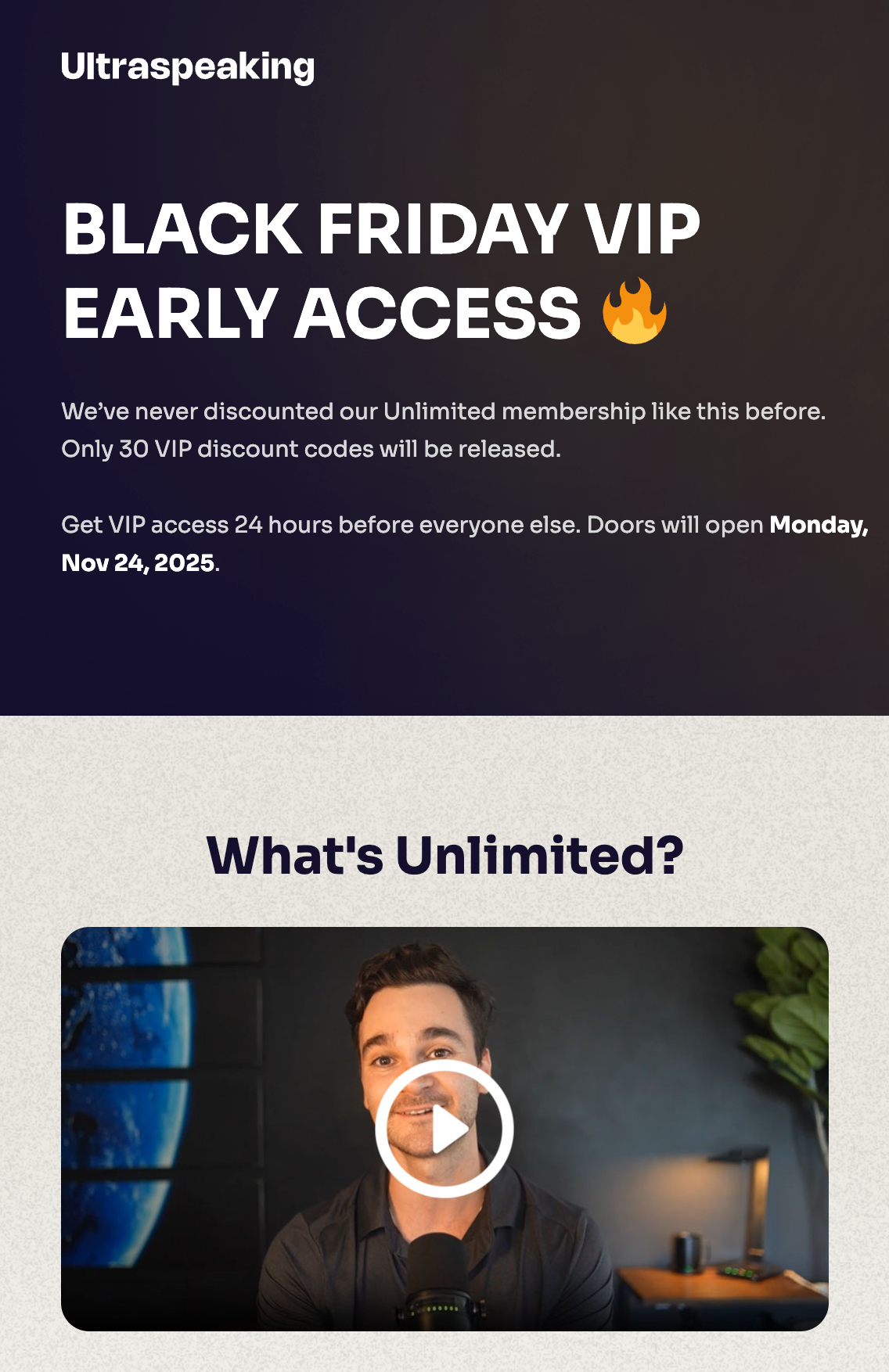
Public speaking training company Ultraspeaking gave its VIP subscribers a 24-hour head start on its Black Friday membership offer. Only 30 discount codes were available, and early buyers could also unlock a bonus live workshop. Subscribers had a genuine reason to act before the sale opened to everyone else.
Don’t feel you have to wait until Black Friday itself to launch. Giving subscribers an early opportunity to buy can help you reach customers before their holiday shopping budgets are committed elsewhere. You can then open the offer to everyone and keep it available for longer, provided you can sustain it.
A small business could do something similar with limited workshop places, new products, or appointment slots. You don’t need an elaborate loyalty program—an email and a clear early-access window can be enough, as long as customers actually get the advantage you promised.
7. Release a Black Friday edition
A special edition gives customers something different to buy, rather than the usual thing for less. That could be a new version of something you make or an exclusive release you stock.
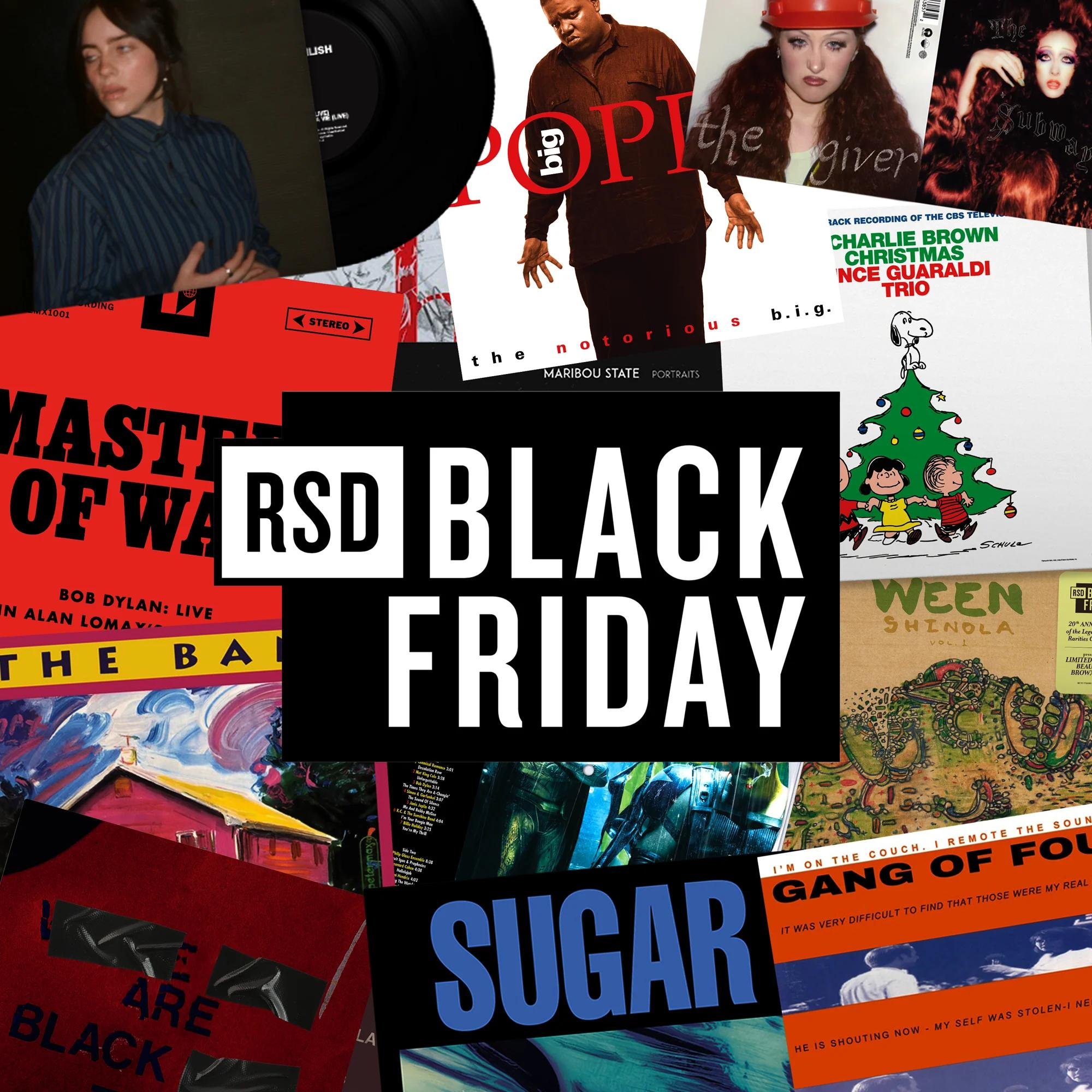
Independent record shop Record Surplus invited shoppers to explore exclusive and limited-edition Record Store Day releases. Shoppers could browse the release list beforehand, and purchases were limited to one copy of each title per customer to give more people a chance to buy.
The idea to borrow is giving customers something worth seeking out. A ceramicist could release a favorite mug in a seasonal glaze; an illustrator could offer a small run of signed prints. Start with something you already make well, then give this edition a clear point of difference.
Keep the limits honest, too. A batch of 25 really can sell out. A digital download won’t, so explain any time limit rather than inventing a shortage.
8. Add a useful bonus above a spending threshold
A spending bonus lets customers choose their own products and receive an extra when the order qualifies. A ceramics seller could include a matching spoon rest with orders over a set amount, rather than marking down the whole collection.
Gifts and add-ons were the main promotion planned by 15% of merchants surveyed ahead of Black Friday last year. For a small shop, the appeal is being able to add something useful while keeping the main product at its usual price.
The threshold still needs to cover the gift’s cost, extra packaging, and delivery — not its advertised retail value. Keep the rule simple enough to explain in one line, and choose a bonus that belongs with the purchase. An unrelated freebie is just another thing the customer has to find a use for.
9. Team up to reach more customers
You don’t always need to create a joint product to work with another business. Sometimes the opportunity is helping customers discover things that belong together.
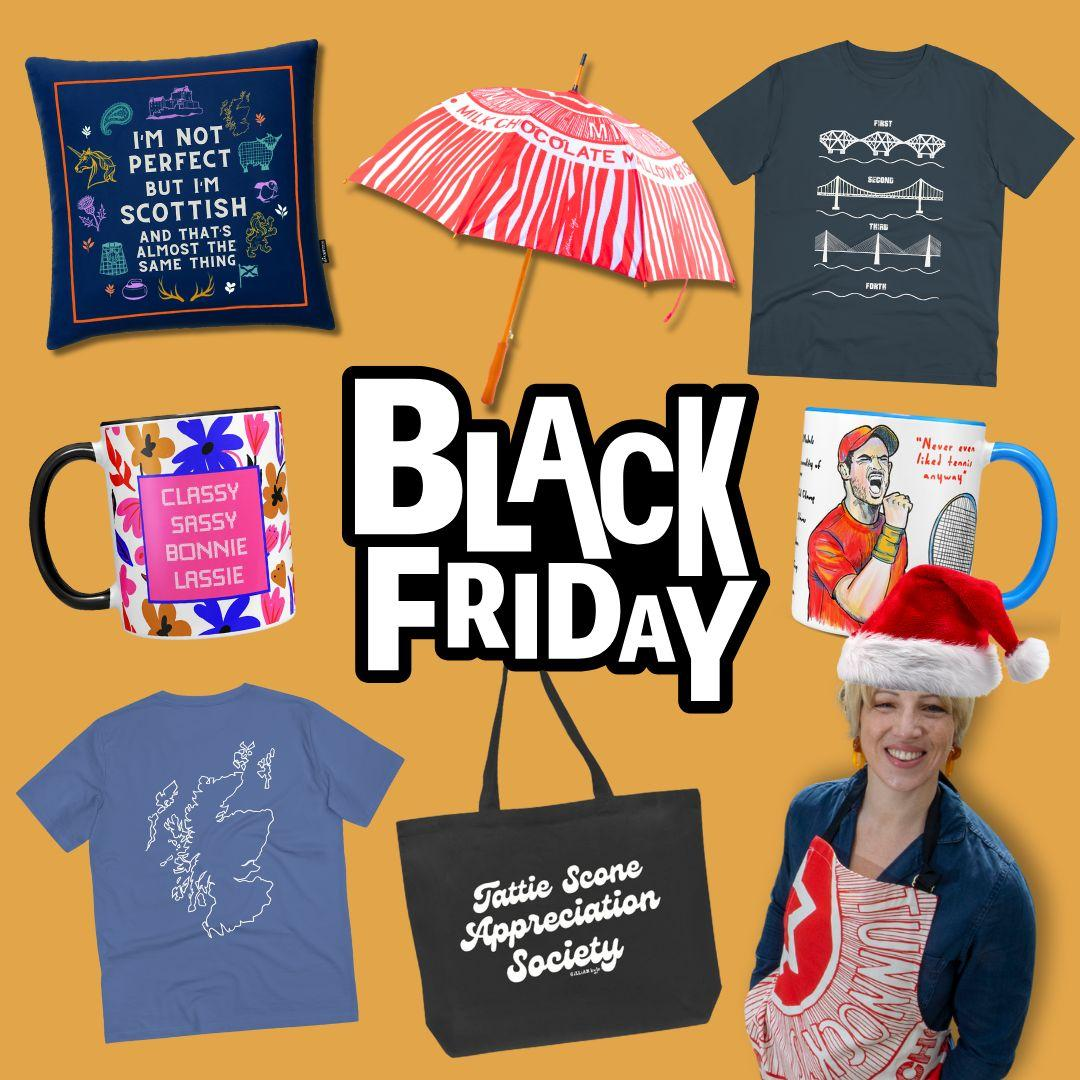
Folksy’s Black Friday campaign, The Real Deal, brought independent makers together in a shared handmade-product showcase. Sellers could nominate products for the collection, while Folksy supplied social media templates, newsletter materials, and printable signs. The campaign put craftsmanship and the people behind the products ahead of price cuts.
A few local businesses could borrow that approach with a shared gift guide or shopping event. For example, a potter, coffee roaster, and baker could build a collection around gifts for someone who loves a slow Sunday morning.
Keep the collaboration manageable:
- Choose one theme that connects the products.
- Give each business a clear place in the guide.
- Agree on how everyone will promote it.
Each business can handle its own sales. The shared effort goes into making the collection worth exploring – not creating another complicated promotion to manage.
10. Give customers a reason to come back
A return incentive works best when the next visit feels like a natural continuation of the first.
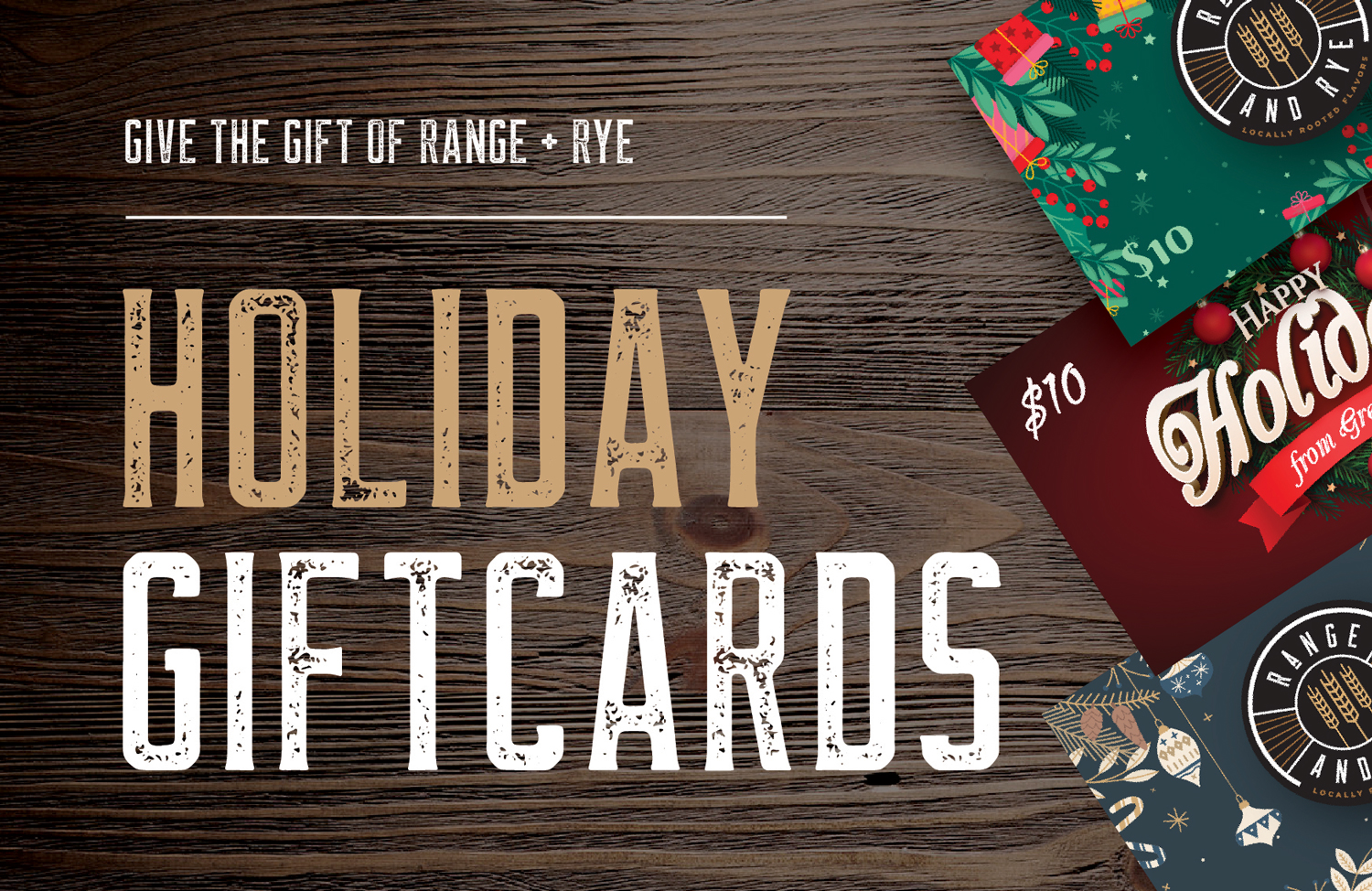
Range + Rye offered a $10 bonus card with a $50 gift-card purchase, or $20 with a $100 purchase. The Pennsylvania restaurant ran the promotion in person: a customer could buy someone else a gift and leave with another reason to visit.
For a class-based business, the equivalent could be credit from a beginners’ workshop toward an intermediate session. Give people time to use their first purchase before deciding what comes next. Price the promotion assuming customers redeem the credit, and explain restrictions upfront. It should work when they remember to return, not only when they forget.
Put your offer to work on your website
The offer comes first; the setup should follow. A one-off consultation doesn’t need the same machinery as a store with dozens of products.
For a single service or download, a clear offer page and a payment button may be enough, with scheduling or delivery handled separately.
A full catalog needs product pages, a cart, and order management; WooCommerce is one option, and WordPress.com’s Commerce plan packages it with hosting and additional store tools.
Keep the customer’s next step obvious: reserve a date, choose a package, or subscribe. Specialized bookings and memberships may need extra extensions, so check the full process rather than assuming that collecting payment completes the job.
Make the offer the first thing visitors notice. If you’re running a discount, lead with the percentage saved and a clear call to action, rather than crowding the page with product features. The same principle applies to bundles, gifts, or exclusive experiences: show customers what they’re getting and make the next step easy.
Choose your offer, then give it a test run
You don’t need to become a completely different business for a weekend.
Remember, one useful offer is enough to start. Give yourself time to promote it, make its value immediately clear, and test the path from landing on your website to completing a purchase.
Once you’ve chosen your offer, make sure your site is ready for Black Friday so customers can follow through to purchase.
Whether they’re buying a product, booking a session, or joining a membership, the promise on your page needs to work – all the way to checkout.